Swine flu outbreak cost UK £1.2bn
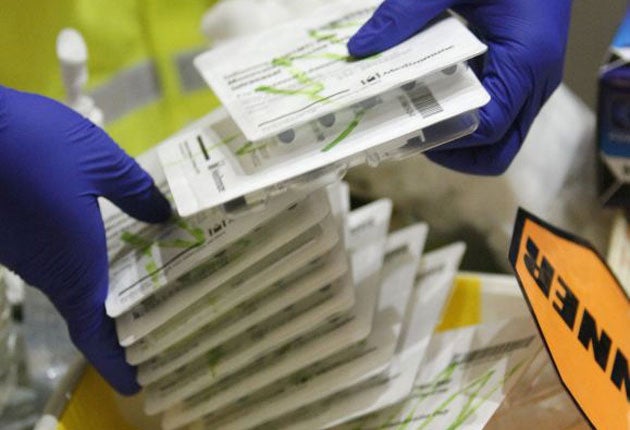
The swine flu pandemic cost Britain more than £1.2 billion despite being much less severe than feared, a Government-commissioned review found today.
Warnings that 65,000 people in the UK could die in a worst case scenario proved far too pessimistic, and the actual death toll during the outbreak was 457.
An inquiry into the handling of the emergency concluded that the Government's response was "proportionate and effective".
But it criticised the restrictive contracts with drug companies which have left a stockpile of over 20 million unused doses of swine flu vaccines for England alone.
The review revealed that Britain spent £654 million preparing for a possible flu pandemic, and £587 million responding to last year's H1N1 outbreak - a total of £1.24 billion.
This included £1.01 billion on drugs, among them anti-virals, vaccines and antibiotics, as well as £115.4 million on items like face masks and respirators.
Critics questioned why the bill for tackling the pandemic was so large, with one describing Britain's response as a "hugely expensive farce".
But Dame Deirdre Hine, a former chief medical officer for Wales who led the review, defended the cost.
"I think we have got to set these figures, which seem enormous, against the potential for saving lives," she told reporters at a briefing in London.
"It is fairly clear, although we can't actually identify the number, that there probably were lives saved of very young people, young children and so on.
"These are extremely valuable lives."
After the H1N1 outbreak in April last year, the Government made plans to buy up to 132 million doses of swine flu vaccine, enough to give everyone in the UK two doses.
But the contracts it signed with drug manufacturers GlaxoSmithKline (GSK) and Baxter were too inflexible, the review found.
Baxter agreed to a "break clause" allowing the Government to cancel its order for some of the doses but GSK refused.
The Department of Health said it ordered 90 million vaccine doses from GSK, of which it eventually agreed to take 34.8 million.
It also placed an order for 36 million doses with Baxter, 9.2 million of which were purchased before the contract was cancelled.
About 4.88 million doses of the vaccine were given to people in England in priority groups such as pregnant women and sufferers of asthma, diabetes and heart disease.
The Department of Health said it still held just over 20 million doses of swine flu vaccine for England, with shelf lives that run out by October 2011.
Dame Deirdre's review team said commercial confidentiality prevented them from revealing how much money would have been saved if the Government's vaccine contracts had included break clauses.
But their report said: "Break clauses would allow the UK to retain the option to cancel further deliveries of vaccine at a particular point if it emerged that more vaccine was no longer needed.
"The lack of such a clause in the advance purchase agreements for both contracts consequently exposed the Exchequer to some risk."
Dame Deirdre noted that the H1N1 pandemic demonstrated that one dose of vaccine could be enough to provide immunity, potentially reducing the need for such large quantities to be ordered in the future.
She stressed the need for flexibility in responding to future outbreaks, saying: "The only predictable thing about the flu virus is its unpredictability."
She added: "It is imperative that the experience of 2009 doesn't lead to complacency.
"It is a bit like childbirth - when it's all over, you forget quite how serious and how difficult it all was.
"The threat of a flu pandemic remains very high. Both the successes and the lessons from this pandemic should inform policy and planning for the next one because there will be a next one, and the next one might be more severe."
Mark Wallace, campaign director of the TaxPayers' Alliance, said: "The swine flu response has proved to be a hugely expensive farce.
"Serious questions must be asked about why so much was spent on combating a threat that turned out not to be very serious.
"It's unacceptable to hide the details of this massive bill behind the excuse of commercial confidentiality.
"We need full details and full answers about this scandalous waste of money."
Health Secretary Andrew Lansley said: "We welcome Dame Deirdre Hine's review into the UK response to the swine flu pandemic and thank her for her hard work."
"The UK response was the result of careful preparation, but it is vital that we learn lessons.
"The Government will take these recommendations into consideration in planning for the future to ensure that we remain one of the best prepared countries in the world for any future pandemics."
Join our commenting forum
Join thought-provoking conversations, follow other Independent readers and see their replies
Comments