Two and a half years on and still no verdict on MMR scare
The GMC's case against Andrew Wakefield has cost over £1m – so far. Jeremy Laurance, health editor, reports
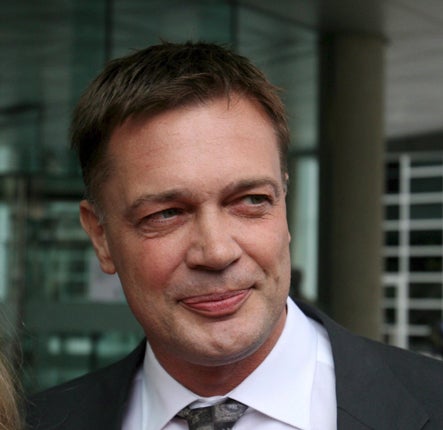
Andrew Wakefield, the doctor who sparked the biggest health scare of the decade over the safety of measles, mumps and rubella (MMR) vaccine, has broken a second record.
The hearing into the disciplinary case against him brought by the General Medical Council has become the longest and most complex in the organisation's 148-year history with costs well in excess of £1m.
Preliminary verdicts on the "facts" of the case are expected this month, more than two-and-a-half years after the case began in July 2007. Hearings were initially scheduled for 64 days and the case was expected to conclude by November 2007.
Instead, it has run for 166 days so far (up to 19 November). The panel sat for an undisclosed number of days in December and a further 19 days of hearings have been scheduled during January. Extra dates have been set aside from April to June 2010, if required.
Dr Wakefield is accused, along with two colleagues, of breaching ethical guidelines in the conduct of a study that triggered the nationwide scare over MMR vaccine.
His 1998 Lancet paper linking the vaccine with bowel disease and autism is said to have done more damage than anything published in a scientific journal in living memory. Vaccination rates against MMR plunged following publication of the research, based on 12 children, and have never fully recovered.
Together with Professors Simon Murch and John Walker-Smith, Dr Wakefield, 52, is alleged to have acted against the clinical interests of the children who took part in the trial. Dr Wakefield is also accused of acting dishonestly in failing to disclose to The Lancet that he had accepted £55,000 from the Legal Aid Board for research to support legal action by parents who believed their children were harmed by MMR.
The charges against the doctors, which all three deny, run to 93 pages and took a day and a half to read out at the start of the case. Closing speeches were made last July and the five-member panel has since sat in camera deciding on the "facts".
It was the disclosure that Dr Wakefield was a paid adviser to solicitors acting for parents who believed their children were harmed by MMR that led The Lancet to announce a partial retraction of the paper in 2004 in what the editor, Richard Horton, declared was a "fatal conflict of interest". Dr Horton said that had he known about it at the time, he would never have published the paper.
If the facts are found proved against any of the doctors, the panel will then decide whether they amount to serious professional misconduct and what sanction, if any, to impose. The options range from a reprimand to striking the doctor off the medical register.
The panel is chaired by Dr Surendra Kumar, a GP in Widnes, Cheshire, who is paid £340 a day. The other four members are paid £310 a day and the panel is assisted by legal assessors paid £525 a day. There are four QCs and their legal teams, representing the GMC and the three doctors, bringing the daily costs of the case to over five figures.
The previous longest GMC case was brought in 2004 against the head of a private drug addiction clinic, the Stapleford centre, and six colleagues accused of inappropriate and irresponsible prescribing of controlled drugs. That case ran for 86 days of hearings and concluded in 2006 with guilty verdicts of serious professional misconduct against three of the accused.
At the opening of the case against Dr Wakefield, scores of parents convinced that the vaccine caused autism in their children demonstrated in his support. They claimed he was the victim of a witch-hunt by the Government and the pharmaceutical industry, who had conspired to cover up the harm the MMR jab has caused.
The verdicts, when they come, are likely to revive the decade-old row over the safety of the vaccine, even though the charges are narrowly focused on the ethics of the research rather than the disputed link between MMR and autism. The row pitched parents against the medical establishment and led to a collapse in trust. Whatever the outcome, public health is likely to suffer.
If Dr Wakefield is exonerated, it will give a boost to the anti-MMR lobby. If he is found guilty, he will become a martyr to his supporters. Vaccination rates with MMR stood at 91 per cent in 1997-98, before The Lancet published Dr Wakefield's findings. In the ensuing scare, the rates slipped to 79 per cent in 2003-4 and lower still, to less than 50 per cent, in parts of London.
National rates have since recovered to 85 per cent, but hundreds of thousands of children remain unprotected from the diseases and cases of measles have soared.
Since The Lancet printed Dr Wakefield's paper in February 1998, a series of epidemiological studies has failed to find any evidence of a link between MMR and autism.
Medical notes: Growth of a health scare
*27 February 1998 The day before a Lancet paper linking the MMR vaccine with bowel disease and autism is published, the Royal Free Hospital holds a press conference at which Dr Wakefield recommends parents give single vaccines for measles, mumps and rubella to their children after warning that the three virus strains contained in MMR may overload the body's immune system.
*28 February 1998 Andrew Wakefield and 12 colleagues from the Royal Free Hospital, London publish their research in The Lancet.
*March 1998 A panel of 37 experts set up by the Medical Research Council says there is "no evidence to indicate any link" between the MMR vaccine and bowel disease or autism in children.
*February 2001 A statistical analysis published by the British Medical Journal concludes that the MMR vaccine cannot account for the soaring rate of autism. It says the number of cases of autism has continued to rise even though MMR coverage has remained the same.
*2001 Ostracised by the medical community, Dr Wakefield moves to America with his wife and four children.
*2003 National vaccination rates against MMR slump to 79 per cent (from 91 per cent before the scare in 1997) and to less than 50 per cent in parts of London.
*2004 The Lancet announces a partial retraction of Dr Wakefield's paper after discovering he had received £55,000 from the Legal Aid Board for research to support legal action by parents who claimed their children had been harmed by MMR. The journal described it as a "fatal conflict of interest". Ten of the 13 authors of the original paper disowned it.
*July 2007 The GMC case against Dr Wakefield and two of his colleagues begins. It is expected to conclude in November 2007.
*January 2010 Preliminary verdicts on the "facts" of the case are expected at the end of the month. Final verdicts, on whether Dr Wakefield and his two co-defendants are guilty of serious professional misconduct, are expected by June 2010.
Join our commenting forum
Join thought-provoking conversations, follow other Independent readers and see their replies
Comments