The cuts victim that won't provoke any tears: speed cameras
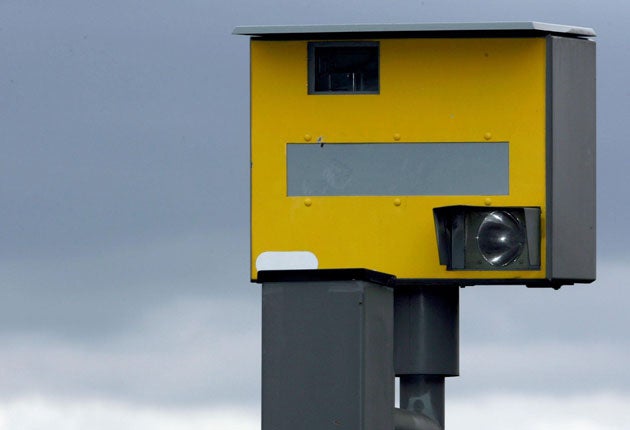
To their opponents, they represent the evil eye of the nanny state, or at least devices to squeeze money out of motorists. To their supporters, they represent a key tool for ensuring safer roads. Whatever the truth, speed cameras are on the way out.
Twenty years after their mass introduction at the British roadside, the coalition Government is fulfilling a Tory pledge to do away with the yellow boxes which snap speeding drivers, by drastically slashing the funding that local councils receive for road safety.
Many local authorities will, the Government intends, no longer be able to fund speed camera schemes. The £95m that the authorities in England are currently awarded annually for road safety programmes is being cut by £38m.
Oxfordshire is likely to be the first council to close down its network and may switch off its 72 cameras as early as next Saturday, with other authorities likely to follow soon.
The road safety minister, Mike Penning, Conservative MP for Hemel Hempstead, was unrepentant about the Government's decision. "In the coalition agreement the Government made clear it would end central funding for fixed speed cameras," he said.
"Local authorities have relied too heavily on safety cameras for far too long, so I am pleased that some councils are now focusing on other measures to reduce road casualties. This is another example of this Government delivering on its pledge to end the war on the motorist."
However, the decision was fiercely attacked by supporters of cameras as a tool for bringing down accidents. "Speed cameras are a really cost-effective way of managing speed, which is one of the biggest issues on our roads," said Ellen Booth, of the road safety group Brake. "To get rid of them would be a backward step and we would really be risking people's lives."
The shadow Home Secretary, Alan Johnson, agreed, arguing yesterday that removing cameras which had been shown to reduce road casualties was "a big, big mistake". He said: "Everyone who has analysed this has said that speed cameras have been an important part of the dramatic improvement on our roads. The carnage on our roads every year has gone down dramatically. It is a kind of a saloon bar view – 'These bloody speed cameras, get rid of them'."
But that saloon bar view – if such it is – has resonated with the Conservatives, who made a manifesto promise that no new cameras would be funded, and the pledge to "end the war on the motorist" was made by the Transport Secretary, Philip Hammond, on his first day in office in May.
One of the loudest complaints for motorists' groups is that the cameras have become revenue raisers rather than speeding deterrents; they allege that accident rates are not falling, although the devices raised £87m in fines in 2008-09.
One notorious camera on the A350 in Poole, Dorset, raises £1.3m a year. Anti-camera campaigners complain there have been no serious accidents on the stretch of road for a decade.
Join our commenting forum
Join thought-provoking conversations, follow other Independent readers and see their replies
Comments