Power line in China could help bring cheap, sustainable electricity to the EU
News in pictures
News in pictures
On Facebook
Life & Style blogs

Living a long, healthy life – looking after your heart

In my clinic I see all sorts of people walking through my door. Mostly, they come to me because they...

Tips on renting your property to students

Five important things to think about before the Freshers arrive...

Problem neighbours make 17,000 people move home

Should you research your neighbours before you buy?

Innovative technology used in a Chinese ‘electrical highway' could provide the solution to Europe's energy problems and ensure cheaper electricity for consumers.

Sustainable power project DESERTEC aims to provide the European Union (EU), the Middle East (ME) and North Africa (NA) with electricity generated from large concentrations of solar panels located in the deserts of North Africa and the Middle East.

The EU, working in close cooperation, with MENA aims to create a network of long distance power lines carrying solar power from the deserts of Africa into Europe; because the electricity is generated by solar power it would be available at a lower cost than power generated by conventional sources, which are subject to rising prices relating to supply and demand issues.

Currently the technology needed to transport electricity from the desert to households in Europe is unavailable due to the large amount of power lost in transporting power over such a distance. Currently about 3 percent of electricity is lost per 1000 km of cables meaning 15 percent of power generated in the desert would be lost before it reached Europe.

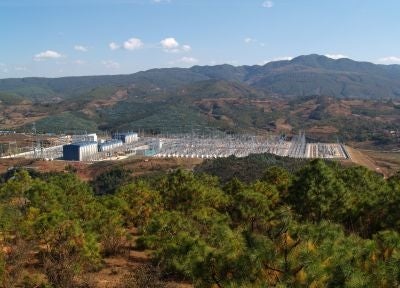
However electrical company Siemens announced on August 1 the successful operation of an innovative 'electric highway in China.' The electricity carried by this highway is generated by hydropower and then transported 1,500 km from Yunnan province to the industrial heartland of Guangzhou and Shenzhen. This ‘electric highway' uses a new transformer capable of carrying 800kv, a world first in the field of power generation; this transformer ensures that less than 2 percent of power is lost in transport and the cost of electricity remains low for the Chinese consumers.  

It is estimated that the successful implementation of technologies similar to those used in China for the DESERTEC project could reduce the cost of electricity to 3/4 euro cents per kWh (kilowatt hour). European statistic database Eurostat currently estimates the average cost of electricity for the household consumer at around 12 euro cents per kWh; electricity is most expensive for householders in Ireland at 18 euro cents  per kWh and cheapest for Bulgarians at 6.8 euro cents per kWh.

As well as financial benefits, projects such as the one in China and DESERTEC also have huge environmental bonuses; Siemens estimate that the ‘eclectric highway' reduces CO2 emissions by 30 million tons per year, and DESERTEC would hugely reduce Europe's reliance on fossil fuels.


Independent Comment
blog comments powered by Disqus
Career Services

Day In a Page

Is Ridley Scott the most macho man in movies?

Ridley Scott: The most macho man in movies?

His cinematic CV is unparalleled. Yet the Alien director is still obsessed with beating his rivals.
Being Gary Lineker: The clean-cut anchorman is this summer's Mr Sport

Being Gary Lineker

The clean-cut anchorman is this summer's Mr Sport...
Gallic gourmets are putting French cuisine back on the culinary map

Gallic gourmets put France back on culinary map

Overdone, out of touch and old-fashioned: French cuisine has never been at a lower ebb...
So Moorish: Mark Hix offers his own take on classic Moroccan dishes

So Moorish: Mark Hix's Moroccan dishes

Why not create a north African-inspired feast to share with your friends?
Sin and the single mother: The history of lone parenthood

Sin and the single mother

Maureen Paton explores the history of lone parenthood.
The outsider: Margaret Howell is British fashion's queen of minimalism

The outsider: Margaret Howell

The designer tells Susannah Frankel why she has never felt part of the fashion industry.
The 50 Best luggage

The 50 Best luggage

From chic cases to compact baggage, pack it all in this summer
For men only: A pilgrimage to Mount Athos in Greece

For men only: A pilgrimage to Mount Athos

On a secluded peninsula in north-east Greece lies an enclave that's way off the tourist map, especially for women...
48 Hours In: Faro

48 Hours In: Faro

More than just the gateway to the Algarve, this city has much to tempt you off the beach.
Here, the coast is always clear: Celebrating sixty years of Pembrokeshire's National Park

60 years of Pembrokeshire's National Park

Mick Webb reveals a land of puffins, tanks and Hollywood blockbusters.
Free Range: Meet the designers of tomorrow

Free Range

Meet the artists of the future
Feeding a hungry world – or meddling with laws of nature?

Feeding a hungry world – or meddling with laws of nature?

As scientists at Rothamsted's GM trials plead with activists not to sabotage their work, Michael McCarthy visits the battle field
Monkey meat that could be behind the next HIV

Monkey meat that could be behind the next HIV

Deep in Cameroon's rainforests, poachers are killing primates for food. Evan Williams reports from Yokadouma on a practice that could create a pandemic
Catcalls, whistles, groping: just another day for a young woman

Catcalls, whistles, groping: just another day for a young woman

Government urged to take abuse more seriously as London study shows 41 per cent are harassed
Jailing of Maori separatists stirs colonial-era resentment

Jailing of Maori separatists stirs colonial-era resentment

Militant Tuhoe tribe members defiant amid claims race relations had been set back 100 years