Playing your cards right is simple with a bit of self control
Credit cards have never been so popular and, if you can avoid running up huge debts, it's easy to see why, writes Rob Griffin
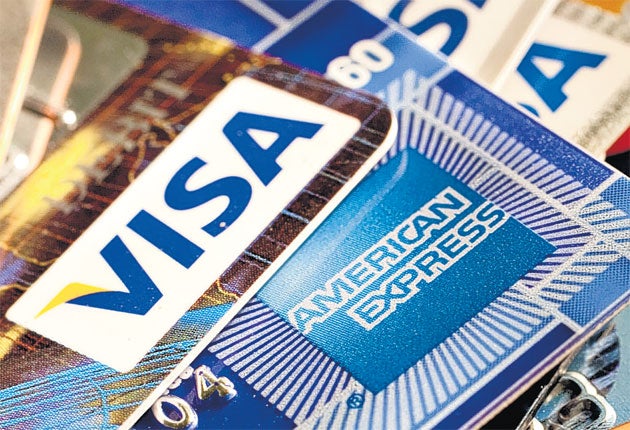
Angus Elphinstone relies on his credit cards. The founder of website AnyVan.com uses them to pay both his personal and business expenditure because it gives him an extra four weeks before he actually has to part with money to pay his bills.
"I've got them purely for cash flow purposes," he says. "I try to put through as many items as possible on the credit cards but always make sure that I pay off the full amounts each month so as not to get charged any interest."
As well as an American Express card for his personal use, the 29-year-old entrepreneur, who lives in Battersea, London, has a business credit card from the Royal Bank of Scotland that he uses to pay invoices associated with AnyVan, a website on which transport firms can bid for work.
As well as providing him with a useful source of credit which can be used to fund both his personal and business lives, the cards also give him some added extras.
"The American Express card enables me to collect Airmiles but that is purely an added bonus and not the main reason for taking it out," he says. "The benefit of using credit cards is being able to take advantage of the use-now, pay-later approach because it gives me more time and space."
Angus is among 31.2m adults in the United Kingdom that have a credit or charge card, according to statistics compiled by the UK Cards Association, an industry trade body. This figure equates to a remarkable 64 per cent of the adult population and illustrates their widespread use.
The fact is that credit cards have a big role to play in everyday transactions, according to Kevin Mountford, head of banking at MoneySupermarket.com, who points out that an increasing number of people will naturally use them when shopping online. "Without some sort of plastic it would be very difficult to operate in the modern world and credit cards offer additional benefits and security over debit cards," he says.
"However, you need to be disciplined in how you use them so as not to get into financial trouble." As well as the aforementioned convenience and cash flow advantages, there are other ways in which credit cards can help, points out Michelle Slade, spokesperson for Moneyfacts.co.uk. The first is providing an extra level of security when making purchases; the second relates to your credit rating. The security comes courtesy of Section 75 of the Consumer Credit Act 1974 which dictates that when you spend between £100 and £30,000 on a purchase with your credit card, the card provider is jointly responsible – with the supplier – for any breach of contract or misrepresentation.
In effect, this covers you if the goods or services never arrive; turn out to be faulty or not as described; or are damaged – regardless of how they are purchased. However, for the protection to be valid the individual item at the centre of the dispute must cost at least £100.

Get a free fractional share worth up to £100.
Capital at risk.
Terms and conditions apply.
ADVERTISEMENT
Get a free fractional share worth up to £100.
Capital at risk.
Terms and conditions apply.
ADVERTISEMENT
"It's always worth putting big items on your card – even if you pay off the balance at the end of the month when the bill comes in so as not to pay interest," she says. "Also, if you show that you can use the card effectively and are able to manage the debt, then this can help your credit score."
The fact it can help your credit rating was one of the motivations behind Dave Bond's decision to take out a Nationwide Classic Card. The 25–year-old accountant, who lives in Bristol, opted for this type of plastic because he has banked with Nationwide for many years. "I mainly use it for petrol and buying bigger items because I like the credit card protection," he explains. "My monthly spend is between £200 and £300 so I just keep it ticking over and to keep my credit score going."
However, he is scrupulous about clearing the balance. "It would be easy to go spending a lot of money but I make sure I pay it off monthly," he says. "I think credit cards are definitely worth having as long as you are strong enough not to spend more than you can afford."
It's when you start struggling to clear your outstanding balance that problems arise – and it's a common problem, warns Frances Walker, spokesperson for the Consumer Credit Counselling Service, the debt charity that dispenses free, anonymous advice. In fact, 44.5 per cent of people seeking its help during 2010 had run into credit-card related problems.
"The real mug's game in credit cards is if you only make the minimum payments every month because that's a very expensive way of funding your living," she says. "For example, if you borrowed £2,000 on the average credit card and only paid off the minimum amount each month it would take you 20 years to clear the debt."
How to choose which card to use
Step one: What will you use it for?
Consider why you want a credit card. Are you planning to make a number of large purchases in the near future? Do you have outstanding debts that you want to spread around? Do you only plan to use it in dire emergencies? There are hundreds of different cards to choose from so you need a clear idea how you plan to use it in order to make an informed choice.
Step two: Analyse your finances
What shape are your finances in? Have you money in the bank or do you constantly borrow to stay afloat? Draw up a simple monthly balance sheet showing your regular income and expenses. It's always worth seeing if you can cut your costs slightly before agreeing to take on credit as the temptation to over-extend yourself may prove too much. You also need to know how much you can afford to pay back each month.
Step three: Understand what's available
The market is crowded with credit card providers each pushing their products so you need to find a card that meets your needs. For example, if you have existing debts, then consider a balance transfer card as there are a number of these available with zero per cent introductory offers that can last in the region of 20 months. Others don't charge interest on new purchases for set periods.
Step four: Ensure your card is fit for purpose
There are potential dangers. Never make additional purchases with a credit card that only offers zero per cent on balance transfers as further transactions made will usually incur interest at standard rates. All repayments made will go towards clearing the original debt that was transferred unless a provider specifically states that it won't charge interest on purchases either.
Step five: Check the small print
Make sure you know how much you'll be charged if you don't clear the entire balance as this can add a substantial amount to your original debt. Bear in mind that the average credit card will charge interest rates around the 18 per cent mark – and some will be a lot higher. Also pay attention to how much you are likely to be charged for using your card abroad.
Step six: Consider potential benefits
If you are able to clear your monthly bill then it might be worth considering either a cash back card or one that gives you rewards. With cash back, for example, the holder receives a set percentage of every transaction made which can add up to a tidy sum over time. Reward cards, meanwhile, give loyalty points for transactions made which can be redeemed for vouchers and other benefits. Pick a card whose rewards you will use, says Kevin Mountford at MoneySupermarket.com. "There are loads of options, such as travel and retail, but it's no good having a loyalty programme if you are unlikely to use the benefits," he says. "The cash back cards vary and most are only available if you have a very good earnings profile and credit history."
Step seven: Protect yourself
Once you have chosen your card you need to put safeguards in place. Consider setting up a direct debit to clear your monthly bill so you don't get hit with late payment charges and interest should you go on holiday and miss the deadline. At the very least have a clear note of when you need to make any payments for them to reach the provider on time.
Step eight: Scour market for better deals
Card providers are always coming up with innovative products so shop around for the most attractive deals you can find. Don't just stick with one card for life – and make sure that you keep abreast of any changes in their terms and conditions that could affect their attractiveness.
Join our commenting forum
Join thought-provoking conversations, follow other Independent readers and see their replies
Comments
Bookmark popover
Removed from bookmarks