Independent Appeal: Clinic on wheels saves lives in Indian slums
Delhi's poorest residents have access to free basic health care, thanks to a mobile service

For free real time breaking news alerts sent straight to your inbox sign up to our breaking news emails
Sign up to our free breaking news emails
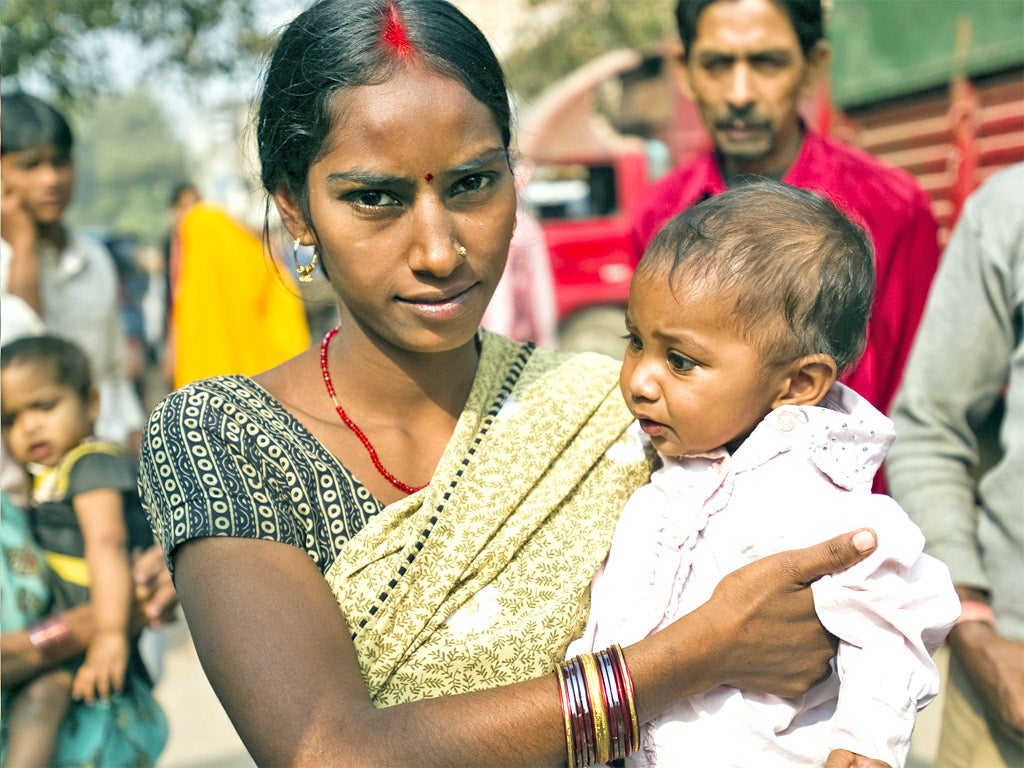
When the clinic on wheels pulls up in one of Delhi's poorest neighbourhoods, its bright red light flashing, a line of women and their children rapidly form a neat line.
Some are here for a check-up, others because their child has a fever or a persistent cold. Some are queuing to collect medicine. All are keen to avail themselves of a service they would otherwise have to travel miles to receive. Best of all, it is free.
Payal Devi, an 18-year-old woman, is here this morning with her six-month-old daughter who has been having problems breathing properly because of mucus on her chest. "Without this bus, we would have to go to the hospital 10 miles away," she says. "I would have to take a bus, and a rickshaw. It would cost me up to 200 rupees (£2.50)."
The idea behind the clinic on wheels that operates in India's capital city, is simple enough. But like many simple concepts, it has had powerful results.
Five days a week, six such vans park-up in some of the city's most poorest districts and provide free basic healthcare, medicine and counseling to people who have few genuine alternatives. These are people for whom 200 rupees may represent more than a day's pay.
The clinics are equipped with two doctors, a nurse, pharmacist, and a small laboratory that is capable of checking blood types, measuring platelet counts and even testing for typhoid, malaria and dengue.
If an individual is found to have a more serious ailment, the clinic will help make an appointment for that person at a government hospital. The vans can each tend to up to 160 patients a day. "In Delhi, there is a huge gap between demand and supply for healthcare, especially for the migrant communities who work as rickshaw drivers, or house-cleaners," says Prasanta Das, a senior coordinator with Save the Children, which funds the clinics and is one of the charities that will benefit from this year's Independent Christmas Appeal.
Today, the clinic is stopped in the Jeevan Jagti Rajeev camp, a cluster of shacks and simple homes located in the Okhla industrial area in the city's south-east. The area is known for its factories, warehouses and textile mills.
The people who live here in simple shacks, most of them economic migrants from northern India, have little access to sanitation or other services. There is lots of pollution and during the dusty months of summer, the air is particularly vile.
By closely monitoring records, the doctors who work on the mobile clinics are able to draw up a profile of each area and plot the types of ailment they are likely to encounter. This is especially helpful when they stock their medicines every day.
"With the women, we get a lot of urinary tract infection. There are a lot of boils, especially during the summer months because of poor sanitation," says Dr Shella Duggal, who has worked with the project since April. "During the monsoon season there tend to be a lot of respiratory problems. Also, they come to us if they believe their children are getting pneumonia."
The doctors say that in the absence of the clinic, their patients would be forced to rely on untrained "quacks" in their neighbourhood, private dispensaries they cannot afford, or else government hospitals located many miles away.
Making the journey to a hospital is not only costly but something of an undertaking, explains Shamaila Khalil, a project coordinator employed by one of the charity's partners. "A woman would have to take her children with her. Also, she could not go by herself, her husband would have to go as well. They cannot afford to lose a day's wages," she says.
In addition to handing out medicine and medical treatment, the project also dispenses important advice. In conjunction with community leaders, outreach workers hold sessions to provide women with practical information about health and sanitation, about the need to obtain pre-natal advice and to arrange to give birth in hospitals.
At the bus's next stop, in the Indira Kalayan Camp, such a session is underway in the compound of a neighbourhood temple. A woman called Kamlesh is advising a group of around 20 women on matters such as the need to regularly wash their bed sheets and importance of a good diet for their children.
One of those listening is a woman called Mishat, who is carrying a young girl who wears a pale pink hat. "I have learned about how important it is to get a child treated early," she says. "There is no alternative for getting this sort of information."
Appeal partners: Who we're supporting
Save the Children
Save the Children works in 120 countries, including the UK. They save children's lives, fight for their rights and help them fulfil their potential. Save the Children's vital work reaches more than 8 million children each year - keeping them alive, getting them into school and protecting them from harm. www.savethechildren.org.uk
The Children's Society
The Children's Society provides vital support to vulnerable children and young people in England, including those who have run away from home. Many have experienced neglect, isolation or abuse, and all they want is a safe and happy home. Their project staff provide essential support to desperate children who have no-one else to turn to.
Rainbow Trust Children's Charity
Rainbow Trust Children's Charity provides emotional and practical support for families who have a child with a life threatening or terminal illness. For families living with a child who is going to die, Rainbow Trust is the support they wished they never had to turn to, but struggle to cope without.
At The Independent we believe that these organisations can make a big difference to changing many children's lives.
CLICK HERE TO DONATE NOW.
Subscribe to Independent Premium to bookmark this article
Want to bookmark your favourite articles and stories to read or reference later? Start your Independent Premium subscription today.
Join our commenting forum
Join thought-provoking conversations, follow other Independent readers and see their replies