Independent Appeal: Not just handouts - the aid that puts cash into the economy
The mass distribution of food to the needy is being replaced by a voucher scheme that helps countries to feed themselves
At a storage depot on the outskirts of Wajir hundreds of people have gathered for the arrival of the first food aid lorry in six weeks. Mothers with traditional shash headscarves billowing in the hot wind trek towards the warehouse surrounded by hordes of excitable children skipping through the mud. The men stand in separate huddles talking quietly among themselves.
For the people of Wajir, a pastoralist town near Kenya's border with war-torn Somalia, the arrival of the lorry is a source of desperately needed relief. The area has been battered by the worst drought to hit East Africa in 50 years and many of the ethnic Somalis who inhabit the town became entirely reliant on handouts when their goats died.
With rains hampering the distribution of food, many of the children waiting in the queue have eaten nothing but a French-made peanut supplement for the past two weeks. The new food lorry will allow Wajir to weather the next few weeks. But aid workers look at such distribution networks with a degree of concern.
"Food aid is enormously important for the Horn of Africa but we sort of see it as a necessary evil because it has a huge amount of downsides," explains Catherine Fitzgibbon, from Save the Children, one of the three charities being supported by The Independent's Christmas Appeal. "When you bring in large quantities of food from the outside and just give it out, you basically destroy local markets. It can act as a massive disincentive to produce. You're talking about millions of dollars in food aid that entirely bypasses the local economy."
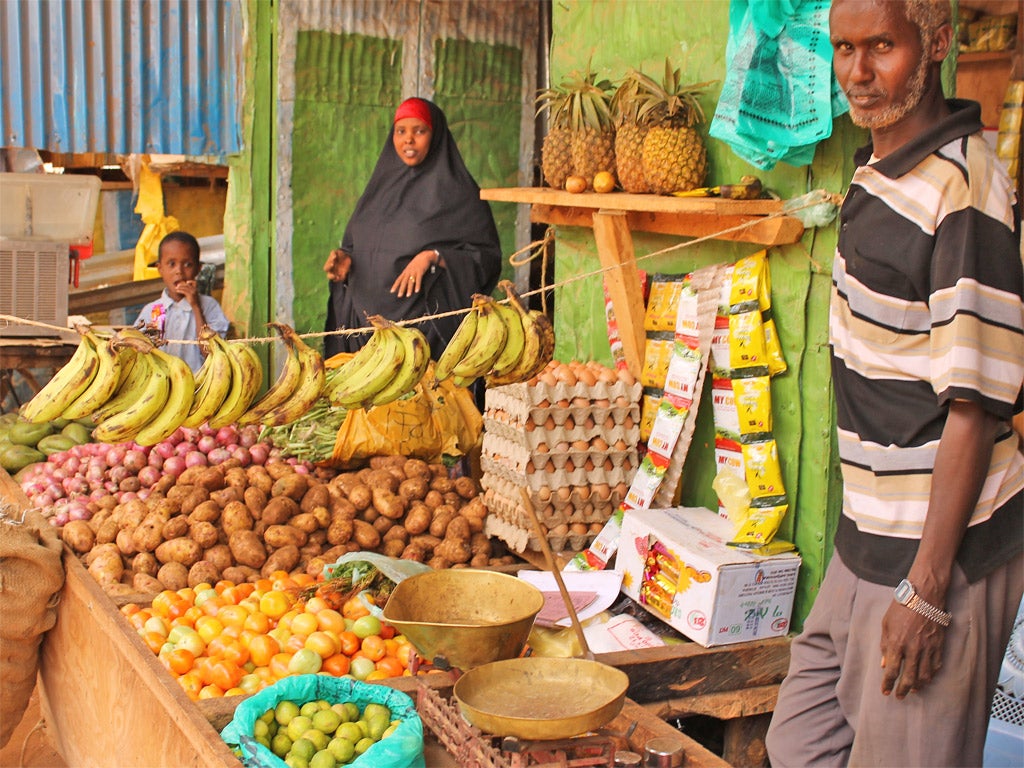
Which is why Save the Children is one of a host of charities now experimenting with a radical new way of distributing emergency food relief that doesn't trample all over the local economy. Under a scheme sponsored by the European Union, mass distribution of dried food imported from abroad is being replaced by vouchers which the starving and malnourished can then redeem at stores run by local traders.
Save the Children has pioneered the use of vouchers in both Wajir and Lake Turkana. Instead of handing out large amounts of dried rice, beans, pulses and cooking oil all at once from a regional distribution point – often forcing already impoverished families to hire transportation for the trip back home – local merchants are encouraged to bring fresh meat, milk and vegetables to sell in local marketplaces. Traders who agree to handle the vouchers are given a handling fee and cash is thus injected into the local economy.
"When people know they have to supply a certain amount of meat or milk a month, they invest in their businesses and you create a market," explains Miss Fitzgibbon, who manages Save the Children's voucher scheme in Kenya. "They also invest in their animals, buying feed and vaccinating them. Those spending the vouchers meanwhile get the food they need, when they need it. There's no more rugby-scrum jostling and swapping at the distribution to find what they need."
So far the results look positive. Research on areas where they are in existence shows food tends to last longer and the nutritional health of those receiving the aid is often better.
And even in the middle of a drought, those markets that used vouchers found business continued. In September, long before the rains had come, 2,682 quality goats and 14 male camels were slaughtered in Wajir to provide the three kilograms of meat that are given out to voucher recipients. Much livestock had died out in the area because of the drought but traders from outside were willing to bring in new stock as long as they could find a market to sell them in.
A similar voucher scheme is being trialled by Save the Children and other charities in Dadaab, the sprawling complex south of Wajir that has the dubious title of being the world's largest refugee camp. Many of the estimated 400,000 people living in Dadaab have spent two decades entirely reliant on food aid. Banned from working in Kenya, they could do little more than wait for the food lorries.
Mass food aid distribution meanwhile did little to stimulate the local economy for those living near the camp. Under the new scheme, mothers with children aged six to 12 months are given vouchers to buy fresh fruit and vegetables from local traders operating inside the camps. The idea is to stop children becoming malnourished in the first place, as well as provide something for the local economy. Shops that once had little more than dried goods and tinned products, now bustle with fresh produce brought in from outside the camp, some from as far afield as the Kenyan Highlands.
Arfon Yussuf Abdi, a grandmother who frequents one of the shops in Dadaab, told Save the Children that she was worried her grandchildren weren't getting the proper vitamins and minerals. But now that she has access to fresh kale her grandchildren are much healthier.
"If there was no voucher project," she said, "I wouldn't be able to buy this." As it is, she can, and her grandchildren have been spared the characteristic stunting common in malnourished children. A combination of charitable giving and a more intelligent use of the market are now saving and changing lives even in the most challenging places in Africa.
Appeal partners: Who we're supporting
Save the Children
Save the Children works in 120 countries, including the UK. They save children's lives, fight for their rights and help them fulfil their potential. Save the Children's vital work reaches more than 8 million children each year - keeping them alive, getting them into school and protecting them from harm. www.savethechildren.org.uk
The Children's Society
The Children's Society provides vital support to vulnerable children and young people in England, including those who have run away from home. Many have experienced neglect, isolation or abuse, and all they want is a safe and happy home. Their project staff provide essential support to desperate children who have no-one else to turn to.
Rainbow Trust Children's Charity
Rainbow Trust Children's Charity provides emotional and practical support for families who have a child with a life threatening or terminal illness. For families living with a child who is going to die, Rainbow Trust is the support they wished they never had to turn to, but struggle to cope without.
At The Independent we believe that these organisations can make a big difference to changing many children's lives.
CLICK HERE TO DONATE NOW.
Join our commenting forum
Join thought-provoking conversations, follow other Independent readers and see their replies
Comments