It's a mad, mad world: The 'freakonomists' are back
They're the number-crunchers who turned statistics into a global bestseller. Now the 'freakonomists' are back, with more off-the-wall insights. Sean O'Grady explains
Economists have occasionally tried, and usually failed, to make the "dismal science" fun – and popular.
Few have succeeded in meeting an untapped demand for comprehensible social science as comprehensively as Steven Levitt and Stephen Dubner. Their first book, Freakonomics, was a bestseller. Now the "freakquel", SuperFreaknomics poses yet more questions and offers the usual challenging answers. But have the freakonomists overreached themselves? Let's take a look...
How is a prostitute like a department-store Santa?
This is actually quite simple to answer – they both take advantage of big seasonal "spikes" in demand. So not quite as kinky as your imagination might have led to you to believe. The same is also true of other seasonal workers, such as potato pickers, soap stars doing panto and comics at Butlins. So far, so obvious. But how do prostitutes enjoy such a bonus? Apparently they have more cause than most to celebrate the Fourth of July holiday. As Levitt and Dubner explain, for many Americans "catching up with Aunt Ida over lemonade isn't quite stimulating enough" and the demand for street prostitutes throughout the States soars at this time. Thus, as all economics textbooks predict, such an increase in demand will push the price up, depending on how supply responds. Supply in this case means women who steer clear of prostitution for most of the year but who find the rise in the tariffs for paid sex irresistible – "like realtors during a housing boom, they see the chance to cash in and jump at it." In London the police are already braced for a surge in people trafficking to cope with the likely boost to demand for paid sex that will arrive with the 2012 Olympics. To a social scientist that means an interesting race between an increase in demand and an increase in supply. Britain's sex industry is due for some interesting economic times.
What's the best way to catch a terrorist?
Bankers may have a poor reputation right now, but they could be better than most of our plods and spooks at catching terrorists. This is because one British banker has worked out that the latest crop of al-Qa'ida-inspired suicidalists have quite peculiar banking habits. They tend to deposit large sums in cash at a branch of a major bank, and then withdraw fairly small amounts, also in cash, at irregular intervals. They tend not to have weekly or monthly pay credits, nor many direct debits. They don't bother with savings accounts and, for obvious reasons, don't think life assurance policies are much of an investment (given that life policies traditionally do not pay out if you kill yourself). Other powerful drivers are a Muslim first and second name but, as the authors point out, that is a poor guide to making arrests. Rummaging through billions of bank records with a powerful algorithm gives a much better result. However, it can only be a matter of time before a copy of SuperFreakonomics makes its way into the hands of Osama bin Laden, and the order goes out from a cave in AfPak for all holy warriors to take out a policy with the Norwich Union just to disguise their intentions.
Did TV cause a rise in crime?
The first edition of Freakonomics made the controversial claim that the decline in the crime rate in 1990s America was down to the legislation of abortion after the Supreme Court's famous Roe v Wade judgement in 1973. In other words, the underclass that was previously responsible for spawning a generation of criminality was no longer reproducing in quite such large numbers, and thus the criminals of the future were not even being born by the later 1970s and 1980s. Even if true, critics felt that this was freaknomics shading into the much less fun world of eugenics.
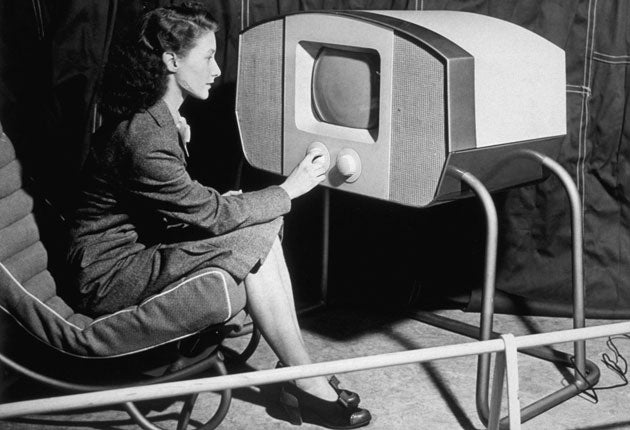
Less controversially, and even less categorically clear, is the research that links the rise in crime with the spread of television across the US, which was staggered over the 1940s and 1950s and thus offers the social scientist a rare opportunity to observe human behaviour with a "control" sample. Yes, for every extra year a young American was exposed to TV in his first 15 years, there is a 4 per cent rise in the number of property-related crimes later in life, and a 2 per cent rise in violent crime arrests. But the freakonomists are at a loss to say why this should be; the biggest effect is among those who watched TV from birth to age four – little of it violent. However, anyone who has a second look at the sadism, mutilation and torture see in the average Tom and Jerry cartoon might beg to differ.
How can we solve global warming?
This probably marks the outer limits of freakonomics – the stratosphere. Freakonomics is probably right to stress the way that technology usually comes up with a "fix" to solve human problems. For example, 100 years ago man's dependence on the horse and the generation of so much muck threatened an environmental catastrophe of a particularly smelly kind. The internal combustion engine, relatively clean and convenient, saved us once. What could save us from global warming may also pose a long term threat. The answer that the geeks offer is an 18-mile-long rubber hose pumping liquefied sulphur dioxide into the stratosphere. This, you might say, is where freakonomics starts getting a bit above itself...
'SuperFreaknomics' is published by Penguin on 20 October, £20. To order a copy at the special price of £18, including postage and packing, call Independent Books Direct on 08430 600030
Join our commenting forum
Join thought-provoking conversations, follow other Independent readers and see their replies
Comments
Bookmark popover
Removed from bookmarks