Goldman bankers get rich betting on food prices as millions starve
Bank criticised for making £250m after destructive spikes in global food market
Goldman Sachs made more than a quarter of a billion pounds last year by speculating on food staples, reigniting the controversy over banks profiting from the global food crisis.
Less than a week after the Bank of England Governor, Sir Mervyn King, slapped Goldman Sachs on the wrist for attempting to save its UK employees millions of pounds in tax by delaying bonus payments, the investment bank faces fresh accusations that it is contributing to rising food prices.
Goldman made about $400m (£251m) in 2012 from investing its clients' money in a range of "soft commodities", from wheat and maize to coffee and sugar, according to an analysis for The Independent by the World Development Movement (WDM).
This contributed to the 68 per cent jump in profits for 2012 Goldman announced last week, allowing it to push up the average pay and bonus package of its bankers to £250,000.
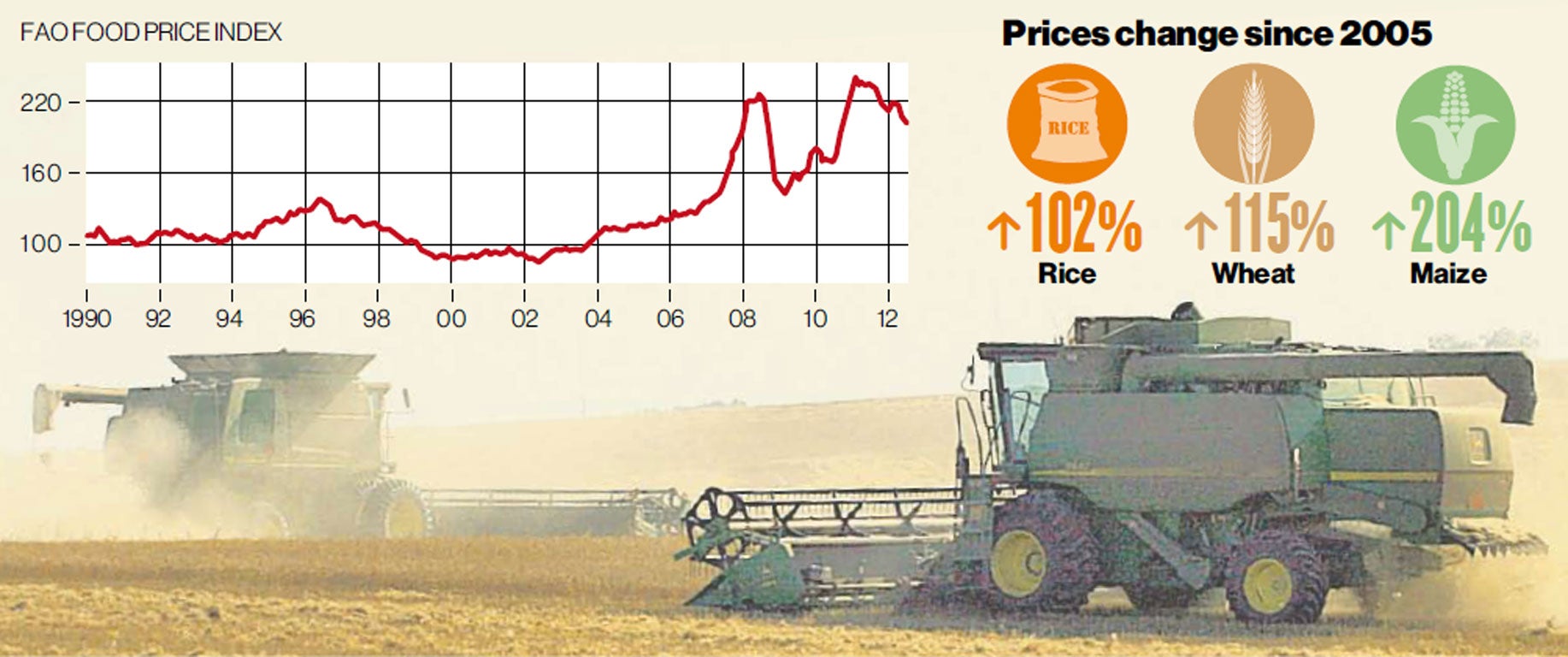
The extent of Goldman's food speculation can be revealed after the UN warned that the world could face a major hunger crisis in 2013, after failed harvests in the US and Ukraine. Food prices surged last summer, with cereal prices hitting a record high in September.
Christine Haigh of the WDM said: "While nearly a billion people go hungry, Goldman Sachs bankers are feeding their own bonuses by betting on the price of food. Financial speculation is fuelling food price spikes and Goldman Sachs is the No 1 culprit."
Goldman makes its "food speculation" revenues by setting up and managing commodity funds that invest money from pension funds, insurance companies and wealthy individuals in return for fees and commissions. The firm invented these kinds of funds and continues to dominate the market, together with Barclays and Morgan Stanley. Swiss trading giant Glencore hit the headlines in August when its head of agriculture proclaimed that the US drought will be "good for Glencore".
Goldman has always shrouded the breakdown of its profits in secrecy, but a WDM commodities derivatives expert has calculated the revenues it believes the bank makes from food speculation through an analysis of its recent results and market information.
The bank declined to comment on WDM's estimate or the impact of speculation on food prices. But Goldman Sachs is known to be advising clients that corn is one of its top trading tips for 2013, after the worst drought in US history whittled stockpiles down to their lowest level since 1974.
Although global food prices averaged seven per cent below 2011's record, prices in 2012 were 16 per cent higher than in 2010 and 2.3 times as expensive as a decade earlier, even after adjusting for inflation, according to the United Nations.
British consumers have not been spared the impact of rising food costs – prices have, on average, risen by nearly 40 per cent in the past seven years.
Rob Nash, Oxfam's private sector adviser, said: "Oxfam is very concerned about food speculation, especially in the light of increasingly extreme weather conditions which can reduce supply suddenly and severely deplete stocks. The last thing we need is for that volatility to be exacerbated by speculation and exploited for short-term profit."
Banks and hedge funds typically argue that speculation makes little or no difference to food prices and point out that no definitive link has been proved. But there is a growing consensus that the influx of cash into food has increased demand so much that it has inevitably pushed up the prices.
Since deregulation allowed the creation of the commodity funds that allowed many speculators to invest in agriculture for the first time, institutions such as Goldman have channelled more than $200bn of cash into the area. This investment has coincided with a significant and sustained rise in global food prices.
Join our commenting forum
Join thought-provoking conversations, follow other Independent readers and see their replies
Comments