Britain's children left behind in languages by the time they're three
At least 11 countries have lowered the age at which children start language lessons, says study
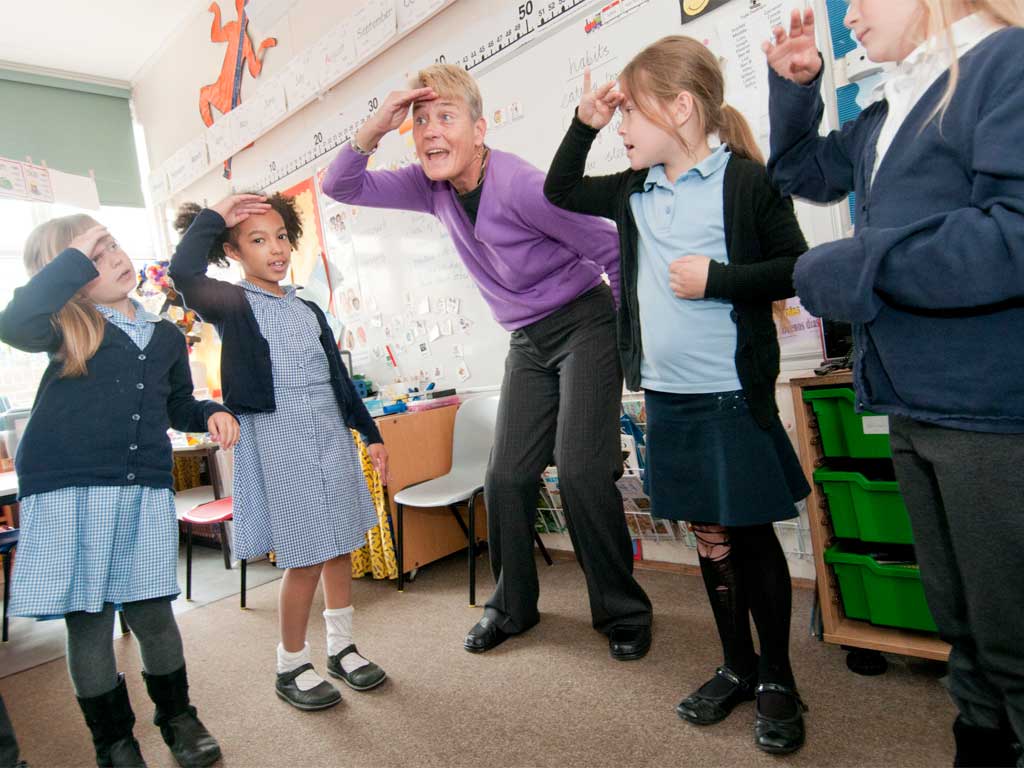
Growing numbers of pupils around the world are learning a foreign language at an earlier age – with some starting as three-year-olds, says a major study released today.
At least 11 countries have lowered the age at which children start learning a second language in the past decade, with two of them – Spain and Belgium – introducing the subject for pupils aged three.
The first bilingual state primary school in England – St Paul's in Brighton – is also introducing lessons in Spanish for three-year-olds.
The study, by language experts Teresa Tinsley and Therese Comfort for the education trust CfBT, offers a comprehensive insight into language teaching throughout the world. It coincides with the decision by Education Secretary Michael Gove, in his national curriculum review on Monday, to introduce compulsory language lessons for all children from the age of seven in September 2014. The report reveals that of 21 countries in the Organisation for Economic Co-operation and Development, England devotes the least time to teaching languages to nine to 11-year-olds.
Only 3 per cent of curriculum time is devoted to the subject compared with 25 per cent in Luxembourg and 13 per cent in Greece.
Countries where language learning is still voluntary in primary schools consist of England, Wales, Northern Ireland, Australia, Ireland and the United States, the report says.
Language teaching is even on the decline in the US. In 2008 the US Education Department reported that the proportion of elementary (primary) schools offering foreign-language instruction had dropped to one quarter of all elementary schools. The Obama-led government has sought to redress this but education policy in the US is highly decentralised. "English-speaking countries dedicate the least amount of time to foreign-language learning," says the report. They are, it adds, "lagging behind the rest of the world".
In addition to devoting the least amount of time to the subject, they also had the lowest expectations of their pupils.
But the report also said: "There are greater challenges in implementing primary languages for policy makers in English-speaking countries than there are in the rest of the world."
In English-speaking countries, it adds, "there is no one language which everyone wants to learn".
it is also often argued in the UK that learning another language is unnecessary because English is the universal language of business. However, the report concludes: "The assumption that English speakers do not need to learn other languages because others are learning ours is damaging to our economy."
The report does not come up with an optimum age for learning a foreign language but says an early start is essential. "Unless language learning starts early, it is argued, learners will be unable to take advantage of the natural capacity young children have to acquire language instinctively," it says.
Case study: Holidays in Spain the inspiration for bilingual primary
It all starts in the nursery school with Spanish lessons for three-year-olds. St Paul's Church of England Primary School in Brighton is the country's first bilingual state primary. The 235-pupil school chose Spanish because it was the language its pupils were most likely to come across on their holidays.
Parents are being attracted to the school because of its bilingualism and its headteacher, Linda Dupret, has been appointed to the panel set up by Michael Gove, the Education Secretary, to review the curriculum.
"We're one of the worst countries in the world for speaking foreign languages," she said. "We're doing them [the pupils] a disservice if we don't teach them another language."
The children's enthusiasm for Spanish is nurtured by practising the language in other lessons. Six- and eight-year-olds receive a weekly Spanish lesson and use Spanish vocabulary in art, music and PE.
The ease with which the children take to a second language at such an early age seems to spur their enthusiasm for other subjects.
Where St Paul's has started, others are likely to follow. In Brighton, there is a proposal for another bilingual primary school – which will be opened as a free school later this year.
Join our commenting forum
Join thought-provoking conversations, follow other Independent readers and see their replies
Comments