How to counter summer holiday 'unlearning'
It has been a problem baffling education experts for years. How do you stop youngsters “unlearning” what they have been taught in schools during the long summer holidays?
The classroom may be out for summer but what they have been taught seems to disappear, too.
Research shows as many as one in three children can fall behind as a result of a seven-week break from the classroom.
Previous attempts to solve the problem – such as the introduction of a five-term year with equal breaks between terms – have floundered mainly because councils could not agree the necessary solution.
Now, however, an infants’ school in East Sussex may just have come up with a more common sense solution.
A new “fun homework” scheme for youngsters during the summer holidays has cut the learning loss of pupils by more than half in a year and is being studied by other schools.
When Christine Terry, head of Grays’ infant and nursery school in Newhaven, arrived six years ago, the extent of the summer learning loss soon began to perplex her.
As a result, she introduced assessments both at the end of the summer term and beginning of the autumn.
Children were marked with an amber light if their standards in reading, writing and maths had stayed the same, a green light if they had improved and a red light if they fallen behind.
“We had a whole column of red staring us in the face,” she said.
The assessments showed that that youngsters were dropping behind by as much as two to four national curriculum points as a result of the break.
In plain English, four national curriculum points amounts to what you would expect a child to learn in a year.
“We definitely did have an issue,” she said. “It could be that children didn’t pick up a single book during the long summer break.”
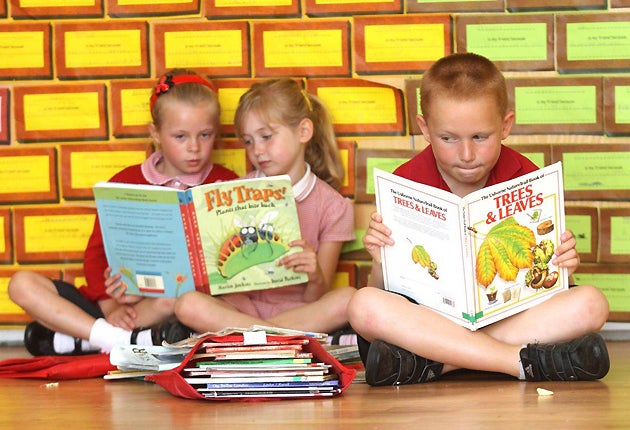
As a result, every child is now sent home at the end of the summer term with a book bag stuffed with five recommended books to read – and parents are encouraged to read to them.
“Every single day during the school year they were doing phonics – and now suddenly there was none,” she said. “It does make a massive difference.”
The school also set up competitions including maths puzzles and science quizzes which youngsters could do online. It also opens for a couple of days for those who do not have access to a computer to come in and do the puzzles.
Children are also given a scrapbook to complete describing what they have done during their summer break.
Finally, a virtual classroom is also set up online showing youngsters what their new classroom will look like in September.
“We all know the pressure of change is another thing that can affect children and – if they worry – it can affect their learning,” said Mrs Terry.
“They can have forgotten what they’ve learnt because they’re not feeling comfortable in the new classroom. This will reduce that.”
The proof of the pudding would seem to be in the eating.
In 2008, the year before it was introduced, 16 out of 60 pupils had slipped back in writing, 22 in reading and 12 in maths. The following year the figures were eight, seven and five respectively.
What is happening at Grays’ infant and junior school today could be happening elsewhere tomorrow as well.
“Several headteachers have contacted me about this with a view to doing it themselves,” said Mrs Terry.
Join our commenting forum
Join thought-provoking conversations, follow other Independent readers and see their replies
Comments
Bookmark popover
Removed from bookmarks