Michael Gove: Get set for new age of exam failures
Education Secretary says GCSEs and A-levels to be made harder
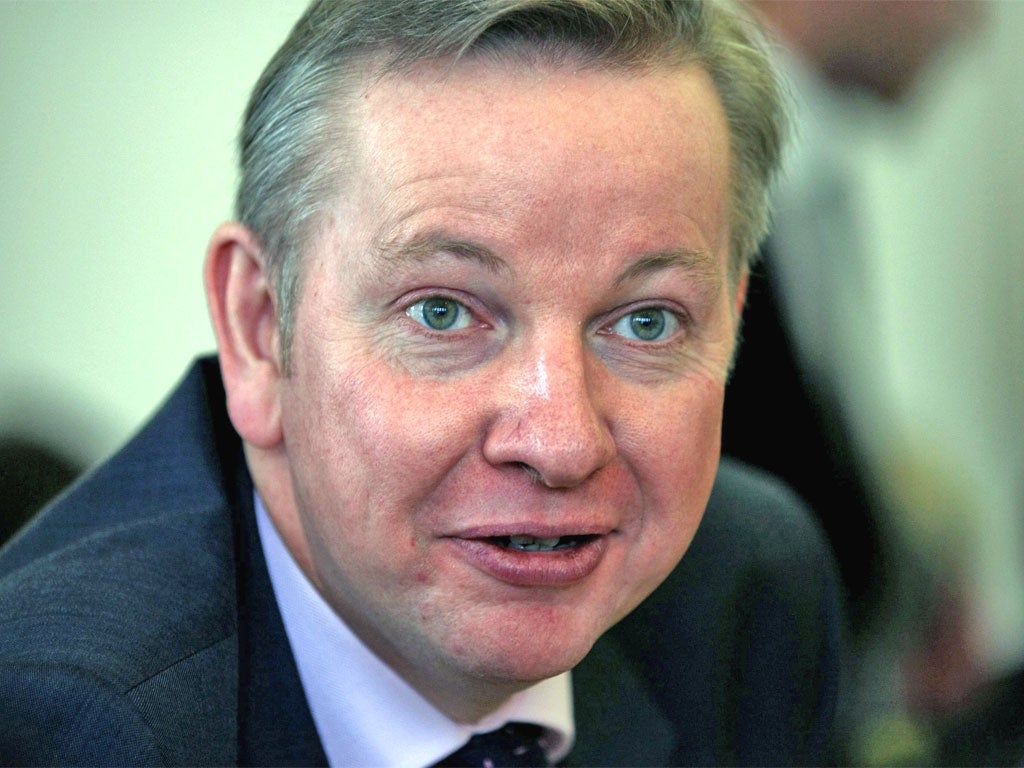
More teenagers will fail their GCSEs and A-levels after a radical toughening of the examinations system, the Education Secretary declared yesterday.
Michael Gove intends to make exam questions harder in a drive to restore confidence in the system and improve standards, which will see pass rates fall for the first time in years. He also wants university academics more involved in setting A-level questions to give pupils greater scope to show their talents.
At GCSE level, coursework will be phased out and more emphasis placed on written, end-of-year tests. Mr Gove is also removing scores of vocational qualifications from exam league tables because he believes schools have been using them to improve their rankings. "There is a tendency to be complacent about our performance and believe our schools are improving year on year," the minister said. "They are, but they are not improving anything like as fast as schools in other countries.
"Education is like trying to run up a down escalator. There are some uncomfortable decisions that will have to be taken. There will be years when, because we are going to make exams tougher, the number of people passing will fall. There are headteachers who have been peddling the wrong sort of approach to teaching for too long, who are going to lose their jobs."
A-level results have improved every year for the past 27 years, and more than a quarter of all passes are now at grade A. Overall GCSE pass rates have hovered around 98 per cent for years, but the number of passes at grades A* to C has risen steadily. However, Britain is sliding down international league tables which measure English, maths and science performance.
The full impact of Mr Gove's shake-up is unlikely to be felt for three or four years as the changes embed themselves in the system. But there were signs last summer that the rise in pass rates was slowing, possibly as a result of moves by the previous Labour government to stretch candidates.
The Education Secretary's assertion that exam pass rates would fall was immediately welcomed by a leading academic researcher. Professor Alan Smithers, of the Centre for Education and Employment at Buckingham University, said: "I actually think that would be healthy. For the past 15 years, everybody in education has been judged by rising scores. At the same time, there have been complaints from universities that young people – when they get there – do not have what [the universities] are looking for."
However, teaching unions attacked Mr Gove for portraying the education system as "failing". "We are very concerned about the negative image ministers are giving of the education service and how it seems that one criticism follows the other," said Brian Lightman, head of the Association of School and College Leaders. "School leaders are more demoralised than I've ever known, and this includes the heads of successful schools. We're absolutely committed to raising standards."
Mr Gove revealed his plans as the boss of a leading exam board told MPs it was considering strict new curbs on examiners after claims that teachers were tipped off in advance about pupils' exam questions. Each year, thousands of teachers attend seminars organised by exam boards and pick up tips on what examiners are looking when marking students' papers.
Mark Dawe, head of the Oxford, Cambridge and Royal Society of Arts (OCR) board, appeared before the Commons Education Select Committee, which is holding an inquiry into exam reform. He told MPs: "We're looking at whether anyone... involved in question-setting in future can't be involved in seminars. There are about 13,000 examiners and you've probably got one or two [who create a problem]. You deal with it rapidly and sack them."
Mr Gove also made a thinly veiled attack on the appointment of Professor Les Ebdon as the Government's new university access "tsar". During an interview for the job at the Office for Fair Access, Mr Ebdon told MPs he was prepared to use the "nuclear option" against elite universities which failed to raise their intakes of poorer students.
Mr Gove acknowledged that the selection of Mr Ebdon, which was ratified by the Business Secretary, Vince Cable, was "Vince's decision". But he said one only had to be present in the Commons on Monday, when Mr Cable was called upon to justify his choice, to know that "the feeling of backbenchers ran high".
"My own view is that the most important thing you need to do in advancing social mobility is to deal with the failure in the school system," Mr Gove said.
Nothing to gain from shackling press, says Gove
Michael Gove warned about the threat to press freedom from the Leveson Inquiry yesterday.
Mr Gove, a former journalist with the Rupert Murdoch-owned Times newspaper, added: "We have laws against the interception of messages, we have laws against bribery, we have laws against journalists like any other profession going rogue... We have everything to lose and nothing to gain from fettering the press."
He urged that existing laws should be used rather than making a blanket attempt to fetter the press. His comments appear to be coded criticism of the wisdom of David Cameron's decision to set up the Leveson Inquiry in the first place.
Richard Garner
Join our commenting forum
Join thought-provoking conversations, follow other Independent readers and see their replies
Comments