Why we should look east for lessons in education
Michael Gove's review of school standards contrasts the English system with those of successful countries such as Singapore and China, writes Richard Garner
The phrase "Go West Young Man" has lent itself to the English language for the past 160 years. But Education Secretary Michael Gove appears likely to ignore that advice as he looks to all parts east for inspiration on improving school standards in the UK.
He will today publish evidence from his independent review body on the national curriculum comparing the English system with the rest of the world. Mr Gove is aiming to make use other effective methods to provide what his officials call a "gold standard" curriculum here.
The report, by Tim Oates, director of research at Cambridge Assessment, will highlight places like Singapore and Hong Kong, which are at the top of international league tables. Singapore, for instance, insists its pupils learn their times tables by the age of nine – while Hong Kong teaches pupils about animal and plant cells by the age of 10 in science lessons instead of having to wait until secondary school. And the report does not just look to the Far East for inspiration – parts of Eastern Europe features in the list of countries to be marvelled at, too. Poland puts greater emphasis on classic books on its reading list for literature – the work of Homer and Sophocles as opposed to the three most popular books in GCSE exams, Of Mice and Men, Lord of the Flies and To Kill a Mockingbird. A glance at the international league tables for reading and maths standards shows evidence Mr Gove could cast his eye over other eastern countries, too.
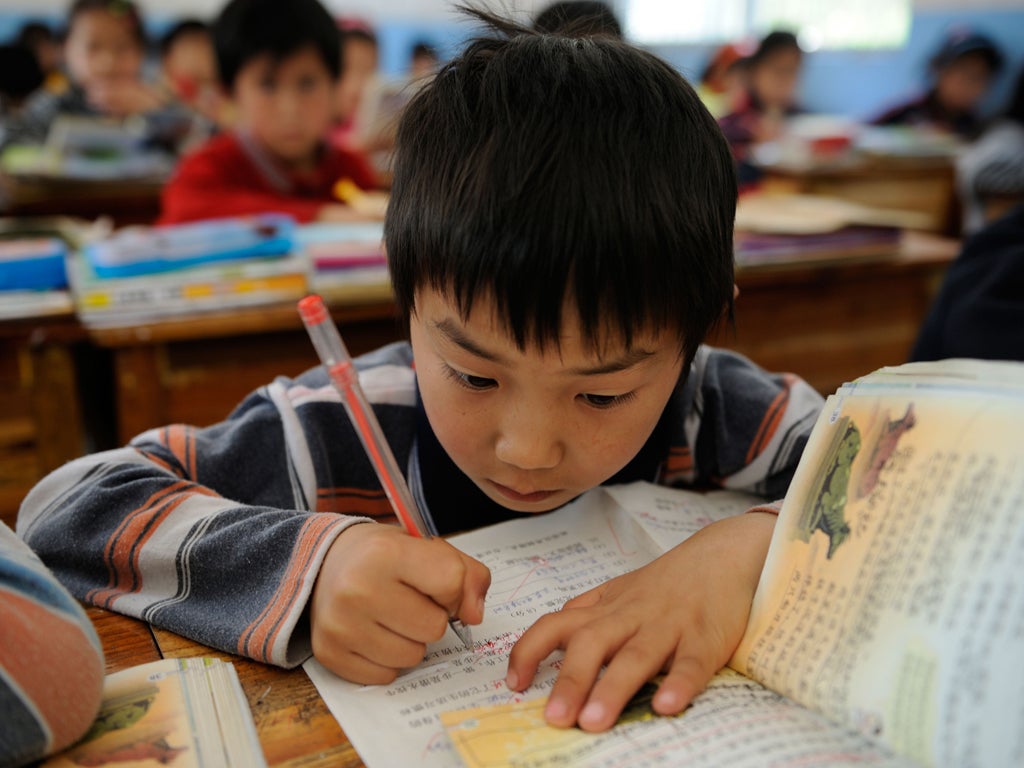
The last Pisa (Programme for International Student Assessment) study in 2009 is topped by Shanghai, the first time China had entered schools for the survey. In Shanghai, pupils spend less time in extra-curricular activities such as sport, concentrating instead on preparing themselves for exams in the basics.
Then there is Finland. It has no league tables or targets; it instead relies on its teachers to prepare their lessons. Teaching there is the most sought-after career in the country.
But any attempt to "easternise" the curriculum over here is likely to have its opponents. "There are advantages to using international comparison data and it is right to view the curriculum in an international context but this must be put into perspective," said Brian Lightman, general secretary of the Association of School and College Leaders. "We know the danger of putting too much stock in cherry-picked international statistics that do not factor in cultural context. The national curriculum must be right for pupils in this country, not a 'me-too' model based on what is done elsewhere."
A second part of Mr Gove's announcement – that the curriculum reforms are being put back for a further year to allow a greater debate on the shape they will take – is being welcomed by secondary heads. "It is encouraging to hear the Department for Education recognise that rushed and poorly debated curriculum change creates chaos for schools by allowing them too little time to prepare," Mr Lightman said.
Mr Gove said his review will be completed by the end of next year – rather than January – and will not be implemented until 2014. This is being interpreted by some as evidence that the review group has not come up with the solutions he would like, including a more traditional 1950s-style curriculum in its first drafts – a claim denied in DfE circles.
Leading by example: What the world can teach Britain
From Shanghai: Top for reading and maths in international league tables. Shanghai schools concentrate less on extra-curricular activities such as sport and spend more time preparing pupils for exams in the core subjects. Critics say we spend too much time on tests but we do try to insist pupils do two hours of physical activity – sport or physical education – a week.
From China generally: Children start formal primary schooling at the age of six or seven (in line with most European countries) instead of aged five as in England. The education budget was also increased by 9 per cent last year, compared with being protected from overall cuts and modest growth of about 1 per cent in England
From Singapore: Children learn their times tables and division in maths by the time they are nine. In England, this is a target for Key Stage Two, which covers seven to 11-year-olds. Secondary school pupils are taught about quadratic equations at 13 instead of 14 as in England.
From Finland: Teaching is the most sought-after profession with 16 candidates for every vacancy on a teacher-training course. All teachers have to have a Master's degree – thus enhancing the status of the profession. In England you can qualify with a third degree pass although Education Secretary Michael Gove is planning to tighten this to just those with 2:2 passes or better.
From Hong Kong: Children in primary schools are taught about plant and animal cells in science lessons at the age of 10 instead of waiting until they start at secondary school, as the system works in England.
From Poland: Reading lists concentrate more on the classics from the likes of Homer, Sophocles and Shakespeare. In GCSE exams, 90 per cent of the answers are based on the same three books – Of Mice and Men, Lord of the Flies and To Kill a Mockingbird. Shakespeare, though, is a compulsory part of the national curriculum.
Bottom of the class: how Britain scores
Reading
1. Shanghai-China 556
2. Korea 539
3. Finland 536
4. Hong-Kong 533
5. Singapore 526
...25. UK 494
Maths
1. Shanghai-China 600
2. Singapore 562
3. Hong Kong 555
4. Korea 546
5. Chinese Taipei 543
...28. UK 492
Join our commenting forum
Join thought-provoking conversations, follow other Independent readers and see their replies
Comments