American owner of McDonald's of higher education gets foothold in UK market
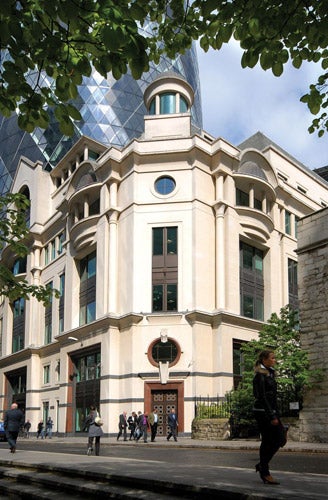
This summer a huge, private higher-education company in the US established a foothold in the British market. The £303m takeover of the firm that owns BPP law school in London by Apollo Global was the biggest buyout of a public company in the UK since the collapse of Lehman Brothers in September last year, and could have equally seismic effects, bringing new competition to legal training and the wider university world.
"It's very significant," says David Willetts, the Conservative higher education spokesman. "If you get a big organisation with lots of capital behind it and lots of skills in running educational institutions, they have the potential to expand and the potential to develop alternative models that give British students a greater choice.
"This is a big step towards greater diversity in British higher education – and, in principle, it's a good thing."
The significance of the takeover is that Apollo owns the University of Phoenix, the largest for-profit university in the USA with more than 400,000 students and ambitious plans to expand globally. Phoenix has been spooking American and British universities for years because it educates its students, who are working adults taking vocational courses, relatively cheaply. It packs them in and makes a great deal of money, which is why it is known as the McDonald's of the university world.
Its website declares: "[Our] students are hard-working spouses, mothers, fathers, grandparents, executives, soldiers, nurses and teachers, all striving to better themselves."
The parent company, Apollo, has an annual revenue of around £1.9bn and has already expanded into Mexico, the Netherlands and Germany. Now it is set to make its mark in Britain. Observers expect it to use its acquisition of BPP to set up business education courses in addition to the legal training already provided, as well as establish a significant British and pan-European platform, and expand advanced degrees and cross-border educational opportunities via online learning.
BPP provides a range of well regarded legal training programmes and is about to begin a tailor-made MBA for Simmons & Simmons, the City law firm.
This latest development chimes with the Conservatives' policy to see a freeing-up in the market for education at all levels as well as an influx of private providers.
"The future is going to be a much greater mix," says Willetts. "After all, if British universities want to create international links and develop a stronger presence abroad, they have to accept that organisations overseas are going to want to set up here. It's very hard to stop, and it's probably desirable."
Professor Mike Thorne, an expert on distance learning and the vice-chancellor of Anglia Ruskin University, who has been watching the growth of for-profit universities over the past decade, does not believe British universities have much to fear, however. He says that Apollo, despite its might, has found it difficult to establish itself seriously outside the United States.
"The most go-ahead universities in Britain are already in partnership with private providers, like the University of Liverpool which is tapping into the Chinese market through Laureate, its e-learning partner," he says.
"At the moment these companies have remained at the margins. You have to ask what they are offering the British marketplace. Their problem is that they have to trade off a largely unknown brand.
"The over-the-counter price for a [first] degree in England is £3,500, so they have to offer something for less than that for it to be of interest to most students here – and [in return] British students get an unknown brand."
When it comes to postgraduate programmes, Apollo could have more luck, Thorne believes, because the company may be able to undercut some expensive British universities – and give better customer care – though, again, the company would be grappling with the problem that it has an unknown name.
The one area in which it might be successful, he thinks, is overseas students who want to study in London. "That will be their marketplace," he says. "The students will get a UK degree and they're laughing. They will have had the chance to study in London and will have something to show for it."
All this could change, of course, if the cap on tuition fees were to be lifted following the review that will be set up this autumn and report next year after the general election. If, and when, that happens, a private provider like BPP could find itself in a more attractive position, and be able to undercut the competition and to make money.
Nigel Savage, chief executive of the College of Law, a competitor of BPP (both have won their own degree-awarding powers and both provide solicitors' training for big City law firms), says that the takeover of BPP will have implications that will be felt far beyond law schools.
"Universities have got a lot to learn from the private sector," he says. "I would not be surprised to see an organisation like Apollo or [other private providers, such as] Kaplan or Pearson actually acquiring an English university."
Kaplan, which is owned by The Washington Post, recently bought Holborn tutors, a small legal training company, and entered into a joint venture with Nottingham Trent University's law department.
The company also has a college at the University of Essex offering online foundation degrees in business studies, financial services and criminal justice. Students can study anywhere – at work, at home, or on the move – and can tailor the pace of study to suit their needs.
Anna Fazackerley, head of education at the think-tank Policy Exchange, says this is just the start.
"Providers like Kaplan offer a potentially exciting new model for higher education," she says. "Their distance-learning courses concentrate on adults who would not otherwise go to university. But,crucially, they are very focused on the student experience. They have student advisers who track students' progress."
Rebutting those who say that private providers are only interested in a cut-price education, she says that this ignores the evidence. Policy Exchange has called on the Government to allow private companies to take over all or part of an institution that is failing. This is particularly apposite now as cuts begin to bite and universities struggle to survive in the recession.
Join our commenting forum
Join thought-provoking conversations, follow other Independent readers and see their replies
Comments