The science of journalism: Reporting on matters of life and death
The latest Masters from one of the UK's premier journalism schools aims to prepare students for reporting on issues that are a matter of life and death. Caitlin Davies reports

Sign up for a full digest of all the best opinions of the week in our Voices Dispatches email
Sign up to our free weekly Voices newsletter
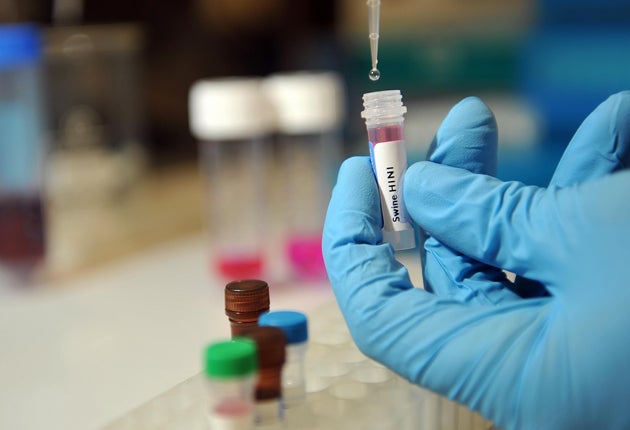
Confused about swine flu? Excited about a new cancer breakthrough? So who do you turn to when you want to get the latest facts: politicians, scientists, doctors or journalists?
Every day, we're bombarded with stories of miracle cures and deadly health scares – on TV, radio, online and in newspapers. Most of our information comes from science journalists, yet do they really know what they're talking about?
Ben Goldacre, the author of Bad Science, has accused science journalists of posing "a serious danger to public health" by writing inaccurate, misleading reports. After all, they're writing about things that affect us all, whether food, climate change or childhood immunisations.
However, Pallab Ghosh, president of the World Federation of Science Journalists, believes that good science journalism can change the world for the better. He delivered the opening address at last week's sixth World Conference of Science Journalists, held in London. In the past, he said, science journalists "were the geeks of the newsroom. On national newspapers, we were given the fun stories to do to provide light relief to the serious coverage of politics and foreign affairs. I think that's now changed."
Today, science journalists cover more grown-up stories, such as stem cell research. And it's the journalist's job to scrutinise and challenge the information emerging from governments, corporations and scientific institutions. No one else, says Ghosh, is able to do this.
But just how well are scientist journalists doing their job? "Personally I'm horrified by some of the irresponsible coverage," says the broadcaster and scientist Connie St Louis. "I find a ridiculous overblown report in a newspaper every morning, yet people look to us to know what to do.
"There is an enormous public appetite for science stories because people want to know what's going on, but reports on medical breakthroughs can be very confusing. People go to their GP and say, why can't I have this drug?"
It is against this background that City University in London is launching a new MA in science journalism, for which St Louis is the course director. The idea is to raise the profession's standards and meet the needs of journalists reporting on science, health, environment, technology and food issues.
Tim Lang, professor of food policy at City University, points out that science journalists help to shape public opinion and reaction. Cases such as mad cow disease reveal a troublesome relationship between scientists, government and the food industry, and a journalist's job is to understand this.
According to the Association of British Science Writers, science is now a very trendy area in the media and a lot of young people want to become science writers.
But if you're tempted by a correspondence course, the association's advice is to forget it and save your money. Instead, it suggests looking at how much experience course tutors have of working in the media. In its booklet So You Want To Be A Science Writer? it says there are two things you really need to be a science journalist: talent and confidence.
City University's multimedia MA course is aimed at journalists who can understand science, rather than those with a science background. Students will learn how to get stories and how to interpret a research paper correctly. They will also be treated to masterclasses, and guest lecturers include Professor Steve Jones, head of the department of genetics at University College London, and science writer Simon Singh.
Students will study the legal, ethical and societal responsibilities of science reporting. They will also have the opportunity to visit Cern, the European organisation for nuclear research in Switzerland, attend science conventions and report on real stories such as the swine flu pandemic.
The MA, which starts in September, is a full-time programme lasting 12 months and costing £7,495 (for home and EU students) and £14,995 (for international students). Applicants must have a good second-class degree and relevant work experience in journalism.
But with the current economic climate, will an MA improve job prospects, or will it just add to students' already overwhelming piles of debt?
Some would argue that, such is the practical nature of journalism, an MA won't necessarily be of much use. "It is a difficult time for all journalists," agrees St Louis, "and we're not promising jobs at the end of it.
"But they will have had an excellent training. It's a great time to do a course because larger media organisations are cutting back on graduate training, and because in the future the market will free up again."
Subscribe to Independent Premium to bookmark this article
Want to bookmark your favourite articles and stories to read or reference later? Start your Independent Premium subscription today.
Join our commenting forum
Join thought-provoking conversations, follow other Independent readers and see their replies