'We're doing it the American way': Why college should raise their own funds
As the cuts bite, colleges should raise their own funds, says Michael Earley of Rose Bruford theatre school. Lucy Hodges meets the US-born principal who's bringing New World thinking to a quiet corner of Kent
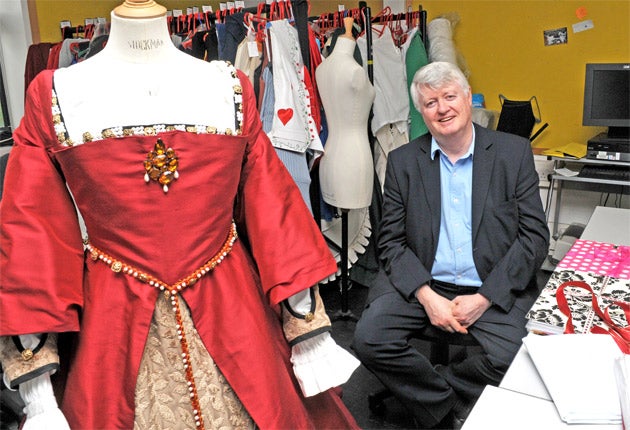
Sidcup was the place in Harold Pinter's The Caretaker that the tramp Davies was always hoping to go to sort himself out. It may not be everyone's idea of a cultural centre, let alone an international cultural centre specialising in theatre, but that is what it is destined to become. And the transformation of this suburban area will largely be down to Michael Earley, the fast-talking American principal of Rose Bruford College. He is bringing a big dose of New World thinking to this quiet corner of north Kent.
With a background in teaching theatre studies, first at Yale and then at New York University, Earley is convinced that the only way for British higher education to thrive at a time of deep cuts is to go out and rattle the can. The American approach of charging full-cost fees and raising money through philanthropy is the answer, he believes.
Conveniently for Earley, these tactics reflect what the Government wants. The Higher Education Minister, David Willetts, is keen to encourage more private funding of universities, so the entrepreneurial new boss of this drama school in Sidcup will find himself sought after by coalition government ministers, but not by those who believe that higher education should be largely funded by the state.
"I want to grow the business at Rose Bruford," he says. "I want to borrow the best aspects of the American system, which includes swathes of continuing education, weekend schools, short courses, must-have courses and need-to-know courses." Earley believes that vice-chancellors should have to bring in philanthropic income equal to three times their salaries each year, on the argument that if the boss doesn't set an example, then no one will. He has already exceeded his personal fund-raising target this year. His salary is £125,000 and three weeks ago he brought in £750,000, just like that. The money came from one donor, an alumnus of the college who was in the record business and then taught at the Open University, whom Earley had been cultivating for a while. "We invited him and other alumni to an event last year," he explains.
"He hadn't heard from the college in 30 years. He said he couldn't come, but he sent me a lovely letter and I started corresponding with him," Earley recalls. "Letters went back and forth. Then eventually he said he would like to make a donation to the college, to be used for bursaries. So, I went to see him in High Wycombe, where he lives.
"We had a lovely afternoon, listening to Wagner and chatting. By the end of it he said he would like to bequeath all his savings and investments, and his house, to the college. He had been in the first graduating class in 1953, and he said Rose Bruford changed his life... His love of poetry, verse, music and art was engendered by the course."
When it was set up in 1950, Rose Bruford was a radical kind of drama school, named after an actress, with a strong community-theatre ethos. Earley wants to take it back to those roots with his plan for a performing arts centre by the railway station in Sidcup that will serve both the college and the community. He has also established a partnership with the Unicorn Theatre to create a new Masters in theatre for young audiences, the first of its kind in Britain. Earley is trying to build up the postgraduate offerings and has decided that all the college's Masters degrees should be fully costed from this September. That means students pay what it costs to run the Masters programme; the taxpayer does not pick up any of the tab.
So, the one-year Masters courses at Rose Bruford cost £9,900 for domestic students and £16,000 for overseas students, which is a lot of money, but Earley thinks the market will bear it. "A lot of my competitors are following suit," he says. "We have had no trouble finding students. The Masters degrees are very professional and vocationally sound – we can say to someone that this will lead you to the right kind of job."
Earley is recruiting students energetically from abroad, particularly from the United States. He claims that Rose Bruford will be able to sign them up because it will be cheaper for Americans to take a degree in acting or stage management, sound or lighting in Sidcup than in the US. At Sidcup, the degrees are shorter and the fees lower. "And we can give a higher degree of prof-essional training here than most American universities can give," he says.
Under the banner of 'London's international drama school', the college will begin to advertise heavily in all the American theatre magazines from this November. The North American market has never before been exploited as Rose Bruford expects to. In addition, Earley has established an exchange relationship with Colombia College in Chicago, which has 800 students studying theatre. They will come to Sidcup for one term and study European approaches to theatre.
As a small college with only 670 full-time undergraduates, Rose Bruford cannot afford to set up an alumni fund-raising office as other universities have done. But it has created a vice principal for enterprise management, who will have a target to reach for the Government's alumni fund-raising scheme, and who will also begin an annual giving programme and an alumni giving campaign. Undergraduates should be asked to give, says Earley: "You have to get the student to see that the university is the making of their life." Students in Sidcup will certainly be receiving this message from their new principal.
The principal's story
Earley has a BA in English and Drama from Rutgers University in New Jersey, and studied as a graduate at the City University of New York
He was literary manager for several theatre companies in the US; taught at Smith College and at the Juilliard School in New York; director of the undergraduate theatre studies programme at Yale University. On moving to the UK he worked as drama editor at Methuen, where he published the hot young writers of the Eighties; worked as a BBC script editor, then produced plays on Radios 3 and 4; as professor of drama at Lincoln University, he was responsible for the new performing arts centre.
He is married to a Brit, and the couple have one son. His wife, Philippa, is a cultural historian who is writing a book on the history of the boudoir. "The reason I'm over here is that she couldn't stand America."
He is in the throes of writing a biography of the theatre director Edward Gordon Craig.
Join our commenting forum
Join thought-provoking conversations, follow other Independent readers and see their replies
Comments
Bookmark popover
Removed from bookmarks