Sports and arts feel pinch from toxic brand backlash
Public anger over bank bailouts and concern over binge drinking could spell trouble for the sponsorship industry, writes Richard Gillis

For free real time breaking news alerts sent straight to your inbox sign up to our breaking news emails
Sign up to our free breaking news emails
When football fans chant “Give us our money back!” it’s usually in reference to the price of tickets after a 0-0 draw. But at recent Newcastle United games the chant from opposing fans has meant something different: a political statement and an implied criticism of government economic policy.
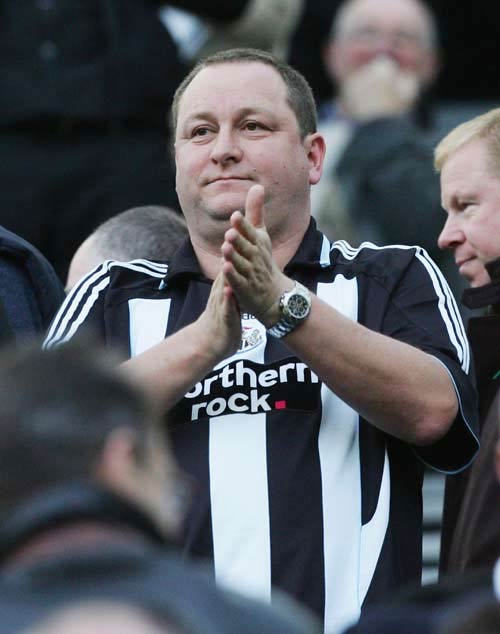
Their anger stems from a deal struck by the Magpies owner Mike Ashley with the nationalised bank Northern Rock to renew its long-standing shirt sponsorship for a fee in the region of £10m over four years, depending on the team’s performance. The details of the deal are unremarkable but it could have far-reaching implications for the future role of sponsorship in funding sports, music and arts bodies. The controversy comes at a time when businesses looking for commercial support are already facing calls for a clampdown on alcohol-related sponsorship from the public health lobby. Without the backing of the banks and the brewers, many organisations and events could be in serious trouble.
Chris Hulme, chairman of the Northern Rock Shareholder Action Group, is furious about the Newcastle deal. “It’s morally wrong,” he says. “It’s a smack in the face for shareholders, and the taxpayers in general.” Despite Northern Rock having been a long-standing supporter of sport in the North-east – sponsoring Newcastle Falcons rugby union club and Durham county cricket club in addition to the football team – the sponsorship industry is finding it hard to shake off its profligate image. “The issue is not about sponsorship’s ability to deliver benefits to business,” says Shaun Whatling, chief executive of the Redmandarin agency, “it’s about the sponsorship industry’s failure to articulate those benefits.” He points out that global brands such as Coca Cola, Adidas and Visa spend tens of millions of pounds on sponsorship annually. A recent Ipsos Mori report suggests sponsorship accounts for about 9 per cent of total marketing spend in the UK.
Another bank with a toxic brand, RBS, is sponsoring rugby union’s Six Nations tournament this year, offering another convenient rallying point for the public’s ire over bank bonuses.
Last year, so sensitive was the bank to accusations of profligacy that it removed its branding from Twickenham completely, replacing it with that of a charity, Barnardo’s. This time RBS has got its retaliation in first, making commitments to support local rugby clubs with help for funding. “We are, of course, reviewing all our sponsorship activity as we look to cut costs across our businesses,” runs a statement on the RBS website. “We are doing our best to strike the right balance between maintaining the benefits sponsorships bring to our businesses and the communities they operate in while managing costs down within contractual constraints.”
During last season’s Six Nations tournament at Croke Park in Dublin, members of the crowd were seen throwing abuse, and empty plastic beer glasses, at the guests in the hospitality boxes. In America, the former presidential nominee Senator John Kerry attempted to bring in
legislation that would prohibit bailed-out banks from “hosting, sponsoring, or paying for conferences, holiday parties and entertainment events”. A bank found guilty would be forced to pay back their share of the bailout. Any form of sponsored corporate hospitality would require a waiver from Barack Obama’s own Treasury Secretary, who would then have 30 days to issue what The Wall Street Journal labelled a “golf and chardonnay diktat”.
In Britain, the fat cat image, compounded by the recession, is already having a detrimental effect on funding of the arts, a sector particularly vulnerable to a dip in bank sponsorship. The London Symphony Orchestra (LSO), Tate Modern and the Royal Opera House are just a few of the major arts organisations supported by the financial sector. According to the organisation Arts & Business, which monitors and encourages arts funding, the total figure for private sector investment in culture for 2008-09 fell from its record high in 2007-08 to £654.9m, a decrease of 7 per cent. Business investment fell by 6 per cent to £157m and accounts for 24 per cent of the overall contribution from private sources. Colin Tweedy, chief executive of Arts & Business, predicts that “the worst is yet to come, with 2010-11 being the low-point”.
Another ongoing news story – binge drinking and excessive alcohol consumption – is also threatening sponsorship deals, particularly in the sport and live music sectors. In January, a cross-party Health Committee report called for far tighter regulation on the marketing of alcoholic drinks, claiming the current system of controls on alcoholic promotion and advertising is “failing to protect the young people it is intended to protect”. Sport and music sponsorship was singled out for particular attention to include a ban on advertising or sponsorship of events if more than 10 per cent of the audience is under 18 years of age. A full ban on the promotion of alcohol, a version of France’s 1991 Loi Evin edict, is a real possibility, according to the Labour MP and Health Committee member, Stephen Hesford. “We’ll be back here in five years’ time and there will be statutory regulation,” he says.
The prospect will horrify many sports governing bodies and music event holders for whom alcohol categories are a cash cow. But beyond these commercial issues the most important question remains, will it work? Will a beer advertising ban stop us drinking? “These severe restrictions will not deliver the health benefits or the protection of young people the committee seeks,” claims Rae Burdon, chief operating officer of the Advertising Association. “Their only effect will be to severely damage media, brand-owner businesses and sporting events.”
Simon Litherland, managing director of Diageo GB, the company behind brands such as Guinness, Smirnoff and Johnnie Walker, says: “Over a third of alcohol is consumed by less than a tenth of the population, which clearly suggests that targeted interventions would be much more effective and appropriate.” Yet such arguments risk being swept aside in the face of what may turn out to be a perfect storm for the sponsorship industry.
Richard Gillis is the editor of Platform magazine
Subscribe to Independent Premium to bookmark this article
Want to bookmark your favourite articles and stories to read or reference later? Start your Independent Premium subscription today.
Join our commenting forum
Join thought-provoking conversations, follow other Independent readers and see their replies