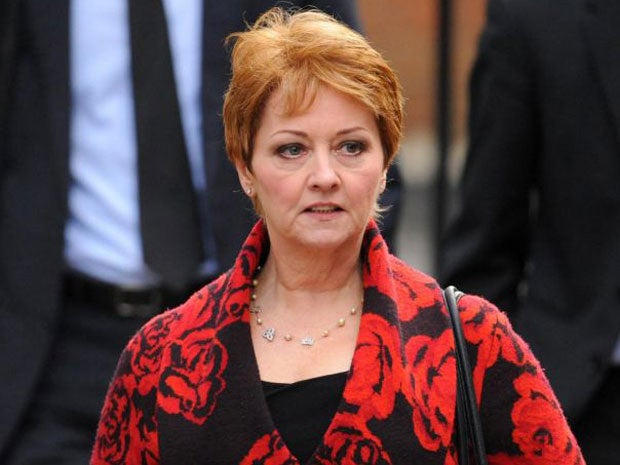
Broadcaster Anne Diamond suggested today that Rupert Murdoch's editors waged a vendetta against her after she asked the media mogul how he slept at night knowing his newspapers ruined people's lives.
The former TV-am presenter told the Leveson Inquiry that The Sun - one of Mr Murdoch's titles - ran an article headlined "Anne Diamond Killed My Father", offered her nanny £30,000 for a story and infiltrated the hospital where she was giving birth by impersonating a doctor.
She also spoke of her distress when the paper published a front-page picture of her and her husband carrying the coffin of their baby son Sebastian at his funeral in 1991.
Ms Diamond told the inquiry she put tough questions to Mr Murdoch when she interviewed him in the 1980s.
"I did put the point to Mr Murdoch that his newspapers were intent, or seemed to be intent on ruining some people's lives and how did he feel about that, and how could he sleep at night knowing that that was going on," she said.
"I seem to remember Mr Murdoch brushing it off completely and I remember after that incident, being a bit frustrated that I didn't feel that I had got my point over to him at all."
She learned earlier this year while taking part in a Channel 4 documentary that Mr Murdoch's former butler, Philip Townsend, recalled that the media tycoon had "indicated to his editors" that she was "a person from that point onwards to be targeted".
In 1987, The Sun ran a front page story with the headline "Anne Diamond Killed My Father" about a road traffic accident in Birmingham seven years earlier in which a man had died, theinquiry heard.
Ms Diamond said she was driving the car but stressed that at the inquest the coroner went to "great lengths" to point out that it was not her fault.
At the time she was on maternity leave having just had her first baby and she felt "terrified", the inquiry heard.
"It made it look like I was a calculated, cold-blooded murderer, and I know I wasn't," she said.
"I was sitting at home nursing my baby and I knew I was a good person. And I was frightened to got out from that moment onwards."
Ms Diamond complained to the Press Council, the forerunner of the Press Complaints Commission, and won a ruling in her favour which criticised The Sun for intruding into grief.
While Ms Diamond was in labour with her first child, a hospital administrator came into her room to tell her that a Sun reporter had been caught impersonating a doctor, the inquiryheard.
She escaped the "hundreds" of paparazzi camped outside by fleeing in a hospital laundry van and then getting back into her house via the roof from an adjoining block of flats.
Ms Diamond also described how her former nanny had lunch with a Sun journalist who offered £30,000 for a story about the secrets of the broadcaster's home life.
The nanny changed her mind, but the paper ran the story anyway and did not pay her, the inquiry was told.
Ms Diamond spoke of the distress of the intrusion of the press after the cot death of her son Sebastian in 1991, telling the inquiry how photographers and journalists besieged her house within an hour.
"I think my husband had very quickly rung the police, as you would," she said.
"And however it happened we were besieged with reporters and photographers outside the door.
"I actually don't know whether they came before the policeman did or the police came first.
"But our front door very quickly was surrounded with hundreds of newspaper photographers and reporters literally just sitting there waiting for something to happen, constantly ringing the doorbell."
One female reporter tried to "rush" the door, she said.
"She rang the bell and she had a big bouquet of flowers to give us and when the door had to be taken off the chain to accept the flowers she rushed in and two grown men had to push her back out of the door."
She said she and her husband had called a priest that morning, who never arrived, and it later transpired he had been put off by the sheer number of reporters at the house.
The inquiry was shown a picture of Ms Diamond and her husband walking to the funeral parlour in the wake of their son's death.
"We were at our possibly most private moment and we were long lensed at that point," she said.
She told the inquiry that after witnessing the media "circus" at the funeral of musician Eric Clapton's son, she decided to write to the editor of every newspaper begging them to stay away from her son's.
They all did, she said, except one photographer who took photos of the funeral from the road.
"I don't even need to say that that's the most private moment you could possibly go through," she said.
The photograph, of her and her husband carrying the coffin, was published on the front page of The Sun.
"Within a few hours of the funeral the editor of The Sun rang my husband and said, 'we have a picture, it's an incredibly strong picture and we would like to use it'."
She said when they refused, they were told it would be used anyway.
Ms Diamond told the inquiry the way the story was written made it look like she had agreed to the publication of the picture, which led other publications to think she had "done a deal" with The Sun.
She said she later reluctantly joined a campaign by The Sun to raise funds for research into cot death: "I felt emotionally blackmailed by the people I had felt had just trampled all over our tragedy, all over our child's grave."
The campaign into cot death research raised £100,000 and awareness, Ms Diamond said.
This year - on the 20th anniversary of her son's death - she revisited the campaign with the newspaper and the Daily Mail.
"I think this is a brilliant example of tabloid popular journalism at its best. The popular press is nothing to be ashamed of in this country," she said.
Ms Diamond continued: "People have called me a celebrity, I am not, I am a broadcast journalist.
"No matter what they do for a living, every human being deserves some time in their lives to be private."
The journalist was questioned about an article she wrote this summer about the weight loss of actress Dawn French. She said: "I agreed to do the article if it could be totally supportive and very affectionate."
Ms Diamond said judgment calls about stories came down to the decency and values of a journalist, editor, or proprietor - not a regulatory body.
"In the press it comes down to the judgment call made by the writer and by the editor and maybe the proprietor as well but not the collective values of a body that has been called together," she said.
Self-regulation of the press on its own had failed, she told the inquiry, adding that she did not think the regulation of the broadcast media constrained reporters.
"I don't know broadcast journalists who are angry at the constraints put upon them, they get on with it," she said.
She said there are "two sides" to the popular press but at the present time the good and the bad came "hand in hand".
"It doesn't have to be like this, it's so sad that a handful of bad journalists have besmirched the profession in this way," she said.
Join our commenting forum
Join thought-provoking conversations, follow other Independent readers and see their replies
Comments