Geordie Greig: 'I think the digital generation have got used to not paying for information'
The Evening Standard's editor tells Ian Burrell why the internet forced the paper's hand
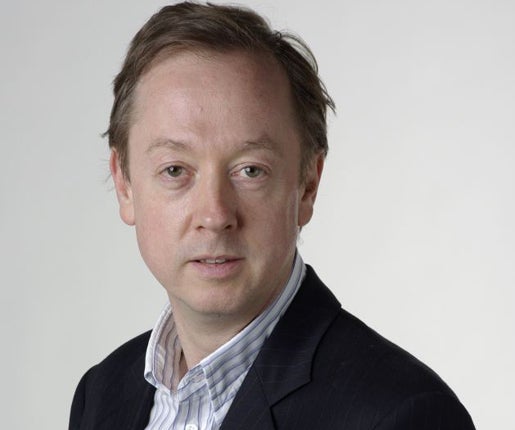
When Geordie Greig left the society magazine Tatler to take over the editorship of the London Evening Standard in March, he never imagined that he would be presiding over a free newspaper within seven months. That wasn't part of the plan.
The publication he had inherited liked to style itself as "London's Quality Newspaper" to distinguish itself from the rival London evening freesheets and justify charging readers 50p for a copy. Under Greig, and the paper's new Russian owner Alexander Lebedev, the Standard's tone changed to become more optimistic in its reporting on the capital but the quality, we were assured, was to be maintained, along with the price.
That was, until yesterday, when it was announced that the paper was to be distributed free for the first time in its 182-year history. "The London Evening Standard will become the first quality newspaper in the world to go free," the paper told its readers.
That editorial had something of a Moon-landings hyperbole to it, but the news set the media world abuzz. Sitting on a sofa in his office at lunch, Greig used similarly lofty language to explain the radical departure. "When people think of London they think of double-decker buses, the London Evening Standard and the Tower of London. These are the clichéd images which get used by foreign TV stations as symbolic of the influence, power and culture of London and that is going to remain the case."
The Standard's gamble is based on replacing the lost circulation revenue with increased advertising income that will come from raising distribution to 600,000. Advertisers would not be able to ignore a quality product of such scale, the editor claimed. Greig, who describes the paper under his editorship as having "moved into the middle ground with a liberal sensibility", is adamant that doubling circulation will not result in a change in the reader profile, or a dumbing down of content. "Our circulation at its height, before any free newspapers, was 600-odd thousand. So how do we get back to that reach to make an impact on London? This was the logical conclusion."
He said the possibility of going free was under consideration before the Rupert Murdoch's giveaway title thelondonpaper closed last month. "There had been discussions beforehand, it was certainly a day of great excitement for us when thelondonpaper did close, not to cheer on their demise but it gave us more of a hope for economic success."
But a fly in the ointment is London Lite, another evening free launched by Associated Newspapers in 2006 as a "spoiler", designed to protect the Standard, which it then owned, from incursions by News International's thelondonpaper.
Associated's sale to Lebedev of a 75 per cent in the Standard means that the two titles are no longer in the same stable, a situation made more bizarre by an agreement that allows the Lite to use Standard stories. And from 12 October, the papers will be direct rivals.
Associated prints the Standard but Greig has had no assurances that the Lite will close: "That's up to them. We've made an aggressive move in the London market and we think we will dominate the market in the afternoon and they have to assess the impact as they see it."
He is anxious to point out that free distribution does not equate with low quality. "Some of the greatest things are free, the British Museum and the National Gallery are free, to clock on to the BBC news site is free."
He also argues that younger consumers understand this better than older ones. "I think the young digital generation have got used to not paying for a lot around the information gathering sphere and I don't think they'll see it as a big deal us going free. I think the more traditional readers will find it more surprising," he said.
"The under 28-year-olds are what every newspaper wants to get, but how do you get them when there are so many distractions? We think that by going free, a lot of people will suddenly embrace the Standard who either get it occasionally or who have not been regular readers. It's the only place where you can read about what is going on in London, in terms of politics, business, arts."
Plans are in place to distribute the Standard directly to secondary schools and universities. Copies will also appear in offices, particularly those with an upscale workforce. "We have spoken to some of the major banks and companies in the city who are thrilled at the prospect of having it delivered straight to them."
This is a risky commercial strategy that has been devised by the Standard's managing director, Andrew Mullins, the deputy chairman Justin Byam Shaw, and Evgeny Lebedev, the company's executive director and the son of the owner. Greig, who is also on the board, dutifully heralds it as being part of "the dynamic move forward", but his role is to ensure that editorial quality controls remain.
"The only thing that changes is the distribution, the writers stay the same and the standards stay the same," he said, emphasising Lebedev Senior's commitment to the role of journalism in a healthy democracy.
The columnist Simon Jenkins called him to say "count me in". When he announced the change to staff yesterday morning, some were sceptical, but nobody has come out and told him "it's not going to work".
The truth is that the Standard has not enjoyed 600,000-plus sales at any time in the past quarter of a century, except in the week of September 11. Circulation is in long-term decline. The paper has recently been sold under a hybrid system at 50p, 20p, 10p or nothing at all. Circulation executives at News International were crowing, before the death of thelondonpaper, that the Standard was part of the free market. Now that's indisputable, but Greig sees it as a positive development. "They've gone from the afternoon scene," he said. "He who laughs last, laughs longest."
Join our commenting forum
Join thought-provoking conversations, follow other Independent readers and see their replies
Comments