Leveson inquiry: 12 months, 378 testimonies, four options...one judgment
As Lord Justice Leveson prepares to deliver his verdict on press regulation tomorrow, James Cusick assesses the possible outcomes
In the House of Commons last year, a simple "yes" from the Prime Minister set in motion a judicial inquiry that has involved months of briefings, seminars, oral evidence and testimony from 378 individuals and 120 organisations – all potentially leading to the most radical shake-up in the way Britain's press has operated since it began. Tomorrow, Lord Justice Leveson will finally deliver his verdict on how the newspaper industry, after the excesses of the phone-hacking scandal, should be allowed to function.
The Leveson Report could lead to one of the most difficult and important decisions the Government has faced. David Cameron, and the Commons, will have to answer the question: should Britain continue to have a free press, or should it for the first time be regulated by the law?
Why are we waiting for a judge's verdict of how Britain's press should be regulated?
In short, because of a sea change in the way the public viewed the phone-hacking scandal. An article in The Guardian on 4 July last year claimed that the News of the World had "illegally targeted the missing schoolgirl Milly Dowler". It claimed the Murdoch-owned Sunday tabloid newspaper had interfered with the police inquiry into her disappearance.
Why was the targeting of Milly and her family different?
A year of hacking stories and allegations against Rupert Murdoch's media company News International had centred on celebrities, actors and politicians. But the targeting of a murdered schoolgirl created a tidal wave of public outrage which brought Mr Cameron to the Commons, where Ed Miliband called the illegal interception of Milly's phone "immoral and a disgrace".
Had self-regulation of the press failed?
Who or what had failed no longer mattered. Police and the Press Complaints Commission had investigated the NOTW and dismissed as mistaken the claims of a deeper criminal culture. Mr Miliband sensed the sea change after the Dowler revelations, calling for a full public inquiry. The Prime Minister had no option but to agree.
So why hasn't the Leveson Inquiry been primarily looking at phone hacking?
It can't, not yet anyway. Fear of potentially prejudicing criminal proceedings already in train meant the Leveson Inquiry has not directly investigated what lay behind the Dowler outrage. That investigation is supposed to form part two of Leveson – the who-did-what-to-whom bit – which can begin only after the criminal courts have completed their work.
Was Leveson's remit deliberately wide?
Putting all of Britain's press in the dock avoided the spectacle of just putting Murdoch media under the microscope. Mr Cameron's links to News International's former chief executive, Rebekah Brooks, and Jeremy Hunt's culture department's links to James Murdoch, provided evidence of how damaging a deeper examination of NI could have been. Leveson was ordered by No 10 to consider the "extent to which the current regulatory system has failed".
So the regulatory verdict was decided before Leveson began?
The PCC chairwoman, Baroness Buscombe, said the NOTW had lied to her. The Labour MP, Tom Watson, a key figure in exposing hacking, said the PCC was "probably finished". Although Mr Cameron told MPs when he launched the inquiry that "the people involved, however high or low, must not only be brought to justice, they must have no future in the running of a media company", the wide remit given to Leveson meant that the entire press was called to justify its behaviour – even titles such as The Independent, which had broken no laws.
What was wrong with the PCC?
According to some high-minded MPs in the late 1980s, Fleet Street had become "infiltrated with rent boys, spurned lovers and smear artists". Decency, privacy and old-fashioned "honour" no longer mattered, and the public was revulsed. The creation of the PCC, following a report by David Calcutt, QC, was intended to restore confidence in the press.
Will Leveson go further than Calcutt?
Lord Justice Leveson has explicitly said he does not intend to become just another footnote in the history of "failed regulatory systems". He said the PCC had never really been a regulator, and was instead a complaints mechanism. Leveson accepted that the press could put its house in order by tweaking the rules of self-regulation. However, he said any conversion from sinners to saints would be short-term and, once public and political attention went elsewhere, it would be "business as usual".
So Leveson wants state control?
No, not all. In fact the Leveson Report is likely to make clear that the state should have no role in what the press writes. However, through comments offered up during the hearings, Lord Leveson has touted the idea of "statutory underpinning" without making clear what exactly this would entail.
Will No 10 do what the report recommends?
Initially, Mr Cameron said he would back the findings of Leveson as long as they were not bonkers. But that was a year ago, and a year is a very long time in politics. The press believes it can still sort itself out – with greater independence, the use of long-term contracts to enforce its own rules, greater powers to fine and investigate misconduct – all without state involvement. Others, especially those who have suffered from the worst excesses of press wrongdoing, believe another "last, last chance saloon" won't work.
What are Labour and the Liberal Democrats saying?
Mr Milband has remained consistent in his support for putting the press on a statutory footing, and believes the public is as outraged as it was when the Dowler story broke. About 40 Tory MPs may be in Mr Miliband's camp. Nick Clegg's Liberal Democrats have said there is no guarantee the Coalition can come up with an agreed policy on what should happen. Although No 10 claims the PM will be speaking "for the Government", Mr Clegg says there is, as yet, no agreed Coalition position.
When will the Government see the Leveson recommendations?
Security surrounding the report will be ultra-tight and it will be deeply embarrassing for the Government if it were leaked before Lord Justice Leveson speaks at 1.30pm tomorrow. Parts of the report were still being written and finalised last week, and government printers are expected to keep the first batch of copies relatively small to ensure maximum control. Where the copies are being produced, and who is guarding the print works, is being treated with the equivalence of a "top secret" stamp.
Future of The Press: Leveson's choices
The status quo
Origins would continue to be based on the Press Council (1953) and Press Complaints Commission (1990) created after the Calcutt Report. The PCC was run and funded by the newspaper industry. It consisted of an editors' code of practice, with blueprint for how newspapers should behave, included printing formal apologies, but it had no power to fine individual titles; and there was no legal requirement to join. The PCC effectively wound itself up this year.
Key supporters Journalists Mick Hume and Nick Cohen.
Likelihood (out of five) 0
Greater self-regulation
To preserve self-regulation, Lords Black and Hunt have proposed a reconfigured, re-invented PCC. Legal long-term contracts with the industry, involving all titles, have been proposed. Lay members would make up half the regulatory body; fines of up to £1m could be imposed. No state role. Supported by national titles apart from The Independent, The Guardian and FT. Fleet St as a whole recognises that the old system of self-regulation is a non-starter.
Key supporters Paul Dacre (editor Daily Mail), London Mayor Boris Johnson, Education Secretary Michael Gove.
Likelihood 1
Independent self-regulation
Contains key elements of the Hunt-Black model, but deliberately keeps the industry at arms length. No one on the regulatory council would have links to the newspaper industry that funds it. Chairman would be selected under Nolan rules to ensure robust independence. Supported by The Independent, Guardian and FT.
Key supporters Chris Blackhurst (editor The Independent), Lionel Barber (editor FT).
Likelihood 2
Statutory under-pinning
Described as "Ofcom for the press". Compulsory membership of a body holding legal authority. Rules of the regulator, however, would be left to the industry to determine. Critics warn of effectively "licensing" the press, creating precedent for further state control. Supported by victims of tabloid excesses and media academics and lawyers who believe press reform is urgent and industry cannot be trusted.
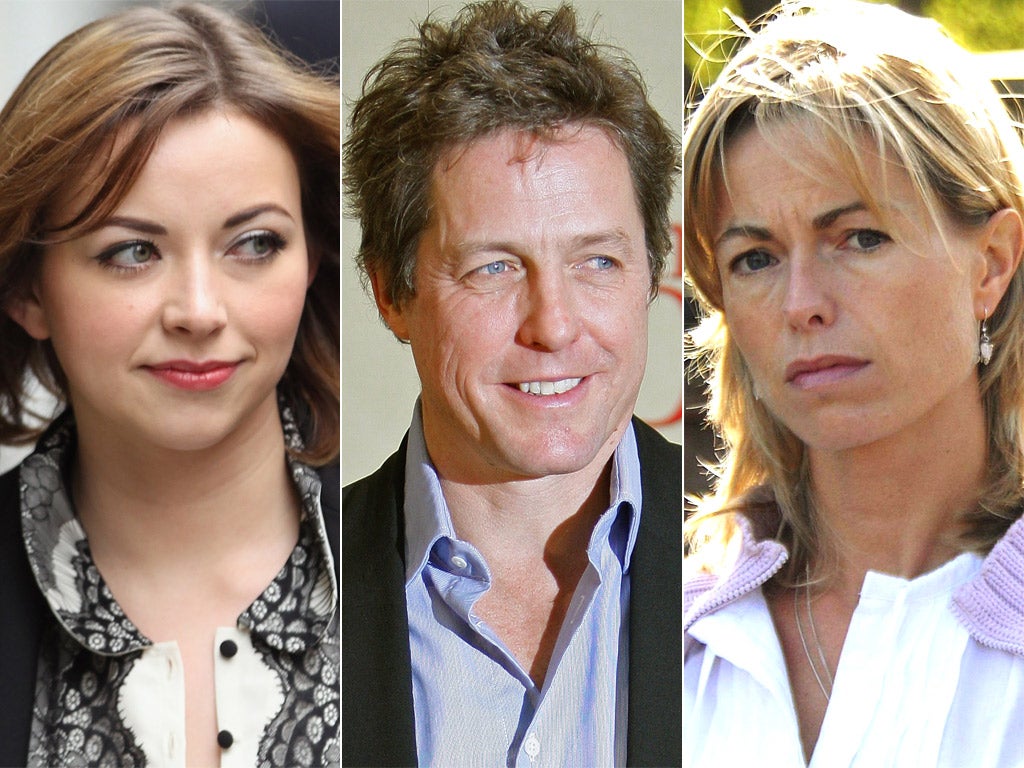
Key supporters Actor Hugh Grant, Kate and Gerry McCann, Charlotte Church, phone-hacking lawyers Mark Lewis and Charlotte Harris, Labour leader Ed Miliband, Tory MP George Eustice, Professor Brian Cathcart.
Likelihood 4
Join our commenting forum
Join thought-provoking conversations, follow other Independent readers and see their replies
Comments
Bookmark popover
Removed from bookmarks