Monocle: 'It's the media project that I've always wanted to do'
Tyler Brûlé tells Matthew Bell how his magazine turns a profit, and why 'The Guardian' hates him
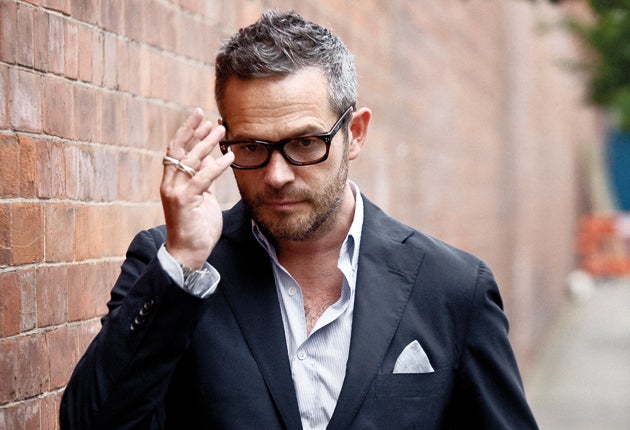
Even among those who have never heard of Tyler Brûlé – the Canadian war reporter-turned fashion editor, turned universal taste arbiter – mention of his name can provoke strong emotions.
"Tyler Brûlé is a character in Sex and the City, right? I mean no one is really called that", is one of the tamer comments posted on a Guardian story reporting how he came to be voted 101st on its list of the media's most influential figures.
Among those who know Brûlé, (it's his real name, he says he is descended from Etienne Brûlé, the 16th-century French explorer who founded Toronto), emotions run even higher, and he enjoys extreme loyalty from his staff. Voting for the joke slot on The Guardian's list was open to the public, and Brûlé mysteriously drew 160 votes in the last half-hour of polling, all from a single IP address, registered to the Marylebone offices of Monocle magazine.
This is Brûlé's latest creation, a slick monthly that would be called a glossy were it not printed on chic matt paper. Otherwise it is a direct competitor to many Condé Nast titles, covering fashion, travel, business and style-conscious urban pursuits such as shopping and fine dining. In a way it is about "everything that is around us", the term Brûlé used to describe Wallpaper*, the style bible with which he captured the zeitgeist in 1996, selling it a year later to Time Warner for an alleged $1.7m.
Monocle was founded in 2007 and Brûlé remains very much in charge, as you find if you visit the office on press day. Readers of his Fast Lane column in the Financial Times will know he spends a lot of time jetting between Tokyo, New York, Copenhagen, Beirut and other cool cities, but he always swoops into London in the few days before Monocle goes to press.
Day-to-day editing is overseen by Andrew Tuck, formerly of this newspaper, but Brûlé cares about every last caption and comma. The offices, as you would expect, are fully feng shui'ed, and populated exclusively with slim, attractive, fashionably coiffured young men and women. They all use the latest Mac computers. If you ask for a coffee, it comes in a minimalist white cup on its own limed-oak board, with a single brown sugar cube and modernist zinc teaspoon.
Sometimes he toys with moving the offices to Berlin or Geneva, he says, but would he want to sell up altogether? "This is the media project I've always wanted to do," he adds. "So I'm in no hurry to sell it." Which, of course, is not to say that he wouldn't if the right offer come along. "But," he says, "it raises the question of who do you sell to today?" He goes on to discuss the straitened market and the fact that, by investing in a print brand, he is swimming against the trend of digitalisation.
Brûlé is proud to be investing in journalism: he has just appointed former Independent on Sunday journalist Steve Bloomfield as foreign editor and last week opened a bureau in Hong Kong, with another planned for Sao Paulo. He employs 100 people and claims to have just broken into profit. No wonder the loss-making Guardian hates him. Two years ago, that paper's managing director, Tim Brooks, said in an interview: "If I had a pound for every title that will close in 2009, I'd have enough money to subscribe to Monocle and Intelligent Life – but that would be pointless ... neither of them will be around by the end of the year." He also predicted the demise of this newspaper and pledged not to make redundancies at his own, both of which, as Brûlé points out, "rather went in the opposite direction".
It was Brûlé's publicist who organised the Media-list mass voting, he says, which had nothing to do with him. "We are a growing print product, we are investing in journalism, we are challenging the market – it's surprising that we weren't high up on the list to begin with, to be brutally frank." In describing his fractious relationship with The Guardian he reveals that, before she left to head easyJet, chief executive Carolyn McCall rang to ask how he created his subscription model, which charges 50 per cent more to subscribers. "She wanted to know which consultants we used, and their number, and I laughed and told her we came up with it over a bottle of wine in the kitchen. We just felt this is how it should be done."
Brûlé's confidence is encouraging, and he has just launched a one-off broadsheet newspaper for the summer, Monocle Mediterraneo. Monocle circulation is 150,000, with Korea and Hong Kong two of his strongest markets. He is proud the title is in the top 200-selling magazines at Barnes & Noble in New York, which may not sound much, but "that does include all the Sudoku mags".
For his impressive achievements as an entrepreneur and his contribution to style – he is wearing shorts when he meet, but still commands authority – we recognise him in today's IoS Pink List of influential gay people in Britain. In Monocle he has created, against the odds, a profitable global print brand. And for that we should be grateful.
Join our commenting forum
Join thought-provoking conversations, follow other Independent readers and see their replies
Comments
Bookmark popover
Removed from bookmarks