Press reports 'contaminate' juries, says Dominic Grieve
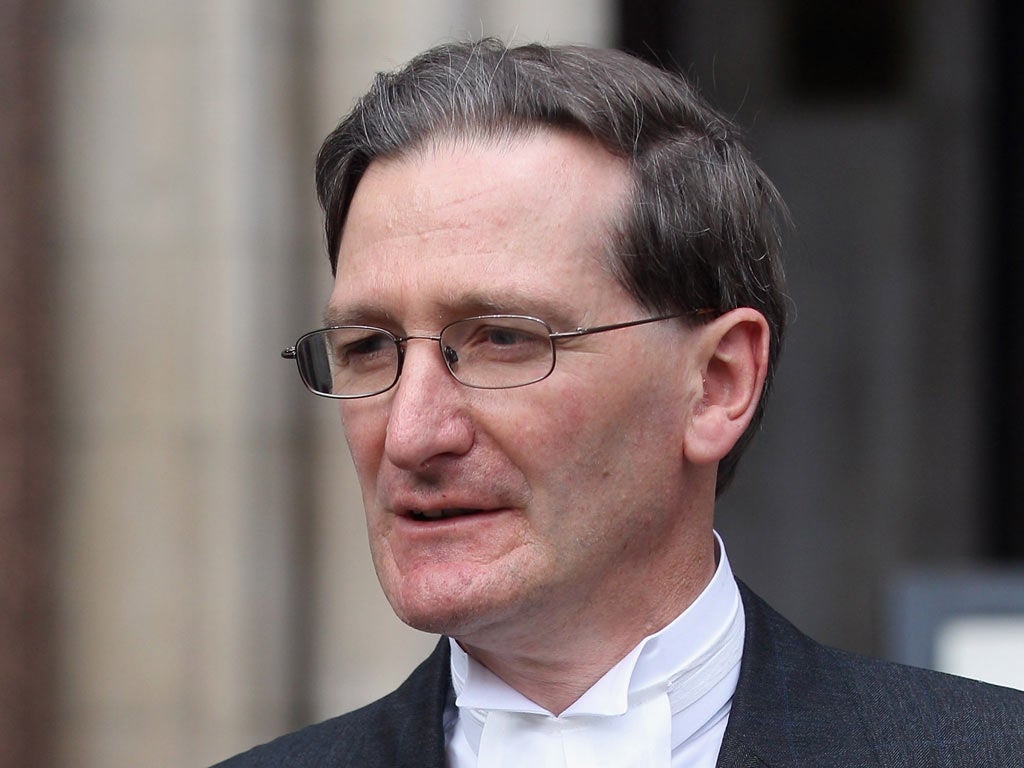
The key foundation of the British justice system, trial by jury, is at risk of being undermined by the media’s attempts to take advantage of reforms to the law, the Attorney General has warned.
Speaking of the danger that juries were being “contaminated” by prejudicial reports relating to court cases, Dominic Grieve, the UK’s chief legal adviser, said last night that at times he believed “the press had lost any sense of internal constraint and felt able, indeed entitled, to print what they wished, shielded by the right of ‘freedom of expression’”.
Since he assumed the role in May last year, the Conservative MP has launched four contempt of court proceedings against newspapers and broadcasters, and asked for permission to follow a fifth – more than his predecessors oversaw in the previous decade. Explaining his hard-line stance during a lecture at City University London, the Conservative MP said he was concerned at what he “perceived to be the increasing tendency of the press to test the boundaries of what was acceptable over the reporting of criminal cases”.
“The potential to admit evidence of a defendant’s previous convictions has led some in the press to believe they can print, without let or hindrance, all manner of true facts, abuse and nonsense,” he said, suggesting that 2003 reforms allowing “bad character” histories to be provided in court had wrongly emboldened the media. “I was concerned that, uncontrolled, such reporting could eventually undermine the jury system… It is essential that jurors are not contaminated by material which has not been presented to them as evidence.”
Contempt of court has traditionally been a relatively rare issue in the British media. Though protected by the Human Rights Act, which enshrines freedom of expression to prevent newspapers being unduly censored or controlled by the state, the press generally abides by restrictions on what it can publish relating to active court proceedings and police investigations in the interests of justice.
However, Mr Grieve is currently pursuing two cases of contempt by the media, requested approval to press a third, and in his short time in office has already successfully brought two convictions. The first concerned photographs of murder trial defendant Ryan Ward holding a gun, published online by the Daily Mail and The Sun during a trial in which he was subsequently found guilty. The other was in support of Chris Jefferies, the landlord who was falsely implicated in the Joanna Yeates murder case and saw a series of lurid allegations about his private life.
Tonight he said that on coming to office he was “determined to ensure that some clarity was reintroduced to the process”. On a conciliatory note, however, he added: “I do not seek confrontation and I have no desire to act as a policeman.”
Following the controversy surrounding super-injunctions earlier this year, he also urged caution on journalists relying on parliamentary privilege to report instances of confidentiality orders being breached by MPs – referring implicitly to John Hemmings’ decision to announce in the House of Commons that Ryan Giggs was the mystery man whose identity had been protected by a judge.
“It is likely that it does extend to a fair and accurate report of proceedings in Parliament,” he said of the rule that anything said in parliament can be reported without fear of prosecution. “But just because something has been said does not mean it can be repeated out of context. This question has yet to be authoritatively decided but will shortly be considered further by Parliament. But in the interim - writer beware.”
Current Cases of Contempt of Court
The Attorney General decided earlier this week that a comment piece about the Stephen Lawrence trial written by Rod Liddle in The Spectator magazine last month may have breached a court order. The matter has been referred to the Director of Public Prosecutions, Keir Starmer, who is currently deciding whether to press charges.
Mr Grieve won approval two weeks ago to pursue contempt of court proceedings against the Daily Mail and Daily Mirror over coverage of Levi Bellfield’s conviction of the murder of Milly Dowler. Two judges ruled that the newspapers’ reporting of Bellfield’s murder conviction this summer meant he could no longer be fairly judged on a separate charge of attempted abduction.
Sky News is also facing action following a decision in the last fortnight, after allegedly breaking an injunction that prohibited reports concerning the abduction of Paul and Rachel Chandler. The media had been told not to give any publicity to their plight while negotiations were taking place last year with Somali pirates who had kidnapped them, an order Sky allegedly broke.
Editor jailed for 'vampire killer' claims
Though a journalist faces up to two years in prison if tried and found guilty of contempt of court, no journalist has been given a jail sentence for contempt since 1949. That year saw the then Daily Mirror editor Sylvester Bolam serve three months, after his newspaper described John George Haigh – who had been arrested for the “acid bath murders” and was said to have drunk his six victims’ blood, but was still four months from trial – as a “vampire killer” who would never strike again. Bolam suffered the indignity of being sent to the same prison as Haigh, who was later found guilty of the murders.
Bookmark popover
Removed from bookmarks