Diana: Gagged! The movie, the conspiracy, and why you are not allowed to make up your own mind
A controversial documentary on the death of Diana – who would have been 50 on Friday – will be launched in Ireland next week. In Britain, it is banned and its director Keith Allen asks: What are they so afraid of?
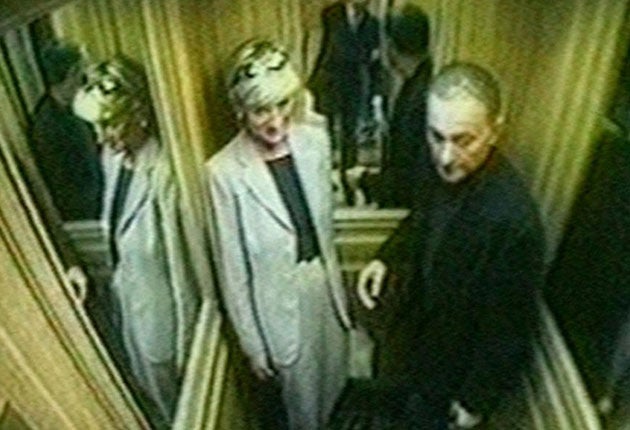
Near the beginning of Unlawful Killing, I show a clip of Princess Diana (who would have been 50 on Friday) speaking less than two years before her untimely death. Well aware that sections of the British establishment had begun to despise her (following her separation from Prince Charles) and wanted her to disappear from public life, she summarised her plight in two pithy phrases: "She won't go quietly – that's the problem."
My film about the inquest into her death won't go quietly either, despite the best efforts of sections of the British press to stifle it at birth. That's not surprising, because journalists widely regarded the 2007-08 inquest as a complete waste of time and money, so it was inevitable that many of them would also dismiss my documentary, which was screened twice at the Cannes Film Festival in May.
Yet what those screenings revealed was a yawning chasm between the perceptions of the press (several of whom did not actually see the film before writing about it) and those of the audiences who did attend. Because while the former were overwhelmingly hostile, the latter were overwhelmingly favourable, and were persuaded by the evidence that I and my production team have assembled that there was something extremely fishy about what happened in the Alma tunnel in 1997 and in the Royal Courts of Justice a decade later.
For the record, both Cannes screenings were packed from start to finish, as was an earlier test screening in Los Angeles (conducted by Nielsen NRG), and audience comments taken afterwards were almost uniformly positive. In the weeks since Cannes, the film has sold to a dozen territories worldwide, with negotiations in a further 20 still in full swing.
The veteran US investigative author and lawyer Mark Lane (who first exposed the cover-up surrounding the assassination of JFK) has endorsed the central findings of my documentary. And on 6 July, it will receive its first full public screening as a highlight of the Galway Film Festival (with many more festivals also eager to show it).
So why did much of the British press report that bored audiences walked out during the screenings at Cannes, when that was demonstrably untrue (and was flatly contradicted by the enthusiastic vox pops which were recorded outside the cinema by Reuters TV)? Why did they pretend that I had tried to conceal the financial backing I had received from Mohamed al-Fayed (whose son Dodi also died in the Alma crash), when I had written lengthy articles in The Guardian and the Daily Mail during the previous week, explaining in great detail precisely how (and by whom) the film had been funded? Why did many of them claim that I had displayed a "shocking" photograph of Diana in her death throes, when no such photograph was ever included?
Why did they claim that there was nothing new in the film, when this is the first ever reconstruction and analysis of the longest inquest in British legal history? And when (to take just one of many examples) it highlights the apparent discrepancy between evidence given under oath by Sir Robert Fellowes (the Queen's private secretary and Diana's brother-in-law), who said he was on holiday during the period before and after Diana's death, and entries in the newly published diaries of Alastair Campbell which suggest that he was overseeing Diana's funeral arrangements?
And why, three years on, is most of the UK press still unwilling to accept the verdict of the inquest jury, which decided that the Alma tunnel crash was not an accident but an "unlawful killing" (the coroner having denied them the option of "murder"), and that unidentified "following vehicles" (not the paparazzi, as was incorrectly reported) had been a principal cause?
What the British press writes does not greatly matter, because over the next few months, people all around the world will have the chance to see the film, and to form their own judgements. Everywhere except Britain, that is, because as things stand, I am legally prevented from screening the film in the UK.
That's not primarily because of fears about libel, as has been suggested by some journalists (although much of the information that we have unearthed about Prince Philip will shock many viewers), but because my film has been deemed by lawyers to be in contempt of court, since it openly questions the impartiality of a coroner who had sworn an oath of allegiance to the Queen, yet was sitting in the Royal Courts of Justice, presiding over a case that involved the monarchy.
Furthermore, it dares to look at why he repeatedly refused to call senior members of the royal family to the inquest, despite Diana having written a sworn note explicitly stating that her husband was planning an "accident" to her car (a note, incidentally, which the Metropolitan Police did not reveal to the press and public for six years, or the French police who first investigated the crash). Saying this explicitly is, it seems, against the law.
This isn't just a whinge from a thin-skinned director, piqued by a handful of negative reviews. We are living in a time when oppressive judges routinely prevent the British press from publishing information of genuine public interest, and my film has fallen foul of that same authoritarian repression.
Whatever journalists may think about Diana's death, surely they should always be in favour of the disclosure of information. That way, the British public can decide for itself whether Diana was simply the victim of a drunk driver (as most of the UK press insist was the case), or whether (as is my contention) the inquest was a shameless establishment cover-up, a modern-day version of the notorious Dreyfus case, in which the British press has (until now) played a shameful and obsequious supporting role.
Either way, my film – like Diana – will not go quietly.
Join our commenting forum
Join thought-provoking conversations, follow other Independent readers and see their replies
Comments