Kershaw: How the BBC left me on the ropes
For 25 years he was one of the nation's best-known broadcasters. Last week, however, a heavily trailed radio show about him was pulled at the last minute. Andy Kershaw reveals the inside story
According to Radio 4's own website message-board, many listeners were as stunned and dismayed as I was by the cancellation of last Tuesday's On The Ropes. For their sakes (and thanks to them for the overwhelming support), I'm glad they didn't also have to share the public humiliation of that decision.
I recorded the programme with presenter, John Humphrys, in London a week last Thursday. We spoke for about 40 minutes to record the 30-minute slot. My attitude throughout was positive and optimistic. I did not want to use the programme to attack the injustices and humiliations heaped upon me over the past three years. After all, these had only aggravated and prolonged a period of turmoil of which I was the original architect.
I have fully recovered from my breakdown and from my period of alcohol dependency. I have, at last, moved on. The invitation to bare all to the great Humphrys was, I felt, an opportunity to announce that. It would be, I hoped, cleansing. And it was. There was no anger in what I said on the programme, no bitterness, nor any self-pity. There was nothing to which my ex-partner and the mother of my two children could reasonably object.
The programme ended by me listing for Humphrys all the things about which I feel positive, red-energised and optimistic. I told him about the incredible support I've had from the community in my adopted home town of Peel on my beloved Isle of Man where, in 2006, I brought my young family to live permanently for a better quality of life.
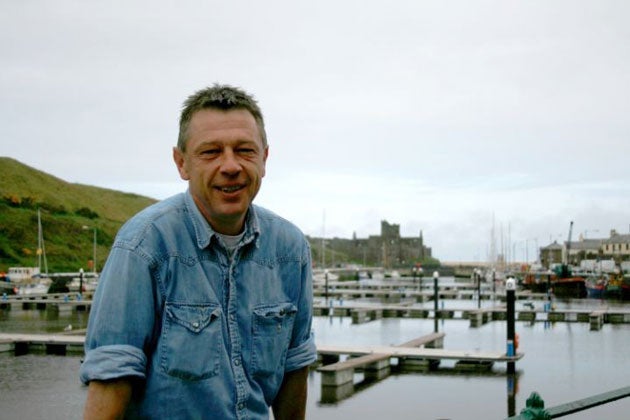
I mentioned the thrill I get still to wake in this beautiful part of the British Isles, to sit up in bed and blink out through the window to the castle, the harbour and the sea. "Those are the visual, John," I told him, "as I listen to you on the Today programme."
I described the rediscovery of my energy, enthusiasm, ambition, optimism, efficiency, curiosity and sense of humour. And that I am now, at 49, in the best physical and mental shape I had ever known.
Still, after 14 months, I have not been allowed any normal contact with them – not because of any court order – but nevertheless I do have, most importantly, two wonderful children, I concluded.
Humphrys' final question was, "How do you see yourself now?" To which I answered: "The old Andy is back. I'm ready to rock and roll."
As we left the studio, Humphrys slapped me across the shoulder and said: "I think you got the tone of that absolutely right." The producer, Karen Gregor, was gushing that I'd been "absolutely brilliant" and that it was "the best On The Ropes we have ever recorded."
I later learned that the programme was cleared by BBC lawyers that same Thursday for broadcast the following Tuesday. It was then trailed so heavily over the weekend that I found it embarrassing to listen to Radio 4.
Clearly, the BBC, at that stage, was not only comfortable about the programme legally but very happy with it editorially – and plugging it as if they'd persuaded Osama bin Laden to face Humphrys.
Then on the Monday night, around 9pm, I got a call at home from a stranger – Andrew Thorman, executive editor of factual programmes, Birmingham. (On The Ropes is made out of BBC Birmingham). Thorman told me that On The Ropes would not be broadcast.
Mark Damazer, controller of BBC Radio 4, did not himself contact me on Monday 27 April when, it transpires, hours of internal BBC wrangling led up to the decision, by Damazer, to pull the programme. The unfortunate Thorman – a virgin to righteous Kershaw indignation – claimed that the programme would not be broadcast "after consultations with legal advisers."
After Thorman's call I wondered how a programme in which I had said nothing contentious and one which had not been an issue in the four days since it was recorded (and had in fact been intensively and enthusiastically trailed) had suddenly, at this late stage, 12 hours before transmission, become a problem.
I phoned the producer, Karen Gregor. She admitted, reluctantly, that there had been contact between herself and Juliette Banner (my ex-partner) on Monday morning. She also confirmed that the programme had been okayed by BBC lawyers on the previous Thursday evening.
Evidently, Juliette Banner, like many people who remarked on them to me, had heard the trails for On The Ropes over the weekend. This would have been the first she knew of my imminent appearance on the programme. Like all those who commented on those trails, Ms Banner would have heard me sounding strong, optimistic, fully recovered and in great humour.
Her hostility to a programme, which she had not even heard, reached Mark Damazer who pulled it just before 9pm on Monday evening, the night before its scheduled transmission on Radio 4 at 9am the following day.
When Damazer eventually called me around 10am on Tuesday morning (28 April), he told me that my ex- partner's approach had been about "concerns for the children". Damazer, like Karen Gregor, ought to have told her there was nothing to worry about, personally and legally.
Damazer assured me he had listened to the programme and had not at first had any problems with it. Later, after Ms Banner's intervention, he killed it on the shared grounds of "concerns for the children", yet was unable or unwilling to tell me precisely what I had said on the programme that had given him those concerns.
He even said: "I don't have to go into that detail." I believe he does, not just to me but to the widely experienced BBC people, John Humphrys and Karen Gregor. In half a century of broadcasting, Humphrys has never had a programme dropped from transmission. In 25 years of service to the Corporation, neither have I.
In all that time, I have never brought the BBC into disrepute, never failed to turn up for a live broadcast or recording, never tormented Andrew Sachs, nor been caught taking cocaine and providing prostitutes to dicey businessmen. I have won nine Sony Gold Awards, more even than John Peel. And, in my occasional role of foreign correspondent, I have cheerily put my life on the line reporting from African civil wars for BBC radio news programmes.
There was nothing said in the recording to give anyone those concerns. I spoke of my children only with affection. Ms Banner herself was scarcely mentioned, except in the context of her understandable distress at my admitted infidelity. Damazer's public statement, intended to justify the cancellation, referred to "the legal order, the result of which makes it very difficult for him to have significant access to his children."
That legal order prevents me contacting only my ex-partner and her current boyfriend. There is no legal barrier whatsoever to contact with my children. Certainly, there is nothing in the court order preventing me from speaking fondly of my children on the radio. Nor am I barred by law from speaking publicly, should I wish to do so, of their mother and my lack of normal contact with my children.
Mark Damazer knows this to be the legal reality. Yet in the On The Ropes recording, I did not even make an issue of this distressing and invidious situation.
His statement also creates the impression of last-minute pressure: "The programme was recorded and edited close to the day of transmission – hence the lateness of the decision." In fact, the recording was made five days before the scheduled broadcast and the BBC lawyers had cleared it on the evening of the same day.
On the phone, Damazer tried to diminish the significance of my ex-partner's intervention. Instead he played the children card, with an assumed concern for the welfare and privacy of my children, superior and more intimate than my own, to justify his decision. (He would appear to rely more on his own expertise in the laws of privacy than that of the lawyers he hires).
I asked Damazer for a written explanation and, in particular, the answers to two specific questions. These were: what happened to change his view between the evening of Thursday 23 April, when the programme was cleared by the lawyers and the evening of Monday 28 April, when he decided to scrap it?
And what precisely was said in the programme that could have caused concerns on behalf of the children? For the latter, I demanded his evidence – direct quotes, in his written explanation, of the offending or troublesome sections of the interview. These he refused to provide.
Last Tuesday's scheduled broadcast should have been a turning point. Instead, its cancellation sent out a very damaging signal, encouraging a widespread assumption that it must have been pulled because I had gone into the studio and made a programme so full of slanders and anger that it was unfit for broadcast. Far from it.
But, like many listeners, I am still waiting for the BBC to provide the evidence on which they so publicly appeared to suggest otherwise.
Join our commenting forum
Join thought-provoking conversations, follow other Independent readers and see their replies
Comments