Up and away – how '7 Up' went global
As the last episode of Britain's '56 Up' airs, the first episode of '28 Up', from the former USSR, starts. Then there's the US, Japan, Germany...

For free real time breaking news alerts sent straight to your inbox sign up to our breaking news emails
Sign up to our free breaking news emails
Even as the final episode of 56 Up airs tomorrow, another incarnation of Britain's first reality TV programme will hit our screens. Eight people, 10 time zones and the seven-yearly updates made famous by the UK's original 7 Up series – but with a twist: ITV's new show has been shot in the world's largest country and each participant was born under a political structure that has disappeared into history's annals.
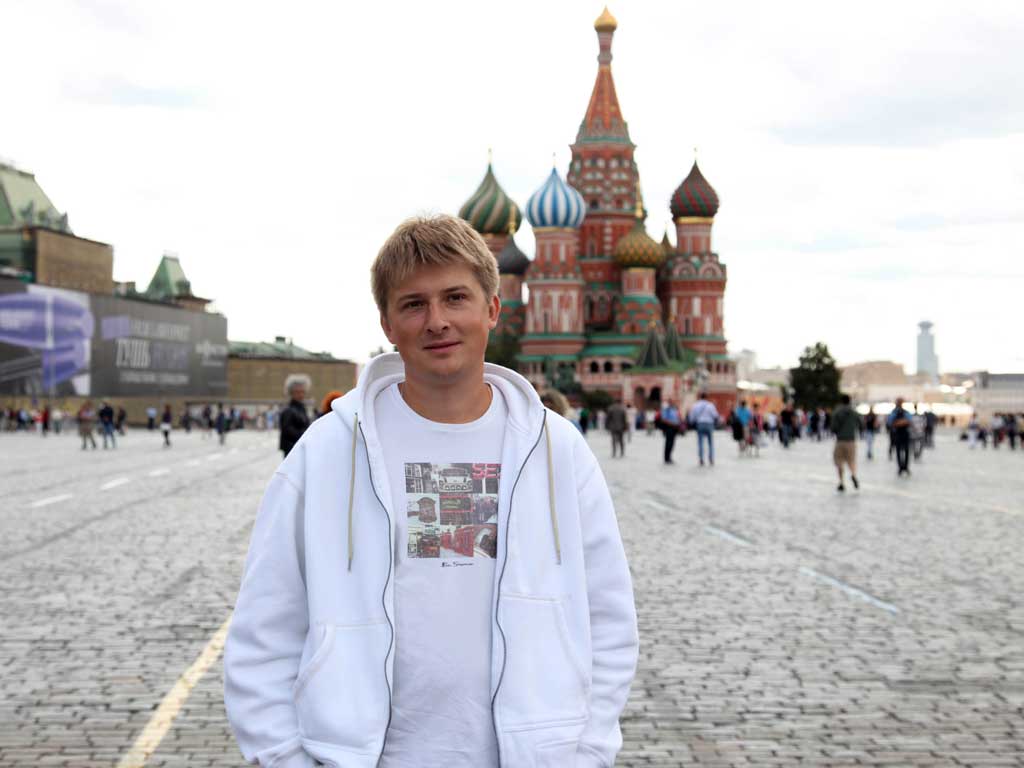
Anton, a 28-year-old magazine editor living in Moscow, is one of the original group of seven-year-olds picked to star in Born in the USSR: 7 Up, back in the time when they called the Soviet Union home. Now, more than two decades later, the journalist is one of the eight people who, in the words of Michael Apted, the British Up series director and producer, helped "dramatise the break-up of an empire".
The little boy, who famously predicted a "coup" when he was first filmed, now lives in a tower block in Russia's capital city with his family. His grandfather wrote speeches for Mikhail Gorbachev; he is now deputy editor of Men's Health.
While he is critical of modern Russia – "corruption is so deeply spread in our culture" – he has enjoyed being part of the show. It helped him "think about the basic things in life. Every seven years, I have had time to stop and think about different things. I look back at what has changed, what I have done, where I am going," he says.
As far as Mr Apted is concerned, this one man's development is testimony to the huge success of the documentaries, which started out with a simple mission: to document Britain's class culture. The series, which has run for almost half a century, was such a huge success in Britain that it was decided it should be franchised out to the world's superpowers – the US (where Mr Apted also worked behind the scenes as executive producer) and the USSR. In the latter case, in 1990, children were plucked from across the Soviet Union's huge landmass – including places such as Siberia and Kyrgyzstan.
The Up format also made it to South Africa, Japan and Germany, inspiring shows in more than half a dozen other countries and a new British series, 7 Up 2000, for the 21st century. The reason is simple, says Mr Apted: behind all the programmes,"the human face was the big currency".
"It was the realisation that the shows dealt with universal human issues, and politics were just the context for it," he says. "It has simple, basic, humanistic underpinnings. This is what made it successful and watchable; it is about stuff we all have to go through, irrespective of where we land."
Of course, some shows have had more context than others. Three of the original contributors to 7 Up in South Africa had died of HIV-related illnesses by 21 Up, while one participant in the USSR series, Andrei, was adopted after the first show, and moved from his children's home in Siberia to Florida. He opted out of the latest filming.
For Jemma Jupp, producer of Born in the USSR for more than 20 years, the programme is akin to putting a "time capsule underground". For Mr Apted, it is a format that could work "almost anywhere".
He adds: "I wish I could have done it in Northern Ireland. It would have been fascinating, a whole generation of children brought up in violence. I would also have liked to have done one in the Middle East. But, then, I think every country should do one. It's about the development and growth of the human face – that's the very powerful image behind all these films."
'Born in the USSR: 28 Up' is on ITV1 tomorrow at 10.35pm
The Up franchise
Some 13 countries have made shows replicating or inspired by the 7 Up format. They include:
UK Now at 56 Up. A later reboot started 12 years ago: 7 Up 2000
Australia Smokes and Lollies (began 1975)
Denmark Argang 0 (2000)
France Que deviendront-ils? (1984)
Japan 7 Up (1992)
South Africa 7 Up in South Africa (1992)
Sweden Från en barndomsvärld (1973)
US Age 7 in America (1991)
USSR Age 7 in the USSR (1990). Now airs as Born in the USSR: 28 Up
Born in the USSR: The other characters
Stas and Dennis At seven, the twins lived in an industrial suburb of Leningrad, now St Petersburg. Their father died at 14. By 28, they have fallen out. Dennis has been working in the navy, while Stas is a poorly paid waiter.
Tanya From a stable family, but at seven was unimpressed by the lack of goods in the Soviet shops and had no hope that they would ever appear. At 28, she loves the increased choice in post-Soviet Russia, but admits life is expensive.
Almaz At seven, he lived in a factory workers' hostel in the capital of Kyrgyzstan. He wanted to study in school and said he would buy exercise books if he ever had a lot of money. At 28, living in Novosibirsk, Russia, he is a market trader, buying goods to sell mostly from China.
Rita At seven, she was very lively and living in a wooden house on the shore of the largest freshwater lake in the world. Since the collapse of the USSR, her village has become touristy and Rita's father runs a pleasure boat for tourists.
Andrei Arguably, his life was changed most by the show. At seven, he was in a children's home in Siberia; at 28, he is living in Florida. He moved to the US at 14, after 7 Up was screened abroad, when he was adopted by an American family, who later changed their minds. Adopted by a second family, he appears this time only to say that he does not want to be filmed.
Asya At seven, she lived with her mother and grandparents in an apartment in Leningrad. At 28, she divides her time between St Petersburg and Pskov.
Subscribe to Independent Premium to bookmark this article
Want to bookmark your favourite articles and stories to read or reference later? Start your Independent Premium subscription today.
Join our commenting forum
Join thought-provoking conversations, follow other Independent readers and see their replies