Abu Daoud: Palestinian terrorist who masterminded the 1972 Olympic massacre
Before the 1972 Munich Olympics, the Black September Organisation, or BSO (Ayloul al-Aswad in Arabic), was generally unknown except to a handful of Middle East specialists and intelligence services who followed a deadly game of exchanging assassinations between Palestinian guerrilla groups and the Israeli intelligence service Mossad.
The BSO, a splinter group from the Palestine Liberation Organisation, or PLO, was founded, its literature said, "to avenge blood of the martyrs of Black September" (20,000 as claimed by BSO and 1,000 according to Jordanians). The BSO coordinated with international terror groups like the German Bader Meinhof gang and the Japanese Red Army, in targeting Arab regimes who "backed" the Jordanian Army. In November 1971, the BSO assassinated Wasfi al-Tal, who was Jordan's prime minister in 1970, outside the Sheraton Hotel in Cairo, earning the wrath of President Anwar Sadat, who was turning Egypt away from Nasser's revolutionary path towards peace with Israel.
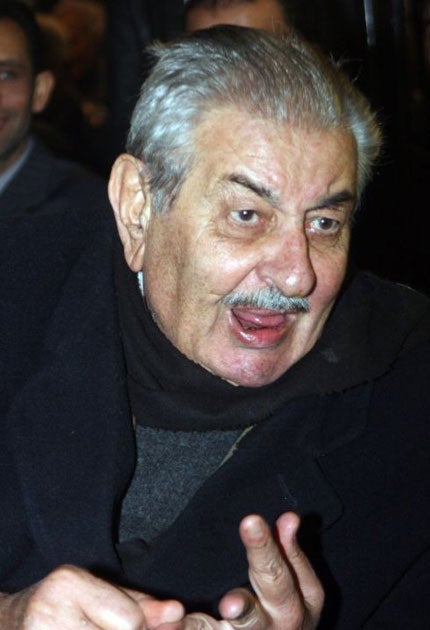
The BSO operations' chief was Mohammed Oudeh, a Palestinian former science teacher known by his nom de guerre Abu Daoud ("Abu" means "father of", and Daoud was his father's middle name given to his only son). Over five months Oudeh planned the attack on Israeli athletes at the Munich Olympics, exploiting his contacts with Syrian intelligence as well as the East German Stasi, smuggling equipment and weapons to Munich, as he later told The Independent).
On 4 September 1972, Oudeh invited a dozen guests to dinner at a Munich restaurant near Munich Banhof, where he went over the final details pf the operation. A few hours later, eight of them scaled the wall surrounding the Olympic athletes' village (another three look-outs were never caught). By 4:45am they had taken nine Israeli athletes hostages in their quarters after killing two who, they said, were armed secret agents (they were a weightlifter and a wrestling coach in the Israeli official version).
During 20 hours of negotiations BSO offered to exchange their hostages for 236 Palestinians in Israeli jails. Golda Meir, then Israel's Prime Minister, refused to negotiate.
Oudeh has been consistent, over many personal conversations, in interviews and in his 1998 book From Jerusalem to Munich, published a year later in English as Memoirs of A Palestinian Terrorist, that his clear instructions was "to avoid harming the hostages", whom he wanted to exchange. He later said that he deliberately prolonged negotiation to maximise publicity, "alerting the world to the Palestinian legitimate grievances").
Having aborted a previously rehearsed plan to storm the compound since television cameras were transmitting live to the world pictures of the outside building, which were also seen by the hostage-takers) the West Germans agreed to transport both captors and their hostages in two helicopters, to Furstenfeldbruck military airfield, where an aircraft was waiting to fly them to Cairo (the Egyptians, infuriated by BSO terror activities, had planned to arrest them, according to their official papers).
To everyone's surprise, the German security a bungled an armed rescue attempt at the airport, resulting in a chaotic gun battle. When the smoke cleared, five Palestinians, a German police officer and all nine hostages' bodies were found on the runway and on the plane. An Israeli government statement vowed to hunt down and kill any Palestinian who had survived or who had been involved in planning the operation; special squads were recruited from Mossad for the mission, which went on for years.
Mohammed Daoud Oudeh was born in Silwan, East Jerusalem, in 1937. Trained as a teacher in Amman, Beirut and Cairo, he taught mathematics and physics in West Bank Palestinian secondary schools (administered by Jordan's ministry of Education). He later studied law and helped draft the PLO charter and constitution and assisted in other parliamentarian legal issues after joining the Palestinian National Council (or parliament).
He remained in East Jerusalem until captured by Israel in the 1967 Six Day War, when he moved to Jordan and joined the Palestine Liberation Organisation. He later admitted to this paper that he had been in contact with them as a "sleeper" of the PLO's largest Arafat-led sub-group, Fatah, of which he was one of the founders. He claimed to have taked part in the Al-Karama battle in 1968 when Israeli forces, using air cover, attacked refugee camps run by the PLO inside Jordan near the village of al-Karama – the first time Palestinian "resistance" fought the Israeli army face to face instead of the hit-and-run or bomb-planting operations they started in January 1965.
He had major disagreements with Arafat over priorities. While Arafat exploited the contradictions between Arab regimes, Oudeh was more of revolutionary puritan who saw regimes who were not aiding the Palestinians, or who were making bilateral peace deals with Israel, as "enemies who should be fought".
He went underground into Lebanon via Syria in 1970, movingd between Libya, Iraq, Syria and Lebanon, and then to Europe. After the 1972 attack, Oudeh lived in Eastern Europe and moved back to Lebanon in early 1975. When the Lebanon civil war broke out later that year, he participated for a few months, then moved to Jordan. He moved to Ramallah in the West Bank following the 1993 Palestinian Israeli Oslo peace accords.
Upon reading his memoirs, the Israelis banned him from returning to Ramallah following a trip to see his doctor in Amman. He finally settled in Syria – the only country that would take him, and the most militant regime country in the anti-peace Arab bloc.
Oudeh narrowly escaped assassination in what he claimed to be a Mossad operation in a hotel lobby in Warsaw in 1981. Despite being shot several times in his left wrist, chest, stomach and jaw, he chased his assassin (who claimed to be a Palestinian double agent), to the hotel entrance, where he collapsed.
He belonged to a group of hard men who founded the PLO in 1965 and believed that armed struggle must not be given up as option beside negotiation. In his last interview, with Al-jazeera in 1999, he said he would carry out the Munich attack all over again as he had no regrets, remaining militant to the end. "Today, I cannot fight you anymore,'' he said in a statement to the Israelis shortly before his death of a kidney failure, "but my grandson will and his grandsons, too."
Mohammed Oudeh (Abu Daoud), politician and militia commander; born Jerusalem 1937; married (five daughters, one son); died Damascus 3 July 2010.
Join our commenting forum
Join thought-provoking conversations, follow other Independent readers and see their replies
Comments
Bookmark popover
Removed from bookmarks