Anita Page: Star of the silent screen
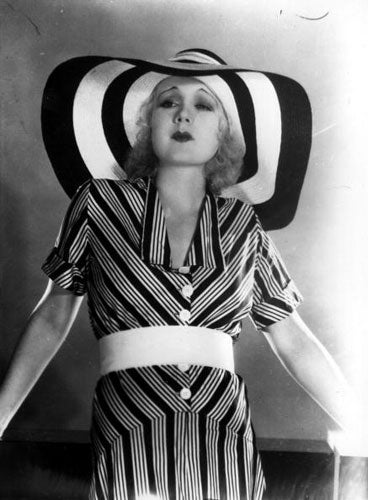
One of the last surviving stars who made the transition from silent films to the talkies in the late Twenties, Anita Page on screen was the epitome of the fun-loving flapper or flirtatious chorus girl in such iconic films of the period as Our Dancing Daughters (1928), Our Modern Maidens (1929) and Our Blushing Brides (1930).
Our Dancing Daughters made a star out of the Charleston-dancing Joan Crawford, but Page stated in 1995, "Our Dancing Daughters was my picture. I say that because I did the acting. Joan Crawford danced her way through it. I acted my way through it." In 1929 she co-starred with Bessie Love and Charles King in the first sound film to win a Best Picture Oscar, Broadway Melody, and Variety commented, "She can't dance, but the remainder of her performance is easily sufficient to make this impediment distinctly negligible".
At the time, Page was receiving 10,000 fan letters a week, second only to Greta Garbo – a particularly obsessive admirer was Benito Mussolini, who sent her several marriage proposals. The composer Nacio Herb Brown, who was married to Page for a few months in 1934, dedicated to her the song "You Were Meant For Me", which was sung to her by Conrad Nagel in The Hollywood Revue of 1929.
Of Spanish descent, she was born Anita Evelyn Pomares in New York in 1910, the daughter of an electrical engineer. The silent star Betty Bronson was a neighbour of the family and Anita made her screen début as an extra in a Bronson film made in New York, A Kiss for Cinderella (1926). Advised by the assistant director to take dancing lessons ("I had the face, but I was a little awkward"), she studied with Martha Graham, then worked as a model before joining an independent film company owned by Harry K. Thaw, the tycoon who had figured in a sensational court case 20 years earlier when he shot the lover of his wife, the showgirl Evelyn Nesbit.
Anita travelled with Thaw and his company to Hollywood, where she was photographed as Thaw's protégée, but his film venture failed – the movie he made with her was never released – and he returned to New York, but she stayed on, and with Bronson's help was able to get her photographs seen by leading agents. "In those days, the only thing you had was how you photographed. You had to have the right bone structure and you had to have the right eyes."
MGM gave her a contract and the name Anita Page, casting her as a showgirl saved by a reporter (William Haines) from a false accusation of murder in Telling the World (1928). Her next film, Our Dancing Daughters, was the first of three films she made with Joan Crawford. Her performance as a fun-loving, hard-drinking "jazz baby" who steals Crawford's boyfriend before meeting an untimely death is considered by many to be her finest performance, and the studio then teamed her with two of their top leading men – Lon Chaney in While the City Sleeps (1928), and Ramon Novarro in The Flying Fleet (1929). She later named Novarro as her favourite co-star: "He was very sweet and kind to me. I was so crushed when he was killed [in 1968]."
Her part in Broadway Melody as "Queenie", whose vaudeville act with her sister (Bessie Love) is threatened when they both fall in love with the same man, is her best-remembered role, though she never cared for it personally. "I thought Our Dancing Daughters was my picture, but Broadway Melody was Bessie Love's. I love good English, and I hated saying things like, 'Gee, ain't it elegant?' In my opinion, silents were much better than talkies. One thing you could have was mood music, which you could have playing throughout your scene to inspire you. The trouble with talkies was, they let you have the music, but they'd stop it when you had to talk, and that was always a let-down for me."
She starred with Crawford again in both Our Modern Maidens and Our Blushing Brides, quipping later, "I used to laugh and say that we're going to be 'The Galloping Grandmothers' at the rate we're going".
Page blamed the gradual decline of her career on her agent who, during the shooting of Our Modern Maidens, demanded more pay. "He should have demanded better roles, like Bette Davis did later at Warners. MGM had never loaned me out before, but now they gave me to Universal and other studios and they did that for five years." Though MGM starred her with Buster Keaton in Free and Easy (1930), John Gilbert in Gentleman's Fate (1931), Phillips Holmes in Night Court (1932), and gave her a particularly striking supporting role as a prostitute in the pre-Code movie Skyscraper Souls (1932), many of the films for which she was loaned were "B" movies.
In 1933, the year she starred in Monogram's Jungle Bride, she made her stage début touring in Billy Rose's revue Crazy Quilt. "I wanted to learn timing, how to deliver one-liners, and Bob Montgomery advised me to get some stage experience." Hitchhike to Heaven (1936), in which she was sixth-billed, was to be Page's last film for 60 years.
The same year she met a naval officer, Herschel House, and in January 1937 they were married. His career took them all over the world before they settled in Coronado, in the San Diego Bay, and House eventually attained the rank of Rear Admiral. "Making pictures was a fabulous experience," Page said in 1976. "But the ultimate goal was a happy marriage, and when this came along it took priority and replaced everything else."
After House died in 1991, Page took occasional small film roles, her latest in the recently completed horror movie Frankenstein Rising.
Tom Vallance
Anita Evelyn Pomares (Anita Page), actress: born Flushing, New York 4 August 1910; married 1934 Nacio Herb Brown (marriage annulled 1935), 1937 Herschel House (died 1991; one daughter, and one daughter deceased); died Los Angeles 6 September 2008.
Join our commenting forum
Join thought-provoking conversations, follow other Independent readers and see their replies
Comments