Bernard Knox: Veteran of the Spanish Civil War who became a celebrated classics scholar
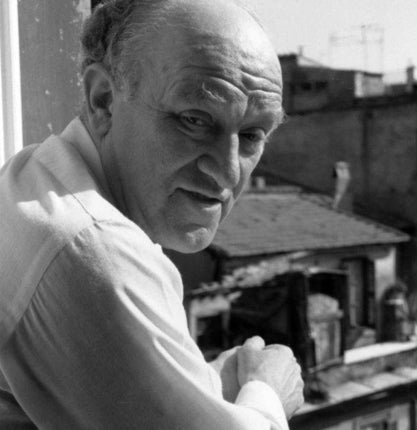
Bernard Knox was one of the first British volunteers to join the International Brigades in the Spanish Civil War. He continued the fight against fascism during the Second World War as a US Army captain, working with the French and Italian resistance, and afterwards became a distinguished classics scholar.
Born in Bradford, the son of a professional pianist, Knox was raised in south London, where he was educated at Battersea Grammar School before winning a scholarship in 1933 to study classics at St John's College, Cambridge. He joined the Cambridge Socialist Club and befriended the dashing young poet John Cornford. Both were part of a generation of students attracted to communism and alarmed by the growth of fascism in Europe.
When the Spanish Civil War began in July 1936, Cornford immediately went to Spain to help the Republic resist General Franco's fascist-backed rebellion. He enlisted with the revolutionary militias on the Aragó*front, but came home in September 1936 to persuade others to join the fight. He contacted Knox, then aged 21, who recalled: "He had returned to England to recruit a small British unit that would set an example of training and discipline (and shaving) to the anarchistic militias operating out of Barcelona. He asked me to join and I did so without a second thought."
Cornford – who was to be killed in action at Lopera on 28 December 1936 – took his group of a dozen volunteers to the International Brigade base at Albacete, where they were assigned to the machine-gun company of the French Commune de Paris Battalion, with Knox as an interpreter. The British unit took part in the battles in and around Madrid in November and December 1936 at the University City, Casa de Campo and Boadilla del Monte, where Knox was so badly wounded he was left for dead.
"As our section was moving back, dragging the [machine] gun, I felt a shocking blow and a burning pain through my neck and right shoulder and fell to the ground on my back with blood spurting up like a fountain," he wrote. "John [Cornford] came back, with David [Mackenzie], our Oxford man who had been a medical student. I heard him say: 'I can't do anything about that' and John bent down and said: 'God bless you, Bernard' and left. They had to go; they had to set up the gun and cover the withdrawal of our other crew. And they were sure that I was dying. So was I. As the blood continued to spout I could feel my consciousness slipping fast away."
Alone, Knox recovered consciousness and with the help of a young miliciano made his way to the front-line dressing station – with the words from a Tennyson poem, "Fall into the hands of God, not into the hands of Spain!" going through his head – before being moved to the International Brigade hospital housed in the Hotel Palace in Madrid. His neck injury required further medical attention and he was repatriated in January 1937.
"Back home, I watched in utter despondency as the British government persisted in its policy of appeasement and the prospect of victory in Spain receded fast as Hitler and Mussolini gave Franco a steadily increasing preponderance in weapons and troops."
In 1939 he moved to the United States and married Betty Baur, an American student he had met at Cambridge and who, as a novelist, would use the name Bianca Van Orden. They stayed together until her death in 2006.
In 1942 Knox joined the US Army and was promoted to captain in 1944, by which time he had also become a naturalised US citizen. In July of that year, while serving in England in an OSS (Office of Strategic Services) unit, he was parachuted into Brittany as part of Operation Jedburgh and worked with local members of the French Resistance. In the spring of 1945 he was sent to work with the Italian partisans and took part in heavy fighting during the Gothic Line and Po Valley campaigns.
It was in northern Italy that his epiphany arrived. Taking cover in a bombed-out house, he came across an edition of Virgil lying under brick dust and broken glass. His first thought was: "I wonder if I can still read this stuff?" and he opened the book at random and stabbed his finger at a line. The passage read: "The curving sickles are beaten straight to make swords. On one side the east moves to war, on the other, Germany. Neighbouring cities tear up their treaties and take to arms; the vicious war god rages the world over." He vowed then that should he survive he would resume his study of the classics.
He returned to the US with two Bronze Stars and the Croix de Guerre "avec palme", the decoration's highest category.
Following the Spanish Civil War, Knox had become disillusioned by Stalin's show trials and foreign policy and ceased to consider himself a communist. Though he remained a defender of the Spanish Republic and a champion of the cause of freedom in Spain, he joined no political party in the US and refrained from political activity. But he was taken aback when in 1946 the chairman of Yale University's classics department called him a "premature anti-fascist", a phrase he would subsequently discover was the FBI code for a communist.
His political past did not, however, prevent him from being accepted, with generous funding from the GI Bill, as a PhD classics student at Yale where, following the award of his doctorate, he also taught. In 1961 he was appointed the director of Harvard's Center for Hellenic Studies in Washington DC. He held the post until his retirement in 1985.
The book that established his academic reputation, Oedipus at Thebes: Sophocles' Tragic Hero and His Time, was published in 1957. Later came The Heroic Temper: Studies in Sophoclean Tragedy (1964) and the acclaimed Word and Action: Essays on the Ancient Theater (1979). Among his other books were Essays Ancient and Modern (1990), which includes chapters on his wartime experiences in Spain and Italy, and The Oldest Dead White European Males and Other Reflections on the Classics (1993), in which he challenges the criticisms of the classics made by "advocates of multiculturalism and militant feminism".
As well as numerous articles in journals and the The New York Review of Books, he wrote introductions for Robert Fagles's new translations of Homer's Iliad (1990) and Odyssey (1996) and Virgil's Aeneid (2006), and edited The Norton Book of Classical Literature (1993).
Jim Jump
Bernard MacGregor Walker Knox, soldier and classics scholar: born Bradford 24 November 1914; married 1939 Betty Baur (died 2006; one son); died Bethesda, Maryland, US 22 July 2010.
Join our commenting forum
Join thought-provoking conversations, follow other Independent readers and see their replies
Comments