Dinko Sakic: Concentration camp commander
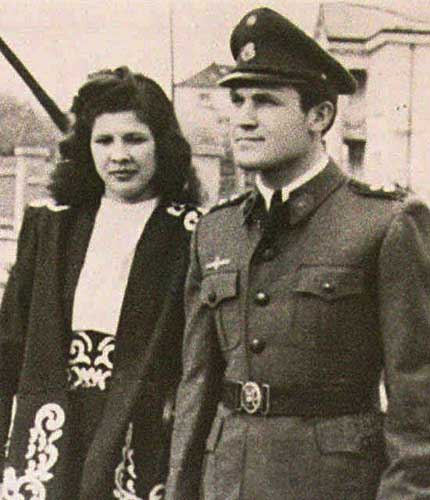
Dinko Sakic was only 22 years old when, in 1944, he was appointed commander of Jasenovac, the most notorious of the wartime concentration camps established by Croatia's pro-Nazi ruling party, the Ustashe. Although thousands of inmates were killed during his brief tenure in charge of the camp, Sakic appeared destined to evade justice once he escaped – along with many other war criminals – to Argentina after the war. There he lived in comparative obscurity for over 50 years, until he appeared in a television interview in which he admitted the role he had played at Jasenovac, while denying that any atrocities had been committed at the camp.
Sakic was subsequently extradited to Zagreb where his trial became an important test of the willingness of Croatia's nationalist authorities to come to terms with the legacy of their country's past. His conviction and sentencing to the maximum 20 years in prison in 1999 was a clear signal that President Franjo Tudjman's administration, which had earlier sought to rehabilitate some aspects of Croatia's wartime regime, was now prepared to distance itself very clearly from that earlier attempt to bring about Croatia's independence from Yugoslavia. During his years in prison, Sakic was believed to be the last living commander of a Second World War concentration camp.
Dinko Sakic was born in 1921 and became a committed member of the nationalist organisation Ustasha from a very young age. Following the German-led invasion of Yugoslavia in April 1941, the new Independent State of Croatia (NDH), established under Third Reich and Italian tutelage, set up detention facilities for Serbs, Jews, Roma and anti-fascist Croats. The Ustasha regime of the Poglavnik, or leader, Ante Pavelic, was determined to eliminate minority groups and political opponents – in the case of the Serbs, by expulsions, killings and forcible conversions to Roman Catholicism.
Sakic joined the concentration camp administration in 1941. A year later he was appointed as an assistant commandant of Jasenovac, south-east of Zagreb, the biggest of the 20-odd camps set up by the Ustasha regime. Just two years later, in April 1944, he was promoted to the post of camp commandant. Sakic's rapid rise in the hierarchy was due only in part to his enthusiastic and loyal support for Pavelic's policies. In 1943 he married Nada Luburic, the half-sister of Vjekoslav (Maks) Luburic, a veteran Ustasha official, who had been instrumental in first creating and then overseeing Croatia's network of concentration camps.
As commandant of Jasenovac, Sakic was not merely a bureaucrat. He personally took part in the killing and torture of some of the inmates. Among the crimes attributed to him – for which he was to be condemned more than half a century later – he shot dead a prisoner accused of having stolen a corn on the cob and killed in a similar way two Jewish internees after another inmate had escaped from the camp. During the six months he was in charge of Jasenovac, at least 2,000 prisoners were killed; many others died of disease or malnutrition.
With the end of the Second World War – which led to the restoration of Yugoslavia under Marshal Tito's Communist regime – Sakic joined Pavelic, and many other Ustasha figures who escaped to Argentina. President Juan Perón's populist regime provided a safe haven for many war criminals, including Adolf Eichmann, the Nazi official in charge of deporting Jews to German-run concentration camps, who was later to be abducted from Argentina by Israeli agents.
Sakic led a relatively quiet life, running a textile factory and engaging in Ustasha émigré politics. He was largely forgotten and already living in quiet retirement when he unintentionally catapulted himself into the limelight in an Argentinian television interview, shown in April 1998, by admitting that he had been a commandant at Jasenovac.
The Sakic case posed a dilemma for President Tudjman's nationalist administration which had led Croatia to independence in 1991. Tudjman had courted the Croatian émigré community, including the far right, in a bid to strengthen national unity during the war of independence from Yugoslavia and the conflict with Croatia's separatist Serbs which lasted until 1995. In his historical writings in the 1980s he had already sought to play down the number of victims at Jasenovac; and as president in the mid-1990s, he had provoked outrage by proposing that the Ustasha victims of post-war retribution by the Communists should be buried alongside those whom the Ustashe had killed at Jasenovac, as a gesture of national reconciliation.
On the other hand, with Croatia's war and the intense phase of nationalism associated with it now over, Tudjman was eager to demonstrate the country's pro-Western, democratic credentials in the hope of securing eventual accession to the European Union and better relations with the United States. So Sakic was extradited from Argentina and put on trial in Zagreb in 1999. More than 30 witnesses provided evidence against the defendant, who nevertheless protested his innocence, claiming that "no harm was done" to the inmates.
By finding Sakic guilty and giving him the maximum prison term of 20 years allowed under Croatian law, the court helped Croatia take a significant step forward in demonstrating the rule of law, irrespective of any ethnic considerations. It also contributed to the important process of reconciliation with Croatia's Serbian and Jewish communities.
Sakic, troubled by heart disease, spent the last decade of his life in prison, with long stays in hospital. Shortly before his trial, the case against his wife, a guard at the Stara Gradiska camp for women, was dropped for lack of evidence.
Gabriel Partos
Dinko Sakic, concentration camp commander and businessman: born Studenci, Kingdom of Serbs, Croats and Slovenes 8 September 1921; assistant commandant, Jasenovac concentration camp 1942-44, commandant 1944; married 1943 Nada Luburic (three children); died Zagreb 21 July 2008.
Join our commenting forum
Join thought-provoking conversations, follow other Independent readers and see their replies
Comments
Bookmark popover
Removed from bookmarks