Gene Lees: Singer and songwriter who was also an unforgiving music critic
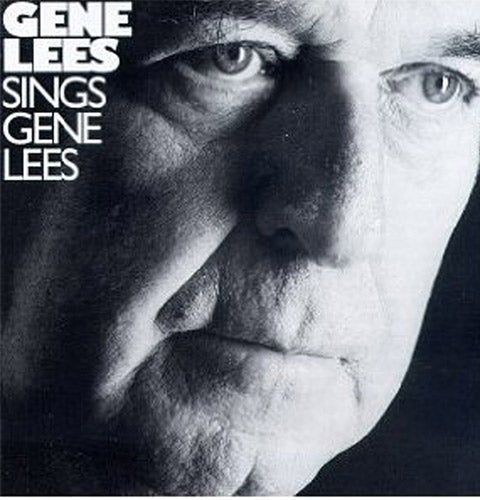
Although Gene Lees was known as a perceptive music writer and biographer, he was also a fine lyricist, writing such stylish standards as "Yesterday I Heard the Rain", "Someone to Light Up My Life" and "Quiet Nights of Quiet Stars". This talent gave his music writing an extra authority and he was a joy to read even if you didn't agree with him. He thought that today's lyrics portrayed "a vision of loveless sex" and that the songwriters were doing as much as pornographers to destroy the mystery of women.
Gene Lees' parents, Harold and Dorothy, were born in England, but emigrated to Canada with their respective parents. Harold had been a coal miner, but in Canada he played violin in an orchestra which accompanied silent films. Lees studied in Hamilton and then at the Berklee College of Music in Boston, Massachusetts. He developed a love of popular music, the Great American Songbook, plus classical music and jazz. His favourite lyric writer was Jerome Kern, and he called Cole Porter's "Begin the Beguine" "the greatest song written in America because of the way it sort of builds operatically. What a piece of work that is."
From 1948 to 1955, Lees worked as a reporter then as an arts critic in Louisville, Kentucky. He wrote uncompromising reviews: the Louisville Orchestra had never received such critical notices and many of the local jazz musicians loathed him. This pattern echoed throughout his life.
In 1959, Lees became editor of Down Beat jazz magazine, and delighted in disparaging rock'n'roll, dismissing it as junk. He loved Nat "King" Cole's piano playing and adored Peggy Lee: "She was completely motionless. Maybe she'd give a flick of the eyebrow or a slight gesture with her finger. The point was that you heard the song. She got out of the way of the song."
In 1961, Lees left Down Beat, objecting to the dismissal of the art director. He wrote his resignation in the form of a lyric, "It's National Fuck Your Buddy Week". He managed the Paul Winter Sextet on a trip to Latin America; while there he discovered bossa nova and, on a bus journey, wrote an English lyric for Antonio Carlos Jobim's "Corcovado", calling it "Quiet Nights of Quiet Stars". He went on to work on other songs with Jobim. He regarded Sinatra's smooth and subdued performance of "Quiet Nights of Quiet Stars" (1967) as the definitive recording of any of his songs, and in 1969 he coached the musicians when Sinatra made an album with Jobim which included three of his songs.
Lees wrote English lyrics for several Charles Aznavour compositions, including "Paris Is at Her Best in May", "There Is a Time", "Little Train" and, in particular, "Venice Blue", recorded by Bobby Darin in 1965. He wrote "Waltz for Debby" with the jazz pianist Bill Evans, recorded by Tony Bennett and Al Jarreau, and the theme for the film Darling (1965) with John Dankworth, recorded by Sarah Vaughan. Lees' novel about an American jazz musician adrift in Paris, And Sleep Until Noon, was published in 1967.
Lees became pop editor of the magazine High Fidelity, but he continued his contempt for the popular music of the day, loathing the Beatles, and when he and Johnny Mercer went to see Hair they left after a few minutes, dismissing it as "absolutely cretinous". He commented in Down Beat: "Paul McCartney is a musical ignoramus, although he has a certain amount of melodic flair. He is not interested in fitting long vowels to long notes, short vowels to short notes, and why should he be? The performances by rock groups are so distorted that fine points of craft are inaudible. Bob Dylan has the worst ear for song of anybody I have ever heard. It may be justified by calling it 'the broken-glass poetry of Bob Dylan', but that's nonsense. Bob Dylan doesn't know a thing about craft."
His most intriguing composition is "Yesterday I Heard the Rain", which has been recorded by Tony Bennett, Perry Como and Shirley Bassey. On first hearing it sounds like a wistful song of lost love, but the images contain hints of paranoia; who are the "faceless people"? It was written at the time of the "Is God Dead?" debate and the lyric reflected it: "Yesterday I heard the rain / Whispering your name / Asking where you'd gone". For a man so meticulous about rhyme and whose best-selling book was The Modern Rhyming Dictionary, the song contains a false rhyme – "rain" and "flame".
Starting with The Gene Lees Songbook (1972), Lees recorded several albums of his own songs. His most unusual assignment was to adapt some poems in Polish by Pope John Paul II, and they were interpreted in concert and on record by Sarah Vaughan as the project One World, One Peace (1985).
Since 1981, Lees had been writing his subscription-only Jazzletter. The informed opinions of Lees and his contributors were highly appreciated. Singers and the Song (1987) was a thought-provoking collection of his essays, while other collections were Meet Me at Jim & Andy's (1988) and Waiting for Dizzy (1991). His third wife, the former Janet Suttle, who plans to continue Jazzletter. Lees analysed racism in music in Cats of Any Color (1994) and wrote biographies of Oscar Peterson, Woody Herman and Johnny Mercer as well as a study of the songwriters Lerner and Loewe, and he worked with Henry Mancini on his autobiography. At the time of his death he was working on a biography of Artie Shaw.
Spencer Leigh
Eugene Frederick John Lees, singer, songwriter and critic: born Hamilton, Ontario 8 February 1928: married three times (one son); died Ojai, California 22 April 2010.
Join our commenting forum
Join thought-provoking conversations, follow other Independent readers and see their replies
Comments
Bookmark popover
Removed from bookmarks