Geoffrey Burgon: Composer whose highly successful scores for film and television subsidised his more serious work
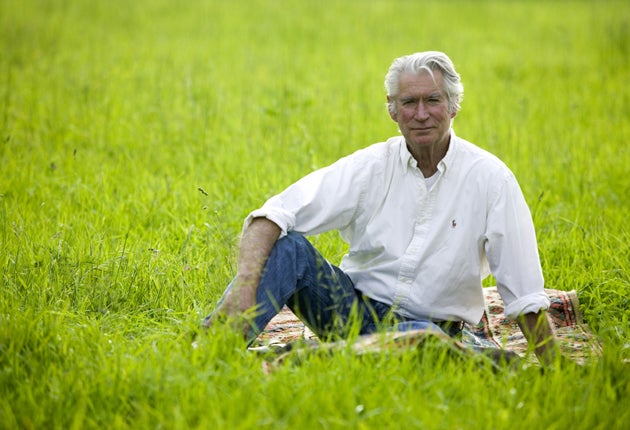
Geoffrey Burgon enjoyed the kind of popular success that most classical composers can only dream about.
The Nunc dimittis from his music for the BBC thriller Tinker, Tailor, Soldier, Spy, which starred Alec Guinness as George Smiley, entered the charts in 1979, and only two years later the recording of his soundtrack for Brideshead Revisited for Granada "went gold", selling over 100,000 copies.
His television and film scores kept his music in the public ear – among them those for the Monty Python film Life of Brian (1979), The Dogs of War (1980), Bleak House (1985), The Chronicles of Narnia (1988–89), Robin Hood (1990) and Martin Chuzzlewit (1994); more recently he won Baftas for Best Television Music for Longitude (2000) and The Forsyte Saga (2002). The classical world sometimes looks down its nose at film-music composers, but all the while Burgon kept up a steady stream of concert music – his real passion – that earned the respect of his contemporaries. Indeed, given the demands made on his time by the studios, Burgon's music for concert-hall and church is astonishing in both its quantity and quality.
He came to music relatively late, taking up the trumpet at 15; soon he was writing music for a local group. When he entered the Guildhall School of Music in 1960, he was still intent on becoming a jazz trumpeter, but composition lessons with Peter Wishart – later supplemented by private study with Lennox Berkeley – began to focus his interest on writing music.
Early success came in 1968 when his Five Sonnets of John Donne for soprano, mezzo soprano and ensemble, written the previous year, won the Prince Pierre of Monaco Award. He none the less supported himself and his young family as a freelance trumpeter until he reached 30, when he sold all but one of his trumpets and took the plunge as a full-time composer – and for the next 10 years was, he said, "incredibly poor". He had written his first ballet score, The Golden Fish, in 1964, and was soon in demand for more – The Calm in 1974 and Goldberg's Dream (Running Figures) in 1975 – as well as TV scores, writing the music for two Dr Who series in 1975 and 1976.
The seal on his reputation as a concert composer came with the excited reception given to his Requiem – one of a series of works inspired by his enthusiasm for the poetry of St John of the Cross – at the Three Choirs Festival in Hereford in 1976; it engendered a series of commissions which began to improve his circumstances.
His bank balance changed beyond all recognition with the runaway success of Nunc dimittis in 1979. Paul Phoenix, the treble whose voice touched millions, recalled how he was an 11-year-old chorister at St Paul's Catheral when Barry Rose, the Master of the Choristers, asked him to sing for Burgon.
"The plan was this," Phoenix said. "I would sing for Geoffrey, with Barry at the piano, and then he would go away and write the theme tune for 'some BBC TV drama episodes'. The meeting was significant for several reasons: having sung for Geoffrey, he took over at the piano, and started to work on some ideas for the Nunc dimittis, with me singing, at this point without any text. He then asked Barry Rose to play the piano again, and whilst we played and sang together, played his trumpet. To be honest, I didn't think any more about it, until I was invited to the BBC to record the theme to Tinker, Tailor, Soldier, Spy. I was paid £20, incidentally!"
Burgon received the first of his two Ivor Novello Awards for the music but – typically of him, Phoenix feels – not only invited his young singer to the ceremony, but insisted that they receive the award together and that Phoenix say a few words: "I can't think of many people who would have done that". Burgon discovered that Phoenix shared his passion for cars and gave him a leather-bound Bristol owner's manual, which he treasures to his day. Burgon himself went through classic cars with profligate speed but remained faithful to a Bristol 405 convertible for over two decades.
Nigel Jones, elder brother of the Python Terry Jones, had been Burgon's best pal at Pewley School in Guildford; it was he who had persuaded him to learn the trumpet and join him in the school jazz band. With the family connection, it was natural that Terry Jones should commission Burgon to write the score for Life of Brian. The Python team had pulled together some snippets from other Biblical epics to indicate what kind of music they wanted but, as Jones recalled, "we sort of left him to work it out". Burgon then returned to play through the music he had written: "He apologised for not being a very good piano player – it wasn't quite one finger, one note, but he just sketched out the melodies for me. It seemed almost like scales at the time but it was entirely wonderful when we recorded it – very exciting."
Burgon and Jones became close friends as a result of their work together: "He was very amusing and droll, laid back," Jones said. "A very good man: I loved him."
Burgon's next major success came with Brideshead Revisited, whose director Charles Sturridge praised "his emotional lucidity as a composer". Sturridge had intended to interview several potential composers but he knew when he met Burgon that he had found the figure he wanted.
"He was a very modest person, but he had a kind of curious self-confidence as well, and it was one of those lunches when you thought: there clearly isn't going to be anyone better than this," Sturridge said. "Although we didn't quite understand this as we started, he was writing nearly four hours of music, which is a pretty huge œuvre by any standard."
In contrast with Terry Jones, Sturridge was a hands-on director: "We must have weeks sitting in his tiny attic in Woronzow Road on the edge of Hampstead, talking about what we wanted the music to do, on a scene-by-scene basis, and he would then turn that miraculously into this exquisite score. He had to work out, bar by bar, how each bar would reflect each shot and each cut in the film."
But Sturridge was at one with Jones on Burgon's basic keyboard abilities: "In those days before computers writing music for films was a question of piano, video recorder, piece of paper. Geoffrey wasn't the world greatest pianist and so, in order to communicate his side of the conversation, you would have a mix of erratically played piano and Geoffrey humming, whining and hooting the score at you."
Burgon resisted the siren call of Hollywood, knowing that concert music was where his heart lay: he regarded his "commercial" work as subsidising his more serious compositions. Their formal and textural clarity can be attributed in part to the early influences of mediaeval music and Balinese gamelan; Benjamin Britten, a master of clean textures, was another.
Britten's writing for the counter-tenor may have planted somethingin Burgon's mind, too, for he wenton to write a generous number ofworks for the counter-tenor voice,from the early Cantata on Mediaeval Latin Texts of 1964 to Merciless Beauty of 1996 – his long-standing association with James Bowman ensuring early performance.
Indeed, Burgon's affinity with the voice – solo and in chorus – means that the larger part of his substantial worklist is vocal: operas (including Hard Times of 1991, where the composer's own libretto used much of Dickens' original dialogue), choruses, cantatas and song-cycles, all elegant in their craftsmanship. Many of his pieces have entered the repertoire of Britain's cathedral choirs.
He also composed chamber and instrumental music, and wrote sympathetically for brass. A trumpet concerto, The Turning World (1993) was one of several full-scale concertos; City Adventures, a percussion concerto for Evelyn Glennie, was first aired at the Proms a year later, and 1997 saw a piano concerto for Joanna MacGregor. Chandos Records recently released his Cello Concerto of 2007 and the viola concerto, Ghosts of the Dance, from 2008 – but the recording companies still have much to do before they catch up with him.
Burgon's success didn't cloud his fundamental modesty. He cited as one of the high points of his career the time when "I was standing at the check-out in Tesco and a little girl about 10 years old started singing the theme from Narnia and I thought, 'Wow, that is really nice'."
Geoffrey Alan Burgon, composer: born Hambledon, Hampshire 15 July 1941; married 1963 Janice Garwood (marriage dissolved); one son, one daughter, 1992 Jacqueline Kroft (one 1 son); died Gloucester 21 September 2010.
Join our commenting forum
Join thought-provoking conversations, follow other Independent readers and see their replies
Comments