Harvey Fuqua: Singer, songwriter and producer who played a significant role in the rise of black music in the 1950s and '60s
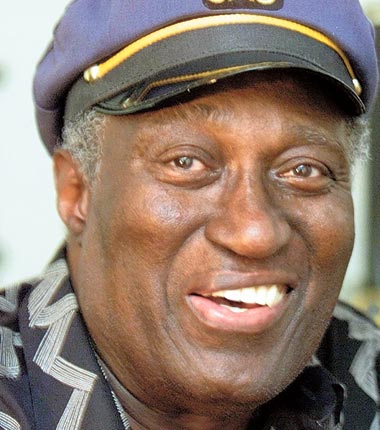
Although not well-known to the general public, Harvey Fuqua was a significant figure in the rise of black music in the 1950s and '60s.
He sang doo-wop with the Moonglows, wrote hit songs, groomed artists for stardom and nurtured the talents of Etta James, Jr Walker and Marvin Gaye. He was a fixer who got things done, and even in later years, past retirement age, he was an active board member for the charitable Rhythm and Blues Foundation.
Harvey Fuqua was born in Louisville, Kentucky in 1929. His uncle, Charlie Fuqua, had joined America's top black vocal group, the Ink Spots, in 1943, but following disagreements, he left 10 years later and formed his own Ink Spots, winning a court case that allowed him to continue. Observing from a distance, the young Harvey was gathering tips.
Fuqua met Bobby Lester at high school and they would sing Ink Spots songs in nightclubs around Louisville with Fuqua on piano. After army service, Fuqua formed a jazz trio in Cleveland, the Crazy Sounds, and in-vited Lester to join. They were spotted by the DJ, Alan Freed, who called himself Moondog on air. He renamed the group the Moonglows, and they recorded for Champagne and Chance. Their records didn't sell but an early single, "Hey! Santa Claus", was used to good effect in National Lampoon's Christmas Vacation (1989).
The Moonglows' success came when they moved to one of the bigger independents, Chess in Chicago. They recorded Fuqua's majestic ballad "Sincerely" with its magical "oow-wah" ending. In exchange for airplay, Freed became a co-writer. The record made the US Top 20 in 1955 but was eclipsed by the McGuire Sisters who were at No 1 for 10 weeks.
The Moonglows had continued success with "Most Of All", "See Saw" and "Please Send Me Someone To Love", and added vocal backing to Bo Diddley's "Diddley Daddy" and Chuck Berry's "Almost Grown". They recorded up-tempo songs as the Moonlighters. While at Chess, Fuqua discovered Etta James and they recorded "If I Can't Have You" and "Spoonful". Through Freed's connections, Fuqua appeared in two films, Rock Rock Rock (1956) and Go Johnny Go! (1958).
Lester and Fuqua fell out, leading to a new line-up, Harvey and the Moonglows, who made the US charts with "Ten Commandments Of Love" (1958). This was attributed to Marshall Chess, the son of a record executive, but it was written by Fuqua.
In 1960, he moved to Detroit to work as a producer for Anna, a label owned by one of Berry Gordy's sisters. The following year he married another sister, Gwen and ran two labels, Harvey and Tri-Phi. He signed the Detroit Spinners, Johnny Bristol, Shorty Long, and Jr Walker and the All Stars. He continued to work with Etta James, who had been hoping to marry Fuqua herself: she recorded "All I Could Do Was Cry".
Tiring of the financial problems in owning a record label, Fuqua joined Berry Gordy at Tamla-Motown. He passed his acts to Berry Gordy, who made him Head of Artist Development. Gordy developed a witty cabaret act with impersonations for the Detroit Spinners and a glitzy package for the Supremes, working alongside the choreographer Cholly Atkins.
Fuqua mentored the brilliant but obstinate Marvin Gaye, who had married Anna Gordy. Gaye lacked Fuqua's confidence but followed his suggestions such as recording A Tribute To Nat King Cole (1965). Fuqua and Johnny Bristol produced hits for Gaye and Tammi Terrell including 'Ain't No Mountain High Enough" and "Your Precious Love" (both 1967), the latter owing a lot to the Moonglows' sound. Other productions included "25 Miles" (Edwin Starr), "What Does It Take (To Win Your Love)" (Jr Walker), "My Whole World Ended" (David Ruffin) and "Someday We'll Be Together" (Diana Ross and the Supremes), all of which he co-wrote.
In 1970 Fuqua left Motown and opened his own production company. He sold three groups to RCA – the Nite-Liters, New Birth and Love, Peace and Happiness – and had success with them all. He rejoined the Moonglows in 1972 and they made the album Return Of The Moonglows.
In 1978 Fuqua was an advisor for a film about Freed, American Hot Wax. He joined the disco craze, producing Sylvester including his 1979 hit "You Make Me Feel (Mighty Real)". He also discovered Two Tons O'Fun, who became the Weather Girls.
In 1982 Fuqua was asked to produce Marvin Gaye, who had moved to Columbia. The singer was becoming increasingly erratic but Fuqua co-produced the Midnight Love album, which included the hit "Sexual Healing". Gaye died in 1984 and although Fuqua discussed a biopic, it never happened. Fuqua still sang on occasion and recorded "Man Up In The Sky" (1989) and "Come To Me" (1991).
Although the Moonglows were elected to the Rock and Roll Hall of Fame in 2000, it was hardly merited in terms of chart success; but Fuqua had determined a new style of singing, known as blow harmony, which involved groups singing through their breaths to achieve a deeper sound.
Harvey Fuqua, singer, songwriter and producer: born Louisville, Kentucky 27 July 1929; married 1961 Gwen Gordy (divorced 1967); died Detroit 6 July 2010.
Join our commenting forum
Join thought-provoking conversations, follow other Independent readers and see their replies
Comments