John Dore: Archaeologist of northern Britain and Libya who was a specialist in Mediterranean ceramics
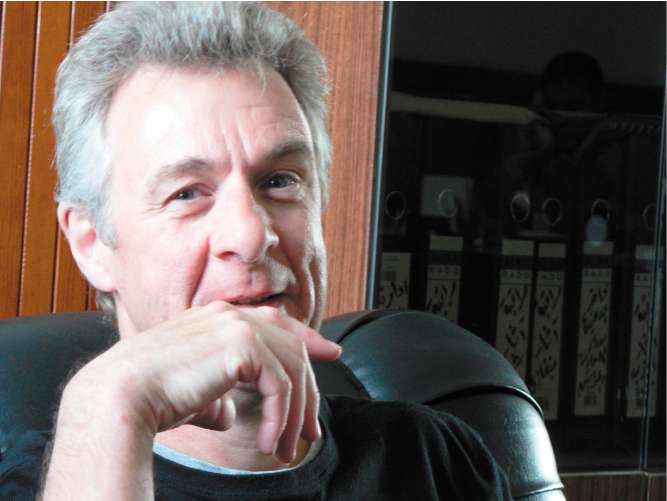
John Dore's archaeological career was unconventional and adventurous, involving numerous projects in the north-east of England, Italy, Portugal, Tunisia and, particularly, Libya.
He was co-author or co-editor of seven monographs and over 50 published articles and pottery reports – a substantial legacy and achievement, despite his not having the continuity and security of a permanent academic post and mostly earning his living through fixed-term contracts and somewhat insecure consultancy work in professional archaeology. Dore was always much in demand as a ceramicist, a sign of the huge respect he commanded nationally and internationally. He was elected a Fellow of the Society of Antiquaries, London, in 1990.
The work for which Dore will be best remembered concerns his pioneering classifications of classical pottery from North Africa. For their geographical and temporal range and the elegance and clarity of their construction, his typologies set new benchmarks in the field. He was among the great Mediterranean ceramicists of his generation and his work is widely employed both to date sites and to understand the economic connections between regions.
Born in 1951 in Altrincham, son of the Cheshire historian Robert Dore, John took a degree in Latin and Archaeology at Birmingham University (1969-72). Scratching around for what to do next, he was dispatched by Professor Barri Jones of Manchester University to join an archaeological excavation in Benghazi, initiating a 36-year love affair with Libya and determining Dore's future career. A second key development was his appointment in 1974 as research assistant to the Roman pottery expert John Gillam at Newcastle University. Newcastle upon Tyne became Dore's adopted home thereafter and his specialism Roman ceramics.
As Research Associate in Newcastle he brought to press important work on the Roman frontier in Britain (including books on the forts at South Shields and Corbridge). His pottery reports embellish (and enliven) many a northern excavation report published in the last 30 years. He co-authored the standard work on Romano-British pottery fabrics The National Roman Fabric Reference Collection: a handbook (1998). Periodically he was also a guest lecturer at Newcastle and by all reports he excelled at this too, engaging students with his enthusiasm and humour. A more conventional academic career was denied him by the almost complete absence of permanent lectureships advertised in the 1980s, though Dore was never bitter about such disappointments.
From 1983 until 1985 he served as curator of English Heritage Hadrian's Wall properties, seeing through the opening of a new museum at Corbridge. The museum development phase was exciting but he became frustrated by the narrowness of the subsequent role and he surrendered security of employment in favour of being a self-employed consultant. This allowed him to supplement bread-and-butter projects in British archaeology with more adventurous forays overseas.
From 1995 until 2002 he was director of the Archaeological Practice, the professional unit attached to the Newcastle Archaeology Department. This involved managing all aspects of a commercial archaeological service, operating in a challenging competitive tendering environment. When financial pressures within the university led to the (short-sighted) closure of the Practice, he returned to consultancy work again, while at the same time completing a Postgraduate Diploma in Advanced Arabic and an MA in Arabic-English Translation from Durham University. Although this suggested a possible change of direction, archaeology in fact continued to be his main occupation.
Dore was a stalwart servant of the Society for Libyan Studies, a scholarly body funded through the British Academy that has done much to foster academic links between Britain and Libya and to facilitate British research in the region, and was Honorary Secretary, 1993-2001, and Head of Mission, 1998-2008. He played a key role in the society's success in the post-Lockerbie years, when fieldwork and academic contacts could easily have been sacrificed in the face of the political difficulties.
Dore's understanding of the quiet dignity of North African society won him many friends in Libya and Tunisia, as did his championing of heritage issues there. He made huge efforts to become expert in Arabic, starting with attending intensive courses over two summers in Tunisia in the 1980s, and built on with his Durham post-graduate courses. His command of Arabic was much appreciated, though his linguistic training in elegant classical Arabic occasionally led him to express ideas in a language that could disconcert Libyans expecting more colloquial conversational constructions – as Dore himself put it, it could be a bit like "hearing someone speaking perfect Chaucerian English on a Newcastle street today".
He played a leading role as ceramicist on the Unesco Libyan Valleys Survey (1980-89) – where my own close friendship with him was forged. Another opportunity seized was a two-year research fellowship funded by the Society for Libyan Studies (1986-88), leading to the publication of the internationally significant pottery assemblage from Sabratha (Excavations at Sabratha 1948-51. The Finds, volume 1, 1989). From 1990 he became involved with the Leptiminus Project, excavating a Tunisian port city of Roman date.
It was also in this phase that he directed a major field project based on al-Marj (ancient Barca) in Eastern Libya (1989-92). Although al-Marj had been expected to produce significant remains of the classical city, what his textbook excavation demonstrated was a deep stratified sequence of medieval and early modern Islamic buildings, overlying the remains of the classical and early Islamic town. In the last decade he worked with me on two major projects in the Libyan desert, the Fazzan Project (1997-2002) and the Desert Migrations Project (2007f; see D. Mattingly et al, The Archaeology of Fazzan, Volumes 1-2). He was already experiencing back pain and a persistent "virus" when we were last in the field in January– the first symptoms of the blood cancer (multiple myeloma) that ended his life.
John Dore was a wonderful colleague who made fieldwork fun, though he always set the highest standards of professionalism. His advice was invariably wise and constructive. He was a good manager of people and wore his own expertise lightly, while being extremely generous with his time to those who sought to benefit from his knowledge. His sense of humour was legendary – he could reduce those he shared workspace with to hysterics by a single word or catch-phrase (often delivered in one of a series of funny voices he cultivated over the years). His facial expressions were equally powerful – the "cocked head and quizzical raised eyebrow look" will be familiar to many.
He was a notoriously tidy and organised person, seemingly impervious to the mud or dust that sticks to most archaeologists. Even in the desert wastes, far from mod cons, he maintained a freshly ironed look. Many of us will always remember him thus, as a dignified and elegant man. He was something of a perfectionist in his work – hating to hand over a pottery report until he was sure it was completely right. That tendency could frustrate excavation directors eager to publish, though in John Dore's case it has led to the creation of a substantial body of work that will prove of enduring value.
Married and divorced at an early age, John was later to have two significant long-term relationships. The first, with Ellen Watts, produced two sons, Tom and Joe, whose company he so treasured – cycling, camping, playing music, hanging out. Linda Green was his partner for the last seven years.
David Mattingly
John Nigel Dore, archaeologist: born Altrincham, Cheshire 25 March 1951; Research Associate, Newcastle University 1974-83, 1986-87; curator, Hadrian's Wall Museums, English Heritage 1983-85; director, The Archaeological Practice, Newcastle University 1995-2002; (two sons with Ellen Watts); died Newcastle upon Tyne 9 June 2008.
Join our commenting forum
Join thought-provoking conversations, follow other Independent readers and see their replies
Comments