Lord Tweedsmuir: Novelist and son of John Buchan who inherited his father's talent but was disappointed of literary fame
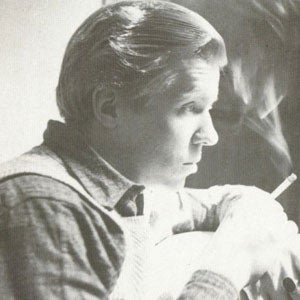
If all John Buchan's children had it hard, his second son, William, had it hardest. Endowed with his father's literary talent, he yet could not hope to match John Buchan in his other occupations of strategy, high policy, business, sport, action. Lacking his father's industry, he was burdened with his ambition, his restlessness, his romance of spirit and his weakness for tobacco. Though disappointed of his ruling passion, which was literary fame, William Buchan, third Lord Tweedsmuir, never let it sour his temper or diminish his enthusiasm for other writers or his encouragement to young people. For all his disappointments, he won through to a sort of luminous old age in a new century.
William de l'Aigle Buchan, was born in 1916, the second son of John Buchan and Susan Grosvenor. His father's blood gave him Calvinist vigour and Borders poetry, his mother's infused English pedigrees of fabulous romance and unfathomable antiquity. Restless and solitary at Eton, Buchan was sent down from New College, Oxford after two terms. His father, now in his plumed apotheosis as Governor-General of Canada, found his difficult son work at Gaumont-British in Lime Grove with Alfred Hitchcock, who had just completed his film of The Thirty-Nine Steps, and lodgings with no less a writer than Elizabeth Bowen.
This period ended in nervous collapse and convalescence in Canada. The fierce Calvinist Prime Minister of Canada, Mackenzie King, who thought John Tweedsmuir a libertine and the ethereal Lady Tweedsmuir no better than she should be, barred William Buchan from the only nightclub in Ottawa. As the Second World War approached, and his father's health deteriorated, Buchan enlisted in the RAF as an Aircraftman, 2nd Class, and trained as a pilot.
He flew Hurricanes in the Battle of the Atlantic, and his squadron was for a period, after the German parachute landing in Crete in 1941, sole aerial defence of the island of Cyprus. There followed service in Palestine, Iraq and Ceylon (now Sri Lanka), and then India, where he commanded a Hurricane squadron and served for a time on the air staff in Calcutta. India gave him his first novel, Kumari, and also his best verse (such as "Poem at 10,000 feet"). He once said to this writer that he had never to his knowledge killed anybody, but once, in the North-West Frontier Province, he saw an old man in a turban stumbling in terror across the road, and pulled out of his attack.
His first book of short stories, The Exclusives, published on bad wartime paper in 1943, was an act of revolt against the violence and tedium of camp and airfield and contains a notorious scene of embroidery. (John Buchan was safely dead.) There followed his only collection of verse, Personal Poems (1952), and three novels: Kumari (1955); Helen All Alone (1961); and The Blue Pavilion (1966). If John Buchan came late onto the scene for what he wanted to do, William Buchan found the stagehands already shifting the flats. His exquisite interest in social form, his suave or exotic settings and nostalgia for childhood seemed out of place in the age of Kingsley Amis and Stan Barstow.
The bills were paid somehow or other. From 1951 to 1954, Buchan was London editor of the Readers' Digest, in which role he was about as unsuitable as it was possible to be. He found a niche in public relations, where his beautiful manners, superb French and continental acquaintance made him useful to the likes of the Nobel Industries division of ICI and the French oil company Elf Aquitaine (now Total).
What William Buchan possessed in good measure was what his father did not, and that was an admiration for women that bordered on idolatry. This second passion brought him into scrapes from which he extricated himself with a mixture of good manners and good nature.
His first marriage to Nesta Parry collapsed in the chaos and temptation of war. His second, to Barbara Ensor, also came to grief, leaving six children to make shift as best they could. It was only in early middle age that William Buchan settled down with Sauré Tatchell.
In this domestic tranquillity, in 1982, he published his best book, a portrait of John Buchan (John Buchan: a memoir) in which he showed his sensitivity to the effect of time on both a life and society. The following year, he edited a selection of letters between John Masefield (whom he had known) and a young violinist, Audrey Napier-Smith (John Masefield: letters to Reyna, 1983). A better critic than his father, he wrote book reviews free of censoriousness or petulance. In 1990, he published a memoir, The Rags of Time, which sought to analyse his youth and hopes that were disrupted by the war. If this was indolence, it was Buchan indolence.
In 1996, he succeeded his beloved brother Johnnie as Lord Tweedsmuir. In entering at last his Valhalla in Parliament Square, he found not the spotless scions of Shakespeare's heroes – Bohun and Scrope, Percy and Plantagenet and Mortimer – but bustling life peers and dishevelled backwoodsmen up in town for the attendance allowance. William Tweedsmuir preferred his illusions. His maiden speech, in February 1997, was to support Lord Carnarvon's bill for a mayor and statutory authority for London.
Dismissed with his ghosts from the House of Lords in the Blair reforms of 1999, Tweedsmuir entered the most glorious period of his life, tending his Oxfordshire garden, receiving visitors, and reading French and English literature. Never having had much money, he now found he had enough. With the revival of John Buchan's reputation, he entertained German doctoral students and British television producers. Chin resting on the haft of his walking-stick, Tweedsmuir would turn his piercing blue eyes to his visitor or the camera in a look of almost superhuman benevolence.
At his 90th birthday party at his nephew's house, Charlecote Park in Warwickshire, the third Lord Tweedsmuir enjoyed his own apotheosis. In this famous house and park, shielded from the sodium glare of the retail park and the thunder of the Stratford by-pass, William Tweedsmuir could reflect on what his father called Providence and he Irony: that a man who sought only a lonely destiny as an artist should end up as a patriarch of nine children and 29 grandchildren of every nationality and character.
As his eyesight and hearing decayed, his life became to him a shade tedious. Yet as his powers declined, so his manners gained in precision. Nothing could be more exquisite than his concern for those about his sick-bed.
As often with long-lived men, his life receded to an earlier epoch. William Tweedsmuir became a Victorian. Amid the albums of his old Grosvenor-side great-aunts, the world emptied of all but the Iron Duke stooped for the caricaturist at the Congress of Vienna; or Looking up from Meiringen towards the Jungfrau; or great-uncle Reggie Talbot, the last descendant of that Shrewsbury who died with his son on the bloody sands at Castillon, showing his gardener the correct way to scythe a lawn at military headquarters in Cairo. Looked after by Sauré, and attended by his two youngest children, Lord Tweedsmuir died without great pain or much regret.
Mary Lovelace
William de l'Aigle Buchan, writer: born London 10 January 1916; succeeded 1996 as third Baron Tweedsmuir; married 1939 Nesta Parry (née Crozier; one daughter; marriage dissolved 1946), 1946 Barbara Ensor (died 1969; three sons, three daughters; marriage dissolved 1960), 1960 Sauré Tatchell (one son); died Hornton, Oxfordshire 29 June 2008.
Join our commenting forum
Join thought-provoking conversations, follow other Independent readers and see their replies
Comments
Bookmark popover
Removed from bookmarks