Mark Hall: Creator of 'Dangermouse'and 'Count Duckula'
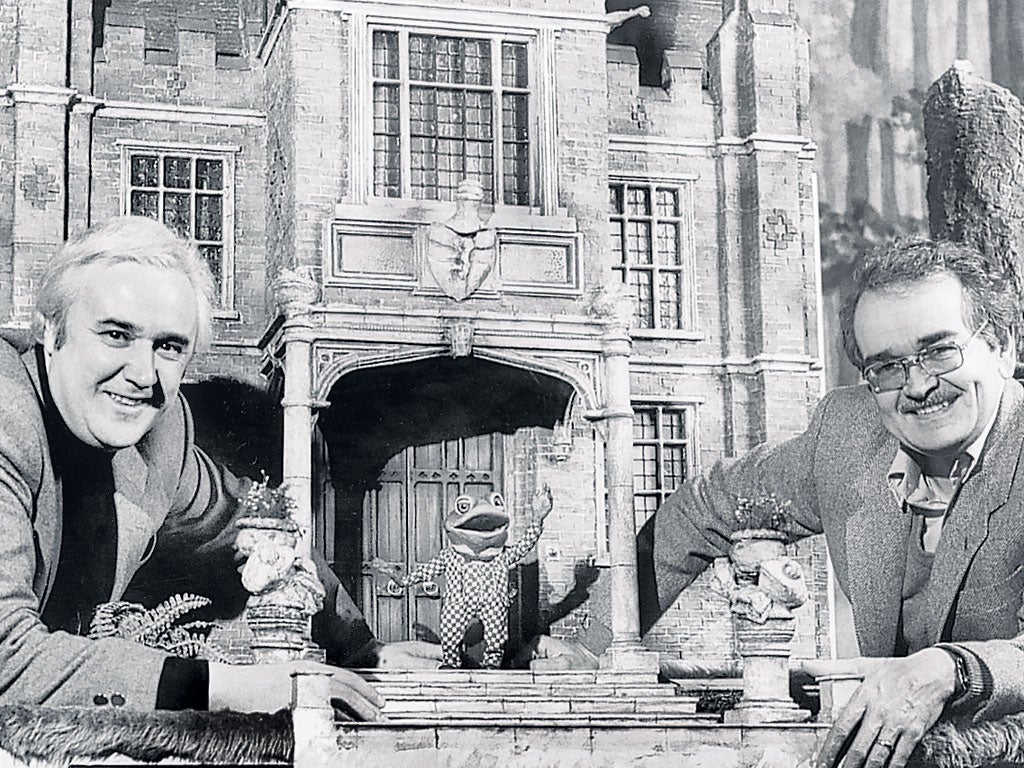
The animator, producer and director Mark Hall created scores of programmes for British television. As half of Cosgrove Hall Productions, he worked alongside Brian Cosgrove from a converted warehouse in Chorlton-cum-Hardy, Manchester, where they utilised drawings on cels, puppets and stop-frame techniques to create the critically praised animations (they were nominated for five awards at the 1986 Baftas alone) that enlivened countless childhoods.
Mark Hall was born in Wakefield, West Yorkshire in 1936. As a boy, he staged puppet shows for friends. After school he went to study at the Regional College of Art in Manchester, where Brian Cosgrove was a fellow student.
The pair's television careers began in the graphics department of Granada Television, and by 1962, they had garnered enough respect within the industry to be elected members of the Society of Industrial Artists. Hall's solo credits in this capacity included You Can't Win (Granada, 1966), a northern-set drama serial. Cosgrove continued to work for Granada, while Hall spent 1970 setting up their company, initially named Stop Frame Animations.
For Granada, the company made The Magic Ball (1971-72), a gentle series of cartoon shorts involving a boy named Sam, narrated by Eric Thompson. Despite their Mancunian base, a telling commission was to contribute animated inserts to Thames' lunchtime series Rainbow, between 1972 and 1984, from which Sally and Jake (1973-74) and Cockleshell Bay (1982-86) gained their own series slots. In 1976 their company, now renamed after its founders, became a subsidiary of Thames, for which it would made its best-remembered work.
Their last work for Granada was Captain Noah and his Floating Zoo, a half-hour Biblical retelling which they co-directed, shown on Boxing Day 1974. They produced a series based on Noddy (Thames, 1975), for which Richard Briers provided the voices, basing one motorist character on his cousin Terry-Thomas. The partnership's originality was then displayed in the colourful fantasies Chorlton and the Wheelies (1976-79), and Jamie and the Magic Torch (1977-80). A sideline, aimed at a contrasting audience, was animated visuals depicting the superhero Captain Kremmen, for three series of The Kenny Everett Video Show (1978-80).
The actor David Jason often provided vocal contributions to Cosgrove Hall's productions. He was the rodent hero of Dangermouse (1981-86, 1991-92), narrating the series in a manner parodying a stentorian announcer: "Will DM and Penfold escape Baron Greenback's clutches? Does anybody care?" He also voiced Toad (the puppet shared his large eyes), with relish and expostulatory noises, in their 1983 special The Wind in the Willows, and the subsequent series, running from 1984-88, with a retitled revival as Oh! Mr Toad! (1989-90).
Over successive festive periods, Cosgrove Hall had successes with the specials Cinderella (1979) melded with live action, and The Pied Piper of Hamelin (1981), narrated by Robert Hardy and somewhat reminiscent of Lotte Reiniger's work. The latter won a Bafta for Best Children's Programme, and a storytelling prize at the Prix Jeunesse in Munich the following year. It was as a result that Thames executive Bryan Cowgill asked Hall, who had directed both, what he wanted to do next, Kenneth Grahame's children's classic being his answer.
Again directed by Hall, the painstakingly made, feature-length musical version followed Grahame's original closely, and it won the 1984 Bafta for Best Children's Programme, and an International Emmy, triumphing over Jim Henson's Fraggle Rock. Further series included Alias the Jester (1985-86), which had its sneak preview at Cosgrove Hall's 1984 Christmas party and won a 1986 Bafta; Count Duckula (1988-91, 1993), tales of a vegetarian vampire, publicised as "there's no one zanier in Transylvania"; and two bungling French felons, Victor and Hugo (1991-92). An announced cinema release for Roald Dahl's The B.F.G. did not happen, and it was premiered on ITV in 1989, the network terming it their "most ambitious single offering this Christmas".
In a sign of how the industry was changing, the firm's next tacklingof Noddy (1992-94) was co-produced with their former rival, the BBC.Following the loss of the Thamesfranchise, the company was purchased by fellow ITV region Anglia in 1993,in the process undergoing a slight name change to Cosgrove Hall Films, with the founders holding a 25 per cent stake. It was claimed then to be the onlyanimation studio left in Britain.Hall's final credit as director was a Terry Pratchett adaptation, Wyrd Sisters(C4, 1997).
Mark William Hall, artist, animator, director and producer: born Wakefield, West Yorkshire 17 May 1936; married 1961 Margaret Routledge (one son, one daughter); died Manchester 17 November 2011.
Join our commenting forum
Join thought-provoking conversations, follow other Independent readers and see their replies
Comments
Bookmark popover
Removed from bookmarks