Ottilie Patterson: Singer with the Chris Barber Band who proved that Britons could sing the blues
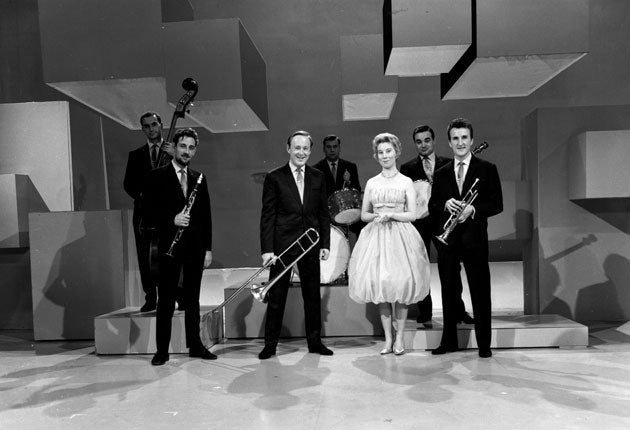
Before Ottilie Patterson joined the Chris Barber Band in 1955, it was accepted that British performers could not sing the blues effectively.
Ottilie Patterson changed all that: she began with what George Melly described as "a comparatively convincing approximation to the style of Bessie Smith", but soon found her own, very distinctive approach. It is unfortunate that, largely out of her own choosing, she became a forgotten figure in the world of British jazz.
Ottilie Patterson was born in Comber, Co in 1932: her father Joseph was a local man, while her mother, Julia Jegers was from Latvia. She took piano lessons from the age of nine and although she trained as a classical pianist, she had no singing lessons. She studied art at the Belfast College of Technology and became entranced when a fellow student lent her some jazz records. She thought that Bessie Smith's "Reckless Blues" was the best thing she had heard. She wanted to sing the blues herself and as there were no blues bands in the area, she would get up with Jimmy Compton's Jazz Band, and then formed her own Muskrat Ramblers.
In 1954, Patterson was teaching at Ballymena Technical College and in the summer she went to London and heard Chris Barber's band. At first they weren't keen on Patterson singing with them, but then the pianist Johnny Parker played the opening notes of "Careless Love" and she began to sing, impressing all who heard her. Barber hired her for £10 a week. The impressive personnel included Lonnie Donegan, Monty Sunshine and Pat Halcox. A week later Patterson was singing with them at the Royal Festival Hall.
"I was at college in Manchester," recalls Tony Davis of the Spinners, "and I went to the Bodega. Chris Barber was there with his band and sounded excellent and then this young girl came out. Ottilie Patterson was a little slip of a girl, so thin, but she had a huge voice, an incredible voice. She sang Bessie Smith songs and I have never heard anybody sing them better."
Patterson built up a large repertoire of mostly blues songs and some early favourites were "Mean Mistreater", "Lonesome Road" and "Georgia Grind". However, you can tell the difference between Patterson and many American blues singers as she had perfect diction and didn't run her words together. (Bessie Smith also had perfect diction.) She also had difficulty in persuading the band (including Barber) to give her more energetic vocals in call-and-response numbers.
Donegan moved on when he had success with "Rock Island Line", and Barber brought over several Americans to tour with the band, often leading bluesmen. Patterson recalled going to a restaurant with Big Bill Broonzy, who asked her, "You don't mind being seen with me, do you?"
In 1957, she was honoured when the gospel singer Sister Rosetta Tharpe asked her to join her on stage for "When The Saints Go Marching In". They stood at opposite sides of the stage and sang thrillingly at each other.
Almost from the start, Barber and Patterson were a couple but they had to wait for Barber's divorce before they could be married. They were married in November 1959, but Patterson felt ill at ease in the otherwise all-male band as they toured the world, playing 200 dates a year. When they toured the US after a hit single with the instrumental, "Petite Fleur", Patterson sat in with the Muddy Waters Band at Smitty's Corner in Chicago.
In 1962, she performed with Barber's band at President Kennedy's Washington Jazz Festival and she can be seen with the band in the Dick Lester film, It's Trad, Dad (1962) singing "Down By The Riverside" and "When The Saints Go Marching In". She also sang the theme song for the crime drama, Where Has Poor Mickey Gone? (1964), starring Warren Mitchell.
Her best-known singles were "There'll Be A Hot Time In Old Town Tonight" (1959) and "Mama, He Treats Your Daughter Mean" (1962). Her albums included Ottilie's Irish Night (1959), which featured folk songs she had known since a child, and a compilation of her work with Barber, Back In The Old Days (1988).
Patterson contracted throat problems in 1963 and, two years later was told she must keep quiet for three months. Her voice recovered but she had lost the inclination to perform and tour, although she sang with the band sporadically until 1973. She released a solo album, Spring Song, in 1969 and the album included a song about her unhappiness, "Please Accept My Apologies, Mrs Pankhurst".
She and Barber were divorced in 1983 but they worked together occasionally, resulting in the live album, Madame Blues And Dr Jazz (1984) and concert dates in 1991. After the divorce, Patterson settled in Ayr and she died in a care home.
A few months ago, a double CD of previously unissued performances, Memories Of My Trip, was issued for Barber's 80th birthday. When I spoke to him about the album, he showed his affection for Patterson and said of a 1962 track, "I think 'St Louis Blues' is a masterpiece. It is everything Ottilie always wanted to do and that is one of the few times where she really got what she wanted. It's fantastic."
Anna Ottilie Patterson, singer: born Comber, Co Down 31 January 1932; married Chris Barber (divorced); died Ayr 20 June 2011.
Join our commenting forum
Join thought-provoking conversations, follow other Independent readers and see their replies
Comments