Professor Christopher Freeman: Influential economist whose radical views gave him a healthy suspicion of capitalism
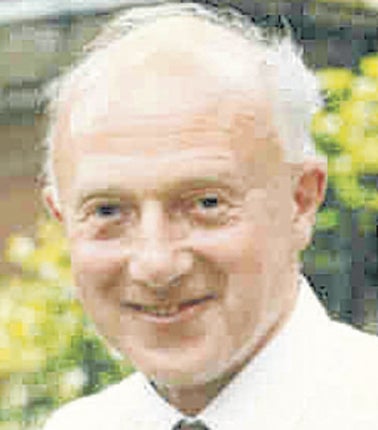
The economist and science policy adviser Chris Freeman was one of the most original and influential economists of the late 20th century who combined the radical political outlook that inspired him (he refused government honours) with advising unashamedly pro-capitalist governments on technological policy.
Freeman's ideas originated in the seven decades of economic stagnation that gripped most of the capitalist world up to the Second World War. The last of those decades were marked by the Great Depression, during which Freeman completed his school education and joined the Communist Party. The innovations of the period, such as the internal combustion engine and electronics, seemed incapable of generating the kind of industrial renaissance that had marked the railway booms of the mid-19th century. JD Bernal, the Communist scientist who inspired much of Freeman's early work, concluded that capitalism is unable to sustain industrial innovations to the point of transforming industry.
The post-War boom proved Bernal wrong. But as East Asia invested in electronics and consumer durables, to make up for the relative poverty of their natural resources, and the Soviet Union propelled Sputnik into space, governments in Europe and North America worried about their loss of technological leadership. Freeman, then at the National Institute for Economic and Social Research (NIESR), came to eminence in this perceived crisis of confidence as the man who understood how policy and institutions make for industrial progress.
Freeman was involved in a series of studies of innovation, from which emerged his book The Economics of Innovation and a series of commissions from governments and the OECD to advise on innovation policy. Behind these studies were his reflections on the notion put forward by the two economists with distinctive interpretations of Marx's ideas on capitalism, the Russian Nikolai Kondratiev and the Austrian American Josef Schumpeter. Both of them identified "long waves" of economic development resulting from crucial technological innovations. He became interested in the institutions and policies that he argued influenced technological innovation, in particular national economies. He was sceptical of "limits to growth" ideas which, in his view, underestimated the potential of technology. He correctly forecast that the Thatcherite love affair with free-market enterprise would do little for industry. In his final years, he contributed to discussions on the significance and likely consequences of the revolution in information and communications technology.
Christopher Freeman was born in 1921 into a well-off Sheffield family with radical sympathies: his father Arnold, was Sidney Webb's secretary and an early pioneer of the Workers' Educational Association. Chris was educated at the progressive Abbotsholme School in Staffordshire, where he founded a cell of the Young Communist League. In 1941 he entered the London School of Economics, then evacuated to Cambridge, to study Economics. He interrupted his studies to enter Sandhurst and take up a commission in the Manchester Regiment. At one point he was stationed on guard duty at Balmoral, where the Princess Elizabeth (the present queen) joined the guards at their Christmas party and danced with the Communist officer. This later gave rise to scurrilous and utterly groundless rumours that he had had an affair with the Queen Mother. These caused him more amusement than embarrassment when they surfaced in the German press on the death of the senior royal.
After military service he returned to the LSE, from which he graduated in 1948 with first class honours. He worked for the Post Office and the London Export Group, an outlet for Soviet and Chinese exports to Britain. He left the Communist Party in 1956, but retained his belief that capitalism is irrational and exploitative. He moved to research at the NIESR on innovation in the car industry, and later in plastics and electronic equipment. His ministerial briefs on innovation policy, when Harold Wilson was promising "the white heat of the [technological] revolution" led in 1966 to an invitation to become the first Director of the Science Policy Research Unit at the new University of Sussex.
Freeman's success in bringing together people from different disciplines was a major factor in making SPRU the pre-eminent centre for work in this area. Much of that success was due to his modesty and directness. In speaking to anyone he always gave the impression that that person's questions or ideas were the most important topics of the conversation. This won him an affectionate following, at Sussex and in many countries.
Freeman's world view brought him almost visionary foresight, bringing to attention issues which only later entered popular discourse. His devastating critique of the OECD's 1976 McCracken report was one of the first clear economic judgements that postwar growth had come to an end, and would not return without state and institutional intervention. As the Soviet Bloc fell apart he was predicting the Chinese economic miracle, and he began writing about green technological revolution in the early 1990s. The breadth and depth of his gifts to economic theory is an enduring testimony to an inspiration which helped so many others, whether of his mind or a contrary one, to give of their best.
Jan Toporowski
Alan Freeman
Christopher Freeman, economist: born Sheffield 11 September 1921; married firstly Peggoty Selson (died 1971; two sons, two daughters), secondly Maggie Young (marriage dissolved; one daughter), 2007 Carlota Perez; died Lewes, Sussex 16 August 2010.
Join our commenting forum
Join thought-provoking conversations, follow other Independent readers and see their replies
Comments
Bookmark popover
Removed from bookmarks