Professor D. T. Whiteside: Historian of mathematics whose prodigious work on Newton's papers astonished the scholarly world
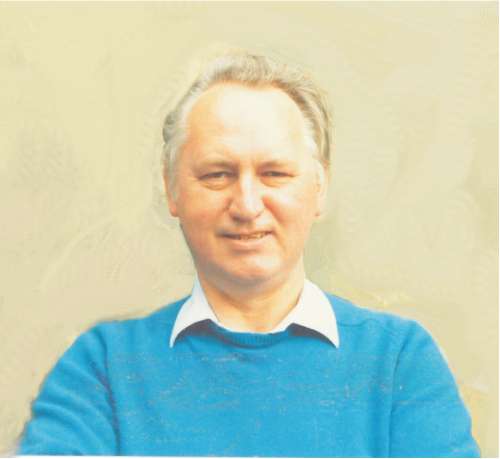
In the small world of the history of science and mathematics, D.T. Whiteside, Emeritus Professor of the History of Mathematics and the Exact Sciences at Cambridge University, was a towering figure. He was one of the most profound and exacting scholars produced by Britain in the second half of the 20th century. Tom Whiteside's central work – and what would have been for anyone else a lifetime's labour – was the publication of an edition of the mathematical papers of Isaac Newton.
Newton (1643-1727) left behind mountains of manuscript papers, which were subsequently dispersed into a number of public and private collections. These have been periodically studied by scholars ever since the middle of the 18th century, but much that was written about Newton was little better than hagiography (either because Newton was a great British hero, or the founding hero of modern physical sciences). Over the past 50 years, the intense and careful study of these papers has finally revealed the deeper, more complex, and intellectually, theologically and scientifically richer – and more eccentric – character of Newton. The single most prodigious work in these studies is the eight huge volumes of Whiteside's Mathematical Papers of Isaac Newton, published between 1967 and 1982.
Such was the chaos of the papers and the difficulty in studying them that few had even begun to scratch the surface of their content, let alone the story of the development of Newton's thinking, when Whiteside embarked on his work. His doctoral dissertation at Cambridge (published in 1961 as Patterns of Mathematical Thought in the Later Seventeenth Century, and still unique in its breadth and depth) was the perfect preparation, and after a difficult search for financial support, he began his study of Newton's papers.
Finding and transcribing it all was already a monumental task, but Whiteside was able to work through and understand every line and page of Newton's mathematics, ordering the papers chronologically and explaining the ways in which Newton's scientific thinking had developed. What resulted astonished the scholarly world as it started to be published: no one had imagined that the papers could be ordered and understood, and that so personally, intellectually, technically sensitive an eye could grasp both the tiny detail and the larger picture. Alongside the Papers came a steady stream of important journal articles.
The publication of the Mathematical Papers (now known in the trade as "Whiteside's papers", something he enjoyed) brought a shower of honours, the most prestigious of which were the Alexandre Koyré Medal (1968), election as the youngest Fellow of the British Academy (1975), the American History of Science's Sarton Medal (1977), the Euler Medal of the Soviet Union's Academy of Sciences (1985), and an honorary DLitt from Lancaster University (1987). Whiteside was made Reader at Cambridge in 1976 and given a personal chair only in 1987.
The Mathematical Papers went to press when Whiteside was in his late forties, and the tragic side of his career was that he completed a life's work when he still had decades of creative power ahead of him. After the exertions of the Newton project his energy was undimmed, but his willingness to bring new and large projects to publication was; epilepsy took its toll, as did a certain isolation from other academics.
He began a huge study of the papers of the early 17th-century astronomer Johannes Kepler, using difficult-to-obtain manuscripts that were in the (then) Soviet Academy of Sciences in Leningrad. Once again, Whiteside's remarkable combination of memory, tenacity and ability to rework the calculations of every line of hundreds of pages of notebooks, and otherwise unconnected manuscript pages, allowed him to follow Kepler's mathematical and astronomical journey as he digested the planetary data of Tycho Brahe. These were the mathematical studies of astronomical data that led Kepler to abandon the use of circles to model the planetary movements, and discover the correct orbit: ellipses.
It was, like the Newton papers, a Herculean task of mathematical, astronomical and palaeographic technicality, and once again Whiteside was able to reconstruct the story of Kepler's thinking. However, he published only a little of this work: having satisfied himself of the inadequacy of other works on Kepler's mathematical astronomical thinking, and publishing only a few parts of his studies, Whiteside was drawn to other problems.
Kepler was followed by Thomas Harriot, a rather under-appreciated British mathematician working in the 1590s to 1610s. Harriot published little in his lifetime, but left behind – once again – a mass of unsorted papers. It turned out that Harriot's mathematics went far, far beyond anything that he published and he had discovered a very large proportion of what was to be done by other mathematicians over the next 50-70 years. Sadly for English science in the early 17th century, this remained unpublished and unknown, and again, sadly, having satisfied his own curiosity about Harriot and published only a tiny proportion of his studies, Whiteside moved on.
His curiosity was unquenchable. A stray remark about an ancient Babylonian calculation or mathematical artefact would send him off for weeks in an intense study of some calculating problems evidenced in 5,000-year-old clay tablets; the same happened with Napier's Bones (an early slide-rule). It was hard to find any area of past mathematical studies where Whiteside had not, at some point in his life, read and reconstructed mathematical thinking. It was his ability to get inside the mind of a past practitioner that was Whiteside's particular power; it is all too easy to reconstruct past mathematics in a more modern mathematical language or context, but to learn to think as a past mathematician thought can be unbelievably hard, and is the holy grail of good historical study of past science.
Whiteside was proud of his origins in Blackpool, where he was born in 1932. He escaped the life of the slums only by dint of his exceptional intellect, and he felt a deep debt to his schools, St John's and Blackpool Grammar, and to Bristol University, where he read French and Latin as an undergraduate. In his last years, his attention turned to Blackpool, and to a study of the history of his early schools.
Whiteside did not take well to any sort of public spotlight, and was shy in his dealings with those outside his family and friends. He never adopted that social grace of suffering fools, and at academic meetings his tenacity could be difficult to deal with. However, his interest was only in the truth or what he thought was academically just, and he could engage in violent argument with colleagues and then quickly come to respect them. He held the most august and the most lowly colleagues to the same simple intellectual standards and judged – and treated – each only in terms of their intellectual integrity.
He rarely made friends, but those he did embrace were brought within a magical circle of affection and loyalty. In private, and in correspondence, it is hard to imagine anyone who could have been more supportive, giving and kind. His letters were playful and humorous, gallant and often delightfully rambling conversations that were a treasure to receive. To those he thought honest seekers after the truth, he was unstinting in his support and generosity.
Whiteside had married a local Blackpool girl – Ruth Robinson – and they had a 35-year marriage in which each turned out to be a very special support for the other; after her death in 1997 Whiteside's isolation increased. Their two children, Philippa and Simon, both inherited much of their father's intellectual power and their mother's good sense.
Piers Bursill-Hall
Derek Thomas Whiteside, historian of mathematics: born Blackpool 23 July 1932; Research Fellow, Department of Scientific and Industrial Research 1961-63; Research Assistant, Cambridge University 1963-72, Assistant Director of Research 1972-76, University Reader in the History of Mathematics 1976-87, University Professor of the History of Mathematics and Exact Sciences 1987-99 (Emeritus); FBA 1975; married 1962 Ruth Robinson (died 1997; one son, one daughter); died Wokingham, Berkshire 22 April 2008.
Join our commenting forum
Join thought-provoking conversations, follow other Independent readers and see their replies
Comments
Bookmark popover
Removed from bookmarks