Sir James Hamilton: Aircraft designer who led the British Concorde development team
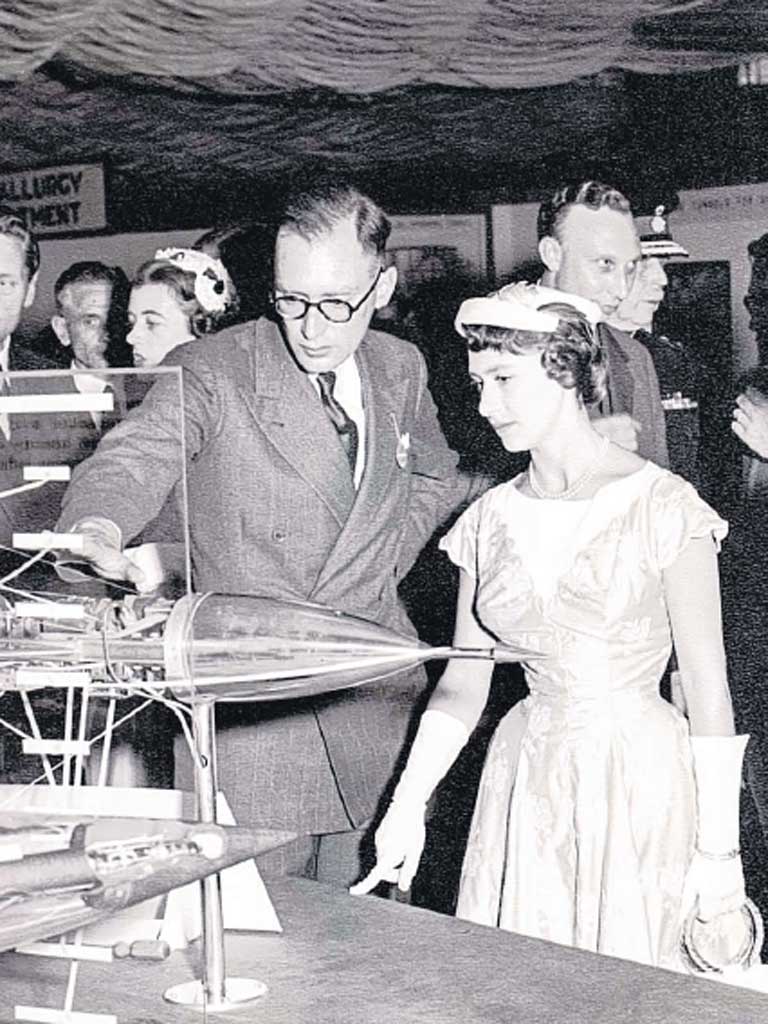
The aeronautical engineer Sir James Hamilton was one of the key figures in the development of Concorde, the supersonic airliner that transformed air travel between Europe and the US, and captured the public imagination, garnering worldwide fame for its speed, grace and engineering innovation.
Hamilton headed the British side of the historic Anglo-French project for 15 years, fighting through numerous obstacles along the way. He was largely responsible for the design of the plane's "Delta" wing, so named because of its resemblance to the classical Greek letter, principally a tall, slim triangle, which, along with its titling nose and long, ultra-slim body, gave Concorde its distinctive and and beautiful appearance. Hamilton's great strengths were wing design, which he developed while at the Royal Aircraft Establishment, Farnborough, and his understanding of steep ascent and descent, and high-speed flight. In all this, he drew on work produced by the late Roy Chadwick for the Vulcan bomber.
The simple appearance of Concorde's wing belied its complexity; no other part of the aircraft had so much time and attention given to its design. On a conventional aircraft, the wings would have dozens of moving parts and flaps to control angle and speed, pitch and roll. Concorde, however, had just six trailing edge "elevons" to the rear of the wings, which had undergone thousands of hours of meticulous testing in wind tunnels.
Concorde made its short maiden subsonic flight in March 1969, and went supersonic that October. It entered commercial service, initially between London and Bahrain in January 1976, and began flying London to New York the following year. Flight times to the US were now achieved in less than three and a half hours, compared with eight for the usual subsonic flight. Due to the time difference it was said, "Passengers were arriving in the US before they had left the UK." The boast was "She travels faster than the sun".
From 1976 to 2003, over 2.5 million passengers flew on BA's Concorde flights, but eventually rising fuel costs, an increased sensitivity over the levels of fuel consumed and a growing concern about noise pollution led to the plane being decommissioned.
Born in Midlothian, Scotland, in 1923, James Arnot Hamilton was educated at Penicuik Academy. Due to the Second World War, he completed a fast-track degree in civil engineering at Edinburgh University, graduating in 1943. He was then despatched to Marine Aircraft Experimental Establishment (MAEE) Helensburgh, on the Firth of Clyde, for secret work on the design of anti-submarine weaponry for the RAF. He also worked on the design of seaplanes and a floating Spitfire. Upon MAEE's return to its pre-war base in Felixstowe, Suffolk, in 1945, he was appointed head of flight research, aged 25.
By 1952, Hamilton had moved to the Royal Aircraft Establishment at Farnborough, where his involvement with the aerodynamics of high-speed flight increased and, in 1964, he became head of the projects division. With budgets being squeezed, projects Hamilton was involved in were cancelled, including a supersonic jet trainer and a light tactical strike aircraft. He moved over to the military side and in 1965 became the project director for the first Anglo-French combat aircraft. Originally designed as a trainer, the Jaguar – the RAF's first design under the metric system – was launched in 1972, and had a nuclear-strike capability; it was sold to several countries around the world.
In 1966, Hamilton became head of the British Concorde project. A year later, he oversaw testing in London by Lightning bombers to gauge likely public reaction to the sonic boom that would be generated by supersonic flights over land. The response was hugely negative, and the government bowed to lobbyists and banned supersonic fights over Britain. Hamilton believed this would seriously jeopardise Concorde's commercial prospects, but further testing continued offshore.
In 1971, five years before Concorde entered passenger service, Hamilton was made Deputy Secretary for Aerospace at the Department of Trade and Industry while retaining responsibility for Concorde. He oversaw the cancellation of the Black Arrow rocket programme, which had launched Britain's first satellite, and nationalised the aero-engine division of Rolls-Royce when "RB211" engine costs spiralled out of control – though it later became an enormous success.
From 1973 Hamilton served as Deputy Cabinet Secretary to both Edward Heath and Harold Wilson, but, with James Callaghan's arrival as Prime Minister, he was moved to the Department of Education. When Margaret Thatcher came to power, Hamilton had to cope with added pressures in the department with unrest in the profession and threats of strikes. He also had to implement cuts in the educational budget, which caused concern among teachers and colleagues in Whitehall. He did, however, manage to reverse cuts in scholarships for painting and sculpture given through the British School in Rome.
Retiring in 1983, Hamilton warned that, although scientific research at Britain's leading universities was first rate, in others it was "extremely mediocre". He said, "The battle for industrial supremacy would be won and lost in technical colleges and colleges of further education." Hamilton served on various boards, including that of the Hawker-Siddeley aircraft company.
James Arnot Hamilton, aeronautical engineer: born Midlothian, Scotland 2 May 1923; Marine Aircraft Experimental Establishment 1943: Head of Flight Research, 1948; Royal Aircraft Establishment 1952; Head of Projects Division 1964; Director, Anglo-French Combat Aircraft, Ministry of Aviation 1965; Director-General Concorde, Ministry of Technology 1966–70; Deputy Secretary: (Aerospace) DTI 1971–73; Cabinet Office 1973–76; MBE 1952, CB 1972, KCB 1978; married 1947 Christine McKean (marriage dissolved, three sons), partner to Marcia Cunningham; died Winchester, Hampshire 24 May 2012.
Join our commenting forum
Join thought-provoking conversations, follow other Independent readers and see their replies
Comments
Bookmark popover
Removed from bookmarks