Sir John Page: Loyal Conservative backbencher known for his trenchant views
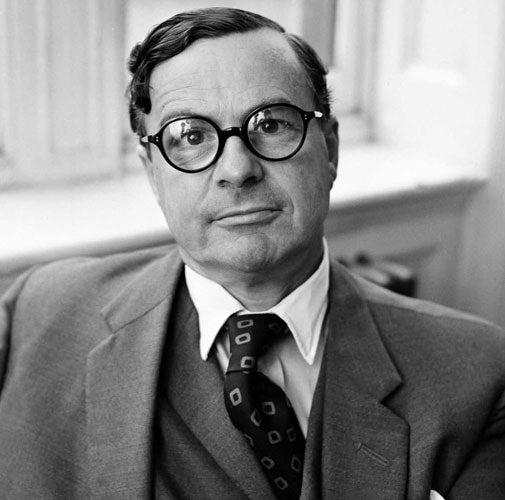
John Page spent more than a quarter of a century in the House of Commons as a Conservative MP, and in 1984 he was rewarded for his loyalty to successive leaders with a knighthood. Apart from a brief spell as PPS to the Parliamentary Under-Secretary at the Home Office, from 1961 to 1963, he seemed to content to remain on the back benches. Throughout, he voiced the kind of right-wing attitudes that went down well with Tory activists in the suburbs, but did so with a good humour that made him popular in the House.
He was influential as Secretary and then Chairman of the Conservative Party's Labour Affairs Committee (1970-74), during a period when the party moved away from its belief that the law had no place in industrial relations to devise and put into operation the ill-fated Industrial Relations Act.
As a member of the clerical union Apex and president of the Conservative Trade Unionists (1967-69), Page was vigorous in defending an individual's right to choose whether or not to join a union. When the Conservatives came to power in 1970, he urged the new Employment Secretary, Robert Carr, to be bold in reforming the unions. Subsequently he was critical of the Conservative government's U-turns, and voted against its decision to introduce a prices and incomes policy. His long-standing campaign to stop benefits being paid to the families of strikers, which led him to introduce a Private Member's Bill in 1973, was finally crowned with success during Margaret Thatcher's government.
Jack Page and his wife were close friends of the Thatchers and were often guests for Christmas lunch at Chequers. He was, Carol Thatcher recalled, "a terrific raconteur with a dry sense of humour". Throughout the Westland affair he supported Mrs Thatcher, and damned Leon Brittan by saying that he had put the Prime Minister into "an impossible situation".
He was always robust in his views. Earlier, he had been one of the few Tories to vote against the agreement to purchase Polaris missiles from the Americans which Macmillan had negotiated with Kennedy at Nassau in 1962, believing that it compromised Britain's nuclear independence. He also opposed the withdrawal of British forces from Malta, and was bitterly critical of the Wilson government for resorting to a prices and incomes policy – they had, he said, declared war on the unions, and he was an active opponent of Barbara Castle's decision to freeze the pay of building workers.
His other views were equally trenchant. When the IRA was conducting a bombing campaign in Britain, he demanded the reintroduction of capital punishment, and he urged the Home Secretary to require identity cards for all Irishmen entering the country. He was by now Secretary of the Conservative backbench Home Affairs Committee, but was refused permission to observe immigration procedures at Heathrow when the Home Office decided to cease publishing immigration statistics. His response was to urge a five-year ban on Commonwealth immigration and tighter rules for Irish immigration.
His own proudest boast about his parliamentary career was that he had saved the pint and the mile – "what more could a man do for England" – by a well-timed intervention when Julian Amery was shepherding the Metrication Bill through the House of Commons in 1970. But he was also responsible for a Private Member's Bill on the registration of insurance brokers, an early attempt at regulating the business of financial advice.
He achieved a certain notoriety during the Falklands War for his criticism of Peter Snow and Newsnight, saying: "I am worried that BBC television newsreaders are giving equal credence to the Ministry of Defence Reports and Argentine reports," he said, claiming that Snow's remark, "If we believe the British", was almost treasonable.
Born in London in 1919, Arthur John Page was the son of a Chief Justice of Burma, Sir Arthur Page QC, and he spent his early years in Calcutta. He was educated at Harrow and Magdalene College, Cambridge. During the Second World War he served with the Royal Artillery. He joined as a gunner, was commissioned in 1940, and saw action in the Western Desert, where he was wounded.
He should have been involved in a combined-services operation on D-Day, but his boat was not alerted, and he spent five frustrating days in Southampton Water awaiting a call to action which never came. He subsequently served in France and Germany during 1944-45, rising to the rank of major and commanding 258 Battery Norfolk Yeomanry. He was proud of his part in the Battle of the Bulge and was one of those who recalled the horror of the Bergen-Belsen concentration camp which he helped liberate in 1945.
After the war he went into business, becoming sales manager of a rubber and plastics company, Long and Hambly Ltd, from 1952 to 1964. He had very nearly captured Eton and Slough for the Conservatives in the 1959 election, losing to Labour's Fenner Brockway by just 88 votes, and his reward came with his successful candidature in the Harrow West by-election in March 1960; he had been selected at a tumultuous meeting in which he triumphed over such Tory luminaries as Peter Walker and William Rees Mogg. He retained the seat at seven general elections, always with five-figure majorities, before standing down in 1987.
He took an active interest in the Inter-Parliamentary Union, becoming a member of the British Group in 1970, its chairman from 1978 to 1982, and president of the IPU itself in 1984. From 1972 to 1987 he served as one of the British delegates to the Council of Europe and Western European Union. He was also a long-standing member of the House of Commons Select Committee on Procedure.
Away from the Commons, he was an able chairman of the Bethnal Green and East London Housing Association (1957-70), Frederick Clarke (furnishings) Ltd (1958-62), and of the Three Valleys Water Authority (1986-2001). His major passion in life remained politics, but he played a hard game of tennis and was also a talented painter.
John Barnes
Arthur John Page, politician: born London 16 September 1919; MP (Conservative) for Harrow West 1960-87; PPS to Parliamentary Under-Secretary of State, Home Office 1961-63; Secretary, Conservative Parliamentary Labour Affairs Committee 1960-61, 1964-67, Vice-Chairman 1964-69, Chairman 1970-74; Secretary, Conservative Broadcasting Committee 1974-76; president, Conservative Trade Unionists National Advisory Council 1967-69; Chairman, Inter-Parliamentary Union 1979-82; Chairman, Independent Schools Association 1971-78; Chairman, Council for Independent Education 1974-80; Kt 1984; married 1950 Anne Micklem (four sons); died Burnham, Buckinghamshire 31 October 2008.
Join our commenting forum
Join thought-provoking conversations, follow other Independent readers and see their replies
Comments
Bookmark popover
Removed from bookmarks