Sir Richard Young: Industrialist with an incisive and analytical mind, and a passion for technological innovation
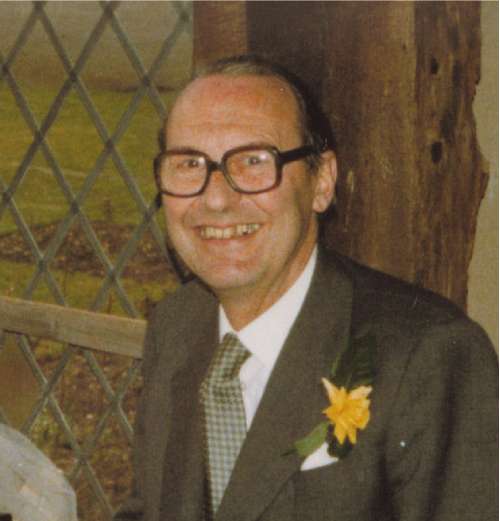
Richard Young was an industrialist whose interests and achievements extended far wider than the manufacturing in which his business career was largely based. He was managing director of the engineering group Tube Investments in the 1960s and the chairman of the machine-tool company Alfred Herbert, but he also became chairman of the music publishers Boosey & Hawkes and was a long-serving council member of Warwick University.
To contemporary eyes he cuts a very modern figure. His concerns included technological modernisation in industry, competiveness, national technology policy, industrial development in India, and the relationship between universities and industry: in 1975 he founded the Teaching Company Scheme (now called Knowledge Transfer Partnerships) to link companies with academic institutions.
A tall and bespectacled figure, Young moved easily between the worlds of industry, science and the arts, concealing an incisive and analytical mind behind a modest and cultivated manner. When one went to his home, an Elizabethan manor house in the heart of the Warwickshire countryside, what struck one was not the normal appurtenances of the successful Midlands industrialist but the Bratby painting on the wall, the grand piano and the Scott Moncrieff translation of Proust in the bookcase. Supported by his wife, Jean, at weekends he would entertain an eclectic mixture of industrialists, academics, actors from the RSC in Stratford and civil servants from Britain and India. He had links with the subcontinent stretching back 40 years, to the early days of Tube Investments of India.
Dick Young was born in Gloucestershire in 1914. He came from a distinguished scientific family: Thomas Young, the 19th-century physicist who invented the wave theory of light and defined the characterisation of elasticity, was a forebear; his brother was the neurophysiologist John Z. Young FRS. Young's father was in the automobile industry in Bristol and Dick entered Bristol University and read mechanical engineering, graduating shortly before the Second World War.
Although training as a pilot he was called to war work in various Tube Investment (TI) companies, emerging as managing director of TI's company in Argentina for five years until 1950. It was through this that he met Jean, who was from an old British-Argentinian family but now working in London.
Back in London himself and working at the very centre of TI as assistant to the chairman, the formidable Sir Ivan Stedeford, Young played a leading role in the first hostile takeover of a public company when TI and Reynolds Metals, a US firm, advised by S.G. Warburgs, acquired British Aluminium in the so-called "Aluminium War" in 1958. In 1961 the board promoted him to group managing director of TI, which included responsibility for Raleigh Bicycles. This was a powerful and nationally important post at the heart of the UK's manufacturing industry. In 1965 he moved to Alfred Herbert Ltd, the largest machine-tool company in the Britain, becoming chairman the following year.
These were the years when many began to recognise that the UK's manufacturing base was at risk because its cost base was too high and it had failed to keep pace with technological development. Harold Wilson's "white heat of technology" speech in 1963 brought a change of mood in Whitehall and the remit of the short-lived Industrial Reorganisation Corporation indicated the government's willingness to engage in the necessary change process.
Dick Young was ideally fitted by scientific sympathies, his industrial background and his keen appreciation of the link between technology and manufacturing costs to play a leading role. He was one of a small group of industrialists involved in establishing the new Warwick University, a large part of the case for which had been the need to bring technological change to the engineering industry on which Coventry and its region depended.
A close friend of Solly (later Lord) Zuckerman, who had become the government's first Chief Scientist, Young joined Zuckerman's new Central Advisory Council on Science and Technology which was specifically set up in 1967 to steer national technology policy and, inter alia, to link the Research Councils, and hence the universities, more closely to industrial interests. Prior to this he had been a member of the Advisory Committee on Scientific Manpower. He was in and out of Whitehall in these years, constantly called on for advice on technology issues and became a member of the Engineering Board of the Science and Engineering Council and of the Social Science Research Council.
But closer to home, he had the task of bringing technological change to Alfred Herbert. Knighted for services to exports in 1970, he recognised immediately the problems at the company, many of them endemic to the UK's manufacturing industry, which was fast losing its competitiveness: the cost base was too high, the technologies were outdated and management was complacent.
He drew heavily on former collaborators from firms like Ferranti and Plessey's for new automated techniques which would cut manufacturing costs, and, assured of major orders from the now nationalised British Leyland he went into partnership with Ingersoll Milling, a leading US machine-tool manufacturer. Herbert-Ingersoll built a state-of-the-art facility in Daventry, where it introduced the most advanced robotic and automated techniques then available to control engine cylinder block manufacturing lines. However, the board at Alfred Herbert was not on side with these approaches and when the promised orders did not materialise for the new plant, Young had to leave the company in 1974, a casualty of the refusal of his own board and of British Leyland to face up to the underlying causes of their manufacturing decline.
Young's contributions in other fields continued. He was a key member of the council of the increasingly successful Warwick University up until 1989, and left his mark as an energetic chair of its building committee. He also served on the board of its science park, where the incubation of small science-based companies was of great interest to him. He was a board member of Ingersoll Engineering in Rugby and took the lead in opening up its links with the Ministry of Heavy Industry in India and with Indian companies. From 1979 to 1984 he took on what was for him the very agreeable task of being chairman of Boosey & Hawkes, the music publisher.
Perhaps his most significant contribution lay in the leadership of a joint working party of the Science and Social Science Research Councils set up to create new interfaces between universities and industry. Young came up with the Teaching Company Scheme (now called the Knowledge Transfer Partnership scheme) where graduate researchers worked on scientific/technological problems in science-based companies under a grant applied for jointly by the company and the students' supervisor. Implicit in the scheme was that the researcher would ultimately be appointed to a job in the company.
The scheme thus provided an answer to the double problem of getting more technological solutions into industry and more scientists employed in companies, and grew to be Europe's leading programme to help companies improve their competitiveness through importing scientific and technological ideas from universities. The scheme will be a memorial to his passion for technological innovation in industry.
In retirement Dick Young took up painting with remarkable success, advised various foundations on engineering design (a gallery space is named after him at the Design Dimension Educational Trust at the Dean Clough centre in Halifax) and maintained close links with Warwick University. He remained an excessively modest, civilised and engaged person who never lost touch with the world around him.
Michael Shattock
Richard Dilworth Young, industrialist: born Mangotsfield, Gloucestershire 9 April 1914; managing director, Tubos Britanicos, Argentina 1945-50, managing director, Tube Investments (Export) 1950-53; sales director, Tube Investments Aluminium 1953-56; assistant to chairman, Tube Investments 1957-60, director 1958-59, assistant managing director 1959-61, managing director 1961-64; chairman, Park Gate Iron and Steel 1959-64; chairman, Raleigh Industries 1960-64; deputy chairman, Alfred Herbert 1965-66, chairman 1966-74; Member of Council, Warwick University 1966-89; Kt 1970; chairman, Boosey & Hawkes 1979-84; married 1951 Jean Lockwood (four sons); died Chipping Campden, Gloucestershire 16 May 2008.
Join our commenting forum
Join thought-provoking conversations, follow other Independent readers and see their replies
Comments
Bookmark popover
Removed from bookmarks