Sir Roy Shaw: Arts Council leader who fought right-wingattacks on public arts subsidies
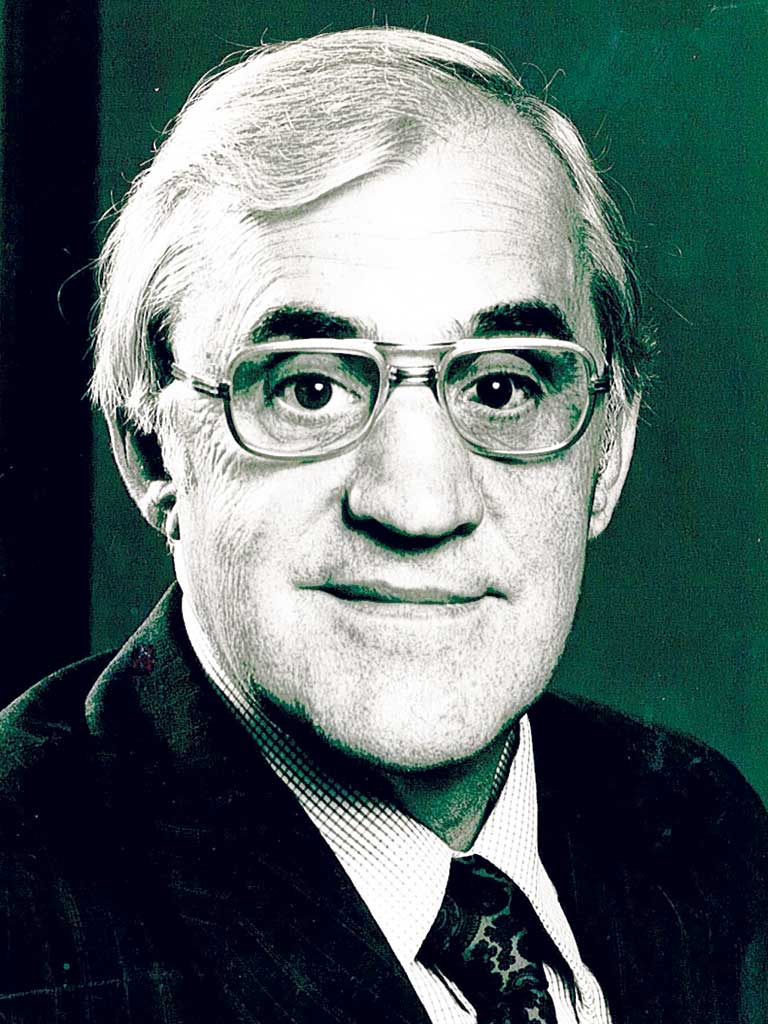
Sir Roy Shaw, who has died aged 93, was secretary general of the Arts Council of Great Britain in some of its most difficult years, from 1975 to 1983, when it was under fierce attack from right-wing politicians who disliked public subsidy for the arts.
Roy Shaw's passion was adult education, or "second-chance" education, and he introduced to the Arts Council the idea of funding educational and outreach programmes. These are now common, but at that time there were many in the arts establishment who thought all that mattered was to make the best in the arts available. Shaw wanted to popularise the arts without dumbing them down – to have "the best for the most people", as he put it.
This passion came from a deprived childhood which taught him that those brought up without access to culture cannot know what they are missing unless positive efforts are made for them.His steelworker father left the family home in Sheffield when Roy was four, and died soon afterwards. His mother tried to make ends meet, sometimes by dressmaking. For a time she had the unpopular job of knocking on doors to collect the interest on small loans from a large money-lending firm. She found keeping Roy a great burden, and for a few years he lived with her parents, in a mining village near Mansfield. She later remarried, and he remembered his stepfather with affection, partly as the man who introduced him to music.
Roy passed the 11-plus and went to the local grammar school, where he blossomed under the tutelage of some intelligent teachers who saw his potential. He stayed on at school, though his mother said reproachfully: "So and so's son is your age and he brings home 30 shillings a week." But his later schooldays were overshadowed by the start of Crohn's disease, which was to be with him all his life. He had a major operation at 18 and later had six more, the last in 2002.
That first operation almost killed him, and he could not complete his Higher School Certificate qualifying him to go to University. He was working in Sheffield Library when the Second World War broke out, and he announced that he was a pacifist and a conscientious objector, although his health would have exempted him from military service anyway. The librarian told him that if he had his way, Roy would be shot.
He eventually obtained a scholarship to study German and philosophy at Manchester University. Graduating in 1946, aged 28, he married fellow student Gwenyth Baron, a happy partnership of equals that lasted a lifetime. That year he became tutor-organiser for the Workers' Educational Association, moving the next year to Leeds University to be a lecturer in the department of extramural studies. In 1960 he became director of the Leeds University Adult Education Centre in Bradford, moving in 1962 to Staffordshire as Keele University's professor and director of adult education.
He built Keele University's outreach work in the Potteries and the surrounding villages. He also became a national figure in the movement for second-chance education, and a key player in the creation of the Open University, the great achievement of Harold Wilson's 1964-70 governments. He rejected the idea, promoted by right-wing educationalists in what became known as Black Papers, that you cannot have both high culture and equality of access to culture. And he rejected snobbish definitions of culture – he championed theatre in the round at the Victoria Theatre in Stoke on Trent, and loved music hall and comedians (especially Ken Dodd) as much as the classics.
Parts of his inaugural address as a professor at Keele look in retrospect like a manifesto for his time at the Arts Council: "Mass democracy will mean cultural decay unless the state spends more money on education, including adult education, and unless it generously endows the arts."
It was to be the dominant theme of his time at the Arts Council. He rejected the criticism that the Council was using taxpayers' money to fund minority middle-class arts, telling an American magazine in 1981: "The arts do reach only a minority of the population, particularly the serious arts which we fund, but I believe you can extend the reach beyond the middle class... by education. What distinguishes the bourgeoisie is not a special gift from God but the fact that they've had an education and the opportunity to enjoy the arts."
But this was an increasingly unfashionable view. Some members of his board, including his chairman, Sir William Rees-Mogg, hardly seemed to understand it. Even less fashionable in the Thatcher years was his passionate conviction that funding the arts was the state's job – not that of private benefactors or commercial sponsors. At his retirement party in 1983 he asked the then arts minister Lord Gowrie whether he had read the paper Shaw prepared for him on developing wider access to the arts, which Gowrie had not even acknowledged. Shaw was profoundly depressed by the answer: "Oh, yes, but my main concern is to foster the growth of business sponsorship."
After he retired he wrote The Arts and the People (1987), telling the story of his Arts Council years and restating his most passionate convictions. He edited The Spread of Sponsorship (1993), a collection of essays on sponsorship in different fields – he asked me to write the essay on sponsorship in education. Business sponsorship, he pointed out in his introduction, carried the danger of censorship. "The excellent Theatre Royal at Stratford East was refused sponsorship by a bank on the grounds that it had put on a play satirising Mrs Thatcher and her government."
He was the theatre critic of the Catholic weekly The Tablet during the 1990s. He had converted to Catholicism in the late 1950s, left the Church after Pope John XXIII died in 1963, returned in the 1980s but was increasingly uncomfortable, attending Anglican services rather than Catholic ones. Two years ago he lost his faith entirely.
Roy Shaw was charming, intelligent, and erudite, with a well-stocked mind and firm beliefs which he wore lightly but pursued tenaciously. With his light voice, his easy laugh and his boyishdelight in elaborating his anecdoteshe seemed laid-back and relaxed,but the achievements of his life, in the face of a deprived childhood and adesperately debilitating illness, tell a different story.
Roy Shaw, educationalist: born Sheffield 8 July 1918; Secretary General of the Arts Council of Great Britain 1975–83; Kt 1979; married 1946 Gwenyth Baron (five sons, two daughters); died Brighton and Hove, East Sussex 15 May 2012.
Join our commenting forum
Join thought-provoking conversations, follow other Independent readers and see their replies
Comments