Teena Marie: Singer and songwriter who became Motown’s most successful white female artist
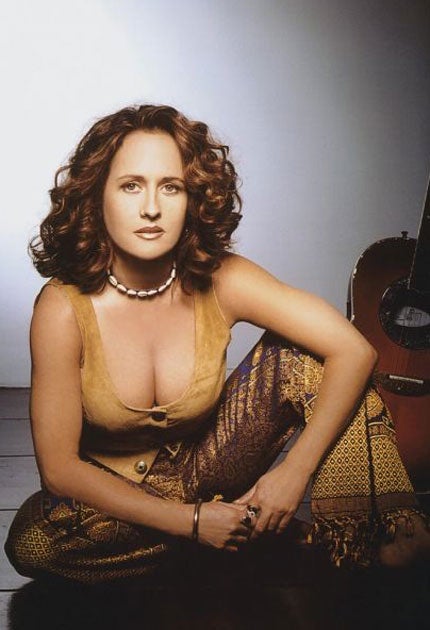
Teena Marie wasn't the first white female singer signed to Berry Gordy Jr's legendary Motown label – the Californian Chris Clark and British vocalist Kiki Dee preceded her in the 1960s – but she certainly had the most impact, blazing a trail for many of the crossover R&B to pop artists who followed.
Issued between 1979 and 1981, her four Motown albums were full of soulful, slinky, sensual, self-penned ballads – "Irons In The Fire", "Portuguese Love" – which helped define the quiet storm format on late night R&B radio in the US, while her uptempo, funkier compositions – "Behind The Groove" and "I Need Your Lovin'", her two 1980 British hits – dominated daytime playlists and the dancefloor.
She was mentored by the flamboyant Rick James, who produced and wrote most of her Wild And Peaceful debut album – including the gorgeous "Déjà Vu (I've Been Here Before)" and the direct "I'm A Sucker For Your Love", her first UK chart entry, credited to her and James – and had a long, fiery relationship with her. The frisson between them was still tangible whenever they performed the torrid duet "Fire And Desire".
She became a gifted songwriter, multi-instrumentalist, producer and performer in her own right. Her desire to control her career led to conflicts with Gordy, who refused to release her from her contract, yet wouldn't sanction any more records by her either. This resulted in a legal case and an historic ruling that granted her freedom in 1982 and became known as the "Brockert Initiative" after her real name. "It wasn't something I set out to do," she said in 2004. "I just wanted to get away from Motown and have a good life. But it helped a lot of people, like Luther Vandross and the Mary Jane Girls and a lot of different artists, to be able to get out of their contracts."
After signing to Epic she scored a Top 5 hit in the US with the Prince-like "Lovergirl" in 1985, and topped the R&B charts in 1988 with the sublime "Ooo La La La", later referenced by The Fugees on "Fu-Gee-La". She left the label two years later and concentrated on bringing up her daughter Alia Rose, who is now a singer using the name Rose Le Beau and guested on the two albums her mother made for Cash Money Records in the noughties. In 2009, Marie issued Congo Square on the revived Stax label, and made a triumphant appearance at the Indigo 2 in London last January, her first UK visit in 18 years.
Born Mary Christine Brockert in 1956, she told the Blues And Soul.com website that she had Portuguese, Irish, Italian and Native American ancestry. She was billed Tina Marie Brockert when she appeared on an episode of The Beverly Hillbillies in 1964, and later took up the name Teena Marie.
She was raised in Venice, California, two blocks away from a black neighbourhood. "I had a lot of black friends and I learned a lot about blacks and black music," she said. "All the kids used to call me Off White because I acted sort of black and I was comfortable with the black kids." Her best friend Mickey, a black girl, accompanied her when she appeared on Soul Train. "I can remember being chased home a couple of times and being called nigger lover. I was only 13 or 14, and to a young mind, that's heartbreaking. I can remember going in my house and sitting in my room and crying."
In her early teens she formed her own soul-flavoured band. "I used to listen to all the early Tamla things like Stevie Wonder and Marvin Gaye," she recalled. "I was introduced to Hal Davis, who got me an audition with Berry Gordy. Berry wanted me for a movie he was planning. The project got shelved but he wanted me on the label."
Between 1976 and 1978 she worked with various producers at Motown's LA base but grew frustrated when no recording met Gordy's approval. She was even reticent when a tie-up with James was suggested. "Why should Rick be able to work with me after everyone else had failed?"
Yet James enthused about her from the start. "I was around the Motown office and I heard this girl singing her ass off," he said. "I walked in and here's this little short munchkin white girl.I said, 'Wow, you're really great. Are you on Motown?' Working with her was my first chance to teach someone all the things I knew. I taught herguitar, bass and piano and I taught her how to produce. Showed her how to carry her vocals where she wouldn't exploit the song too fast, usingher range. It was probably the greatest experience I've ever had working with a vocalist."
This heady combination of restraint, yearning and eventual release would remain Marie's vocal trademark, on tour de force slow jams such as "Casanova Brown" – one of several she wrote about James – or "Shangri-La", that became staples of urban radio in the US. Marie always recognised the crucial role James had played, both on a personal and professional level, and was devastated when he died in 2004. "Rick knew there were feelings in my heart and songs upon my lips. He didn't say: 'This is a white girl, I can't produce her'. Our relationship grew into something really beautiful."
Still, in 1979, Motown wasn't quite sure what to make of this alabaster-skinned girl with red hair who sounded black, and purposely packaged the James-produced Wild And Peaceful in a nondescript seascape sleeve that didn't include a picture of her. The strategy worked and empowered Marie, who would grace the covers of the 12 albums she subsequently issued, starting with 1980's Lady T, which was co-produced by Richard Rudolph, the husband of the late Minnie Ripperton.
However, despite the success of Irons In The Fire and It Must Be Magic, Gordy's meddling and a dispute over non-payment of royalties created an impasse and forced Marie's hand. "Every good artist needs a lawsuit," she later told Billboard magazine. "At the time it was going on, I was very bitter and frightened, and when I won the suit there was no great euphoria. I'm just really sorry it had to happen."
Though Robbery, her first Epic release, didn't match her Motown success, her career regained momentum and she made the US Top 100 with Starchild (1984), Emerald City (1985), Naked To The World (1988) and remained a constant presence on the R&B charts there throughout the the '80s. But despite the involvement of Soul II Soul's Jazzie B, who produced and co-wrote the single "Since Day One", 1990's Ivory didn't fare as well and Marie and Epic parted company.
Throughout the '90s, many rap and hip-hop acts sampled classic Marie tracks such as "Square Biz" and, when she made La Doña in 2004 for Cash Money Records, she could call on guests like Common, Lady Levi and MC Lyte, as well as James and the soul singer Gerald Levert, who duetted with her on "I Got You" and "A Rose By Any Other Name" respectively. La Doña became a bestseller, while Marie was Grammy-nominated for Best Female R&B Vocal Performance for "I'm Still In Love" in 2005. The other nominees – Janet Jackson, Jill Scott, Angie Stone and the eventual winner, Alicia Keys – all named her as a major influence.
On the following year's Sapphire she collaborated with another Motown veteran, Smokey Robinson, and paid tribute to James on "You Blow Me Away". The death of her former mentor and lover hit her hard, and she turned to prescription drugs, though she overcame her dependency.
Congo Square, her last album, named after a historical meeting place for slaves in New Orleans, featured Faith Evans, the widow of Notorious BIG, the former Shalamar singer Howard Hewett, jazz pianist George Duke and R&B singer Shirley Murdock, and reached the US Top 20. "I've been through quite a few trials and tribulations over the last two years," she said last year. "I spent many of those hours in prayer and felt like God was putting his arms around me. I started thinking about the music I grew up on.
"Each song I was coming up with began to sound like the style of some favourite artist of mine from the past, Curtis Mayfield and Marvin Gaye, Billie Holliday, the old Chicago soul of The Emotions and the new Chicago vibe of Kanye West. Ice Cube's bumpin' in the trunk vibe and, of course, Rick James. It's all in there." In 2008 she said, "All in all, it's been a wonderful, wonderful ride."
Mary Christine Brockert (Teena Marie), singer, songwriter, multi-instrumentalist, producer: born Santa Monica, California 5 March 1956; one daughter; died Pasadena, California 26 December 2010.
Join our commenting forum
Join thought-provoking conversations, follow other Independent readers and see their replies
Comments