The Rev Andrew Ross: Missionary and Church historian
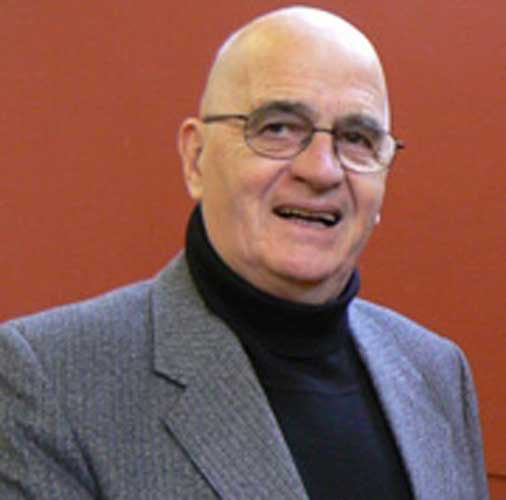
Andrew Ross was a distinguished missionary, academic scholar and university leader during an illustrious career that spanned several continents. Born into a coal-mining family in the Lothians of Scotland, he retained the commitment to family life, community, football and social justice that was instilled in him from his earliest days. All these he celebrated with a characteristic passion and infectious enthusiasm.
After education at Dalkeith High School and Edinburgh University, he served as an officer in the RAF before returning to Edinburgh to study at New College for the ministry of the Church of Scotland. In 1953, he married Joyce Elder, who had been a fellow student of history in Edinburgh. They would have 45 happy years together and five children. A postgraduate year at Union Theological Seminary, New York in 1958-59 was to prove significant. Work in the black neighbourhood of East Harlem impressed upon him the evils of urban poverty and racial injustice – this experience was to serve him well in his subsequent work in Africa and throughout his academic career.
Ordained to the ministry of the Church of Scotland in 1958, he moved to Malawi (then Nyasaland) where he served the Presbyterian Church of Central Africa. Actively engaged and outspoken on political and social issues, he was deeply committed to the independence movement, democratic reform and social justice. Becoming fluent in the national language of Chewa, he served as chairman of the Lands Tribunal of the Nyasaland, then Malawi, Government 1963-65, and vice-chairman of the Nyasaland, then Malawi, National Tenders Board, 1963-65.
However, he grew increasingly disturbed by the oppressive regime of Hastings Banda, and, after supporting the democratic resistance movement, he was forced quite suddenly to leave Malawi by the Banda regime in May 1965. In fleeing Malawi, he and his wife had also to leave the grave of their young daughter, Jocelyn, who earlier had been killed in a road accident.
His enforced return to Edinburgh enabled him to continue work on a doctoral thesis on the Church of Scotland's Blantyre mission. At this time, he was also appointed to a lectureship in the history of missions, the first such dedicated post in the UK. He became part of a distinguished cohort of church historians in the Faculty of Divinity at New College under the leadership of Professor Alec Cheyne and including David Wright and Peter Matheson. Known as the "Cheyne gang", they raised their subject to new standards of professionalism in historical research while also adopting a more global perspective on the history of the church. Christianity was no longer taught as primarily a European religion, but one that from the early centuries onwards had strong roots in Africa and Asia. Ross brought his own commitment and eloquence to the classroom. Students would long remember not only his scholarly insights, but the rich fund of stories from the Lothian coalfields, East Harlem and Malawi.
An activist, he immersed himself in the administration and management of Edinburgh University. He served on the University Court from 1971 to 1974, where he developed a friendship with the then Rector, Gordon Brown, whom he had already known through his membership of the Labour Party. From 1978 until 1984, he was Dean of Faculty and Principal of New College. One branch of his family had been Presbyterian and the other Roman Catholic. Committed to ecumenism, Ross enabled the Faculty of Divinity to become increasingly diverse in its staff body and he played an important role in the (then) controversial appointment of James Mackey, a Roman Catholic theologian, to a chair at New College in 1979. Mackey would later become one of his closest friends in the Divinity Faculty.
An accomplished and much sought-after public speaker, he remained active in the Scottish Labour Party – in many ways, he was both socialist and nationalist – and continued as a strong advocate of democratic reform in Africa. With his close links to the anti-apartheid movement in South Africa, he was instrumental in bringing his friend Allan Boesak to deliver a stunning series of lectures at New College at the height of the struggle in 1984.
Although his scholarly output was initially restricted by extensive administrative commitments, Ross produced an important set of publications later in his career. These included a monograph on the Scottish missionary John Philip (1986); A Vision Betrayed: the Jesuit missions in Japan and China 1542-1742 (1993); The Blantyre Mission and the making of Modern Malawi (1996); and a biography of David Livingstone (2002) that is widely regarded as the best available study.
Throughout his retirement, he maintained a steady scholarly output while also travelling extensively in the United States and Africa. He remained involved in the work of the Centre for the Study of Christianity in the Non-Western World, offering academic advice and pastoral support to many doctoral candidates. A great raconteur who was also a surprisingly good listener, he dispensed sound advice and encouragement to generations of international students.
Andrew Ross had been a keen athlete and all-rounder in his earlier years, but it was football that remained his greatest sporting love. Although his ancestral loyalties always remained with Hibs, he became the leading supporter of the Edinburgh University team.
Very few games were missed, and he was seemingly ever-present on team buses, in dressing rooms and in dug-outs where he kicked every ball. Any colleague believed to have a passing interest in the game would be regaled on a Monday morning with stories of outstanding performances, bad refereeing decisions, and the latest prospects for advance in the Scottish Cup. Into retirement, he never lost his boyish excitement for the game and pride of friendship with those who played it. His final illness only manifested itself when he collapsed after a match towards the end of last season.
Stewart J. Brown and David Fergusson
Andrew Christian Ross, missionary and Church historian: born Millerhill, Lothian 10 May 1931; ordained minister of the Church of Scotland 1958; Minister, Church of Central Africa Presbyterian (Malawi) 1958-65; Chairman, Lands Tribunal of Nyasaland, then Malawi Government 1963-65; Vice Chairman, National Tenders Board, Nyasaland, then Malawi Government 1963-65; Senior Lecturer in Ecclesiastical History, Edinburgh University 1966-98, Principal of New College and Dean, Faculty of Divinity 1978-84; Member, University Court 1971-73; Convener, Student Affairs Committee 1977-83; married 1953 Joyce Elder (four sons, and one daughter deceased); died Edinburgh 26 July 2008.
Join our commenting forum
Join thought-provoking conversations, follow other Independent readers and see their replies
Comments