Bill Gates: 'We could save three million lives over the next decade'
David Walliams talks to Bill Gates
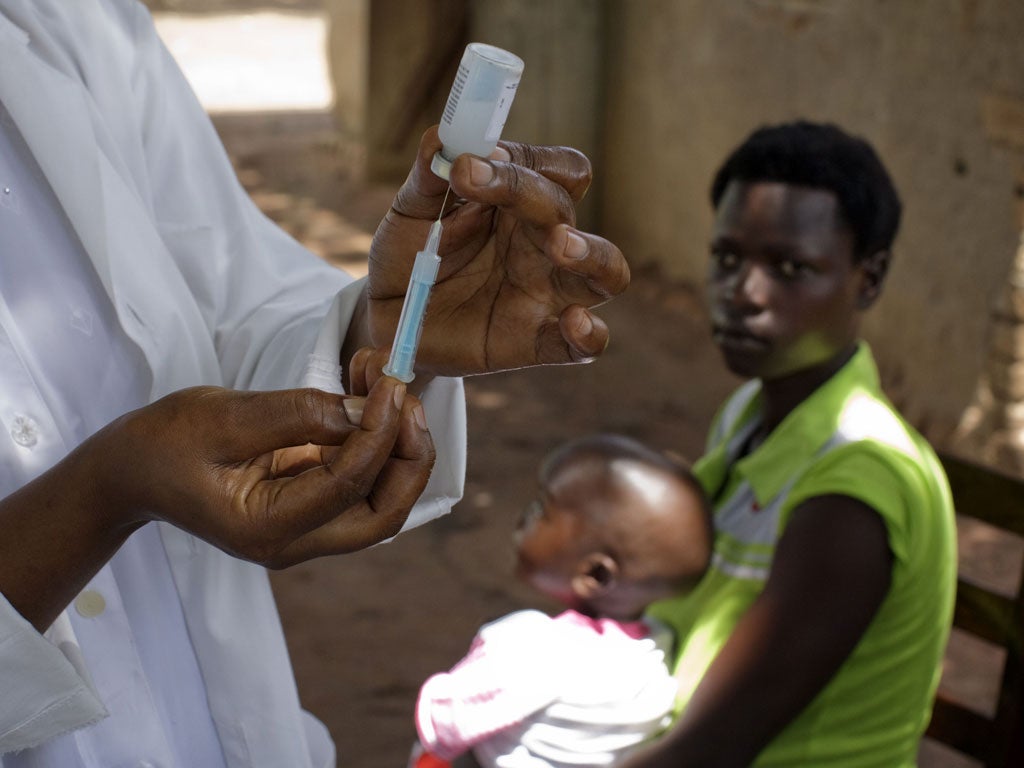
DAVID WALLIAMS: What are vaccines and how easy is it to save a life with one? How much does a vaccine cost?
BILL GATES: Vaccines are a phenomenal tool that can protect a child for a lifetime. They have made the eradication of smallpox possible, and they have brought us to the threshold of eradicating polio. Vaccines are also relatively inexpensive – polio vaccines are now available for 13 cents [8p] per dose, measles for 23 cents and meningitis vaccines are available for less than 50 cents.
DW: Can you describe the process of getting them to the children who need them in poor countries? How many lives do you think we can save by delivering vaccines?
BG: There used to be a lag of a decade or more between when vaccines were developed and when they were delivered to children in poor countries. But that is changing.
Last year a new vaccine for pneumonia was introduced almost simultaneously in the developing and the developed world. As far as numbers of lives saved, if we simply scale up existing vaccines in the five countries with the highest number of child deaths, we could save three million lives over the next decade.
DW: In the UK children are given the option of having the measles, mumps and rubella vaccine. Many parents don't take this offer up, they think it can be dangerous. Do you think we should count ourselves lucky?
BG: In 1960, the number of children who died before their fifth birthday was 20 million. Then, the world learnt how to grow more food and treat more disease, and the number went down. Today, because the world has learnt how to deliver more vaccines to more places, fewer than eight million die before their fifth birthday. But still 2.4 million children will die each year from diseases for which there are already vaccines. Those of us in the developed world are extremely lucky that we have access to these vaccines.
DW: Why do vaccines have such long names? What's the longest one you know?
BG: I'm not sure if it's the longest acronym, but the DPT-HepB+Hib (or you can just call it the pentavalent vaccine) – packs a punch by immunising children against diphtheria, tetanus, pertussis, Hepatitis B, and Haemophilusinfluenzae type B.
DW: What existing vaccines are you really excited about? Which vaccine do you think most urgently needs to be developed?
BG: There are many vaccines I'm excited about, but the new vaccines developed for rotavirus, pneumococcal disease, and HPV are having incredible impact. While it will likely be more than a decade away, I dream of the day when the world discovers effective vaccines for HIV/Aids and malaria.
DW: Who is Gavi and why do we never see his face? What's he got to do with saving children's lives?
BG: Gavi isn't actually a person... It stands for the Global Alliance for Vaccines and Immunisations and was founded in 1999 as a public-private partnership dedicated to delivering vaccines to millions of the world's poorest children.
DW: There was an event in June where a lot of money was pledged to Gavi. What's been happening since?
BG: The Gavi pledging conference last year was a momentous day for global health. The goal was to raise at least $3.7bn (£2.3bn) over five years, and we knew it wasn't exactly the best time to be asking for that kind of money.
Yet through sheer determination and the exemplary leadership of the UK government, Gavi ended up receiving $4.3bn in pledges which will enable it to save the lives of four million children by 2015.
Because of the extraordinary commitment of the UK and other governments in a time of economic difficulty, the poorest infants in the world now receive the same vaccines as infants in rich countries.
Also, due to significant price reductions from vaccine manufacturers, Gavi is now delivering two relatively new vaccines, for rotavirus and pneumococcus. By 2015, these vaccines will prevent 190,000 diarrhoea deaths and 480,000 respiratory deaths.
Join our commenting forum
Join thought-provoking conversations, follow other Independent readers and see their replies
Comments