Casey Stoney: 'The single proudest moment of my whole life'
The captain of the British women's football team has had a long struggle to lead her team out for the first event of London 2012. Emily Dugan meets Casey Stoney
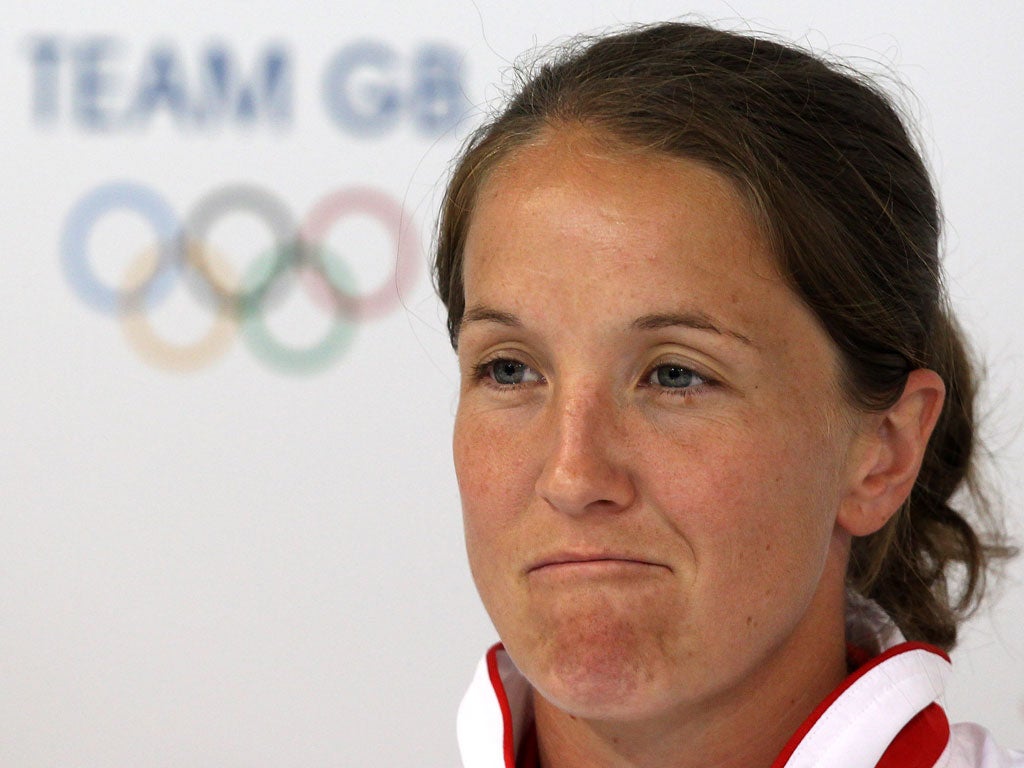
It will be the first competitive act of the Olympic Games: the flip of a coin. At Cardiff's Millennium Stadium on Wednesday, Great Britain's women's football captain, Casey Stoney, will stand opposite the New Zealand skipper, Hayley Moorwood, with a choice to make. She already knows which side of the coin she'd choose if the referee asks her. "Tails never fails," she grins.
Long before Danny Boyle has had a chance to make rain and unleash cows on the Olympic stadium, the Games will be in full swing for 30-year-old Stoney. The fixture is a surprising one. In the BBC sitcom Twenty Twelve, Hugh Bonneville's fictitious Olympic "Head of Deliverance", Ian Fletcher, exasperatedly blurts out: "I mean honestly, whose bloody idea was it to open the whole Olympic Games with women's football?" As has so often been the case with the series, the outburst had a ring of authenticity to it.
Women's football still lags behind the men's game in popularity, and Stoney knows this will be their biggest opportunity yet to prove the nay-sayers wrong. "Being part of the Olympics full stop is incredible, but being the first event could be a major thing for women's football. We're making history: we've never had a women's football team and I'll be the first person to lead my team out. It's hard to get your head around."
Though the public may still need to be won over, Stoney says her team have already shown the men's team their calibre. "I was having a chat with [GB men's defender] Micah Richards, and he said, 'You lot are decent.' Coming from a male pro, that's great. They've got respect for the game. But sometimes people who aren't educated and haven't watched it judge it, even though they've never seen a top-flight game."
I am sitting with Stoney in the lounge at the Rockliffe Hall Hotel at Middlesbrough's training ground, where both teams are staying ahead of Friday's warm-up friendlies against Sweden and Brazil. It is still a novel experience being united as one team. "The men's team have been fantastic. They've very much integrated with us and when we went to the Olympic Village together, all the girls were playing pool and table football with them and playing forfeits for who makes tea the next day."
While age restrictions make men's Olympic football the poorer cousin of the World Cup and other international tournaments, it is a different story for the women. "It's the elite of the game," explains Stoney. "There are no age restrictions, so it's the best of the best."
Much has been made of the thousands of tickets still unsold for the Olympic football matches, but for the women these will still be record audiences. Attendance at this year's FA Cup final was below 9,000, compared with the 30,000 tickets already sold for Wednesday's match, not to mention the 60,000 sold for the clash with Brazil at Wembley.
The women's game was introduced as an Olympic sport at Barcelona in 1992, and Britain has not managed to field a team until now. GB has a tough group. After New Zealand, they face Cameroon and Brazil, but Stoney has faith they can make it to the final. "We've got some great players, we've got a great team and a lot of experience," she says.
When not playing for her country, Stoney captains Lincoln Ladies, one of several women-only clubs succeeding in the Women's Super League without the need for a parent men's club. She has already played for most of the big-name squads, including Arsenal and Chelsea. But after Charlton Athletic unceremoniously dropped its women's team – which Stoney had captained to league and cup wins – when the men's team were relegated in 2007, she was keen on a women-only club.
Born in Wickford, Essex, Stoney was seven when her parents split up. Her mum Sandra did two cleaning jobs as well as working evenings and weekends in a pub to make sure Casey and her brother Scott had what they needed. When there wasn't enough money to pay Casey's football club fees, Sandra would bargain down the price with managers.
"My mum sacrificed a lot," recalls Stoney. "We never went without, but I know there were times that she'd go without food just so that we could eat. We didn't have a lot of money. If I wanted £100 Nike boots, I didn't get them. But I didn't care if I had someone else's old boots on, as long as I was playing football. And these days I get given boots."
Her childhood has left her conscious of the value of money. When she went to the Olympic team's kitting out session – athletes are typically given three giant kit bags of free clothing – she was overwhelmed. Now she's planning to give some of it away. "I was like, oh my God, look at all this kit!"
Stoney struggles to remember the first time she played football. "Most of the kids in the street were boys. We just went out and played and put jackets down for goals. The boys never stuck me in goal, they always wanted me on their team, so I must've been decent."
When she wasn't playing on her street, she'd be kicking a ball at the youth club or playing with her cousin and brother in the park. "I think growing up with the boys toughened me up a bit because you have to get used to the physical challenge," she says.
It wasn't until she was 10 that she joined a club, signing up for a boys' team in Tolworth. "I remember walking in the hall for the first time with really long hair and they looked at me like I had two heads. The first 45 minutes nobody passed to me, so after half time I picked on the biggest one, nicked the ball off him, had a little dribble and then there was a moment of silence. That was it; it broke the ice. I won players' player of the year at the end of the year, so from them that was a big sign of respect."
After 11, girls weren't allowed to play on the team, so she had to move to a park little league. "The standard wasn't great. We won the cup and the league, and I used to have to take the goal kick and the corners. I scored 108 goals in one season and we probably had about 24 games. It was just too easy."
Word of her talent brought the Chelsea Ladies' manager down to the park, who catapulted her straight on to the adult squad at the age of 12. But her passion for football made her a target for bullies who teased her for being masculine. "It was constant, especially at primary school. Kids can be very, very cruel – they don't think before they speak. I would laugh it off at the time, because I wasn't going to let them see they'd upset me. But I'd get home and be very, very upset."
The player Stoney is most often compared to is John Terry. Like Terry she is a defender who's strong on tackles, has played for Chelsea, has working-class London roots and has captained her country, but there the similarities end. Stoney is polite, hard-working and dedicated to helping the next generation of women players. As well as playing for her club and country, she coaches the Lincoln girls' team and is an ambassador for the Youth Sports Trust. With all those jobs, she estimates she makes about £25,000 a year – roughly what Terry earns in a day.
Her final thoughts show just what separates her from the grasping commercialism of the men's game: "If you took the money away tomorrow, I'd keep playing. Leading the team out will be the single proudest moment I've ever had."
Curriculum vitae
1982 Born in Basildon, Essex, the younger of two children.
1992 Joins Tolworth boys' football team. Is voted players' player of the year.
1994 Spotted playing football in the park by Chelsea Ladies' manager. Starts playing for the adult team.
1999 Joins Arsenal Ladies, the country's strongest women's team.
2002 Moves to Charlton Athletic to play more first-team games and captains the team to the FA Cup final in her first season.
2005 Considers retirement after she is left on the bench for the entire European Championship.
2007 Charlton Athletic disband their women's team after the men are relegated. Moves to Chelsea Ladies.
2011 Signed to Lincoln Ladies. Stars for England in the World Cup, taking one of just three successful kicks when they went out on penalties to France in the quarter-final.
2012 Made England and GB captain. Becomes the fifth English player to win 100 international caps.
Join our commenting forum
Join thought-provoking conversations, follow other Independent readers and see their replies
Comments