Jez Butterworth: King of Jerusalem
Well connected and blessed with a sharp wit, the English playwright is destined for recognition at the Olivier Awards this weekend
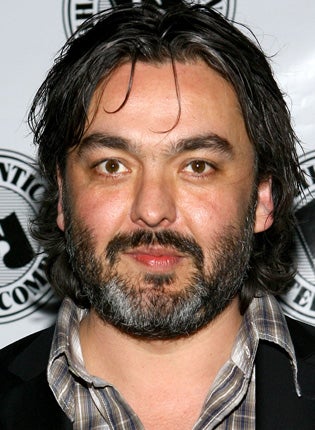
Tomorrow's night's Olivier Awards will almost certainly see Jerusalem by 40-year-old Jez Butterworth confirmed as the best new play of the year. The occasion, whatever the outcome – Jerusalem is nominated in six categories, including best actor for Mark Rylance and best director for Ian Rickson – marks a triumphant vindication for a talented writer with an uneven track record.
His first major play, Mojo, at the Royal Court in 1995, was an absolute blast, hailed by the critics as the most dazzling main stage debut since John Osborne. A black comedy of sex, drugs and gang warfare, it evoked comparisons with David Mamet, Quentin Tarantino and Harold Pinter.
Subsequent plays, and there are only three before Jerusalem, have been greeted with respect rather than euphoria, and Butterworth has been busy developing films (of which only two have been completed). Five years ago he retreated from city life – although his agents are in Los Angeles – and relocated in Somerset with his wife, a film editor, and two young children, where he runs a smallholding and raises pigs.
When Jerusalem opened at the Royal Court last July, the acclaim was almost universal for a play that touched the national psyche in a way few plays do: it's both a celebration of a lost national culture of mop fairs and rustic riot, Arthurian legends, ley lines; and a dystopian hymn to hippiedom and civic antagonism on St George's Day deep in the Wiltshire forest.
Not least, it contains a performance by Mark Rylance – for whom the play was written – that has already entered the history of the British stage. His Johnny "Rooster" Byron, peddling drugs and parties in his mobile home, ripe for eviction by the Kennet and Avon authorities, involved with a teenage wood sprite whose angry dad comes calling, is a Falstaffian creation on a grand scale, a glorious Lord of Misrule, protest and disaffection.
When visited in the encampment by his own small son, chaperoned by his separated wife, Rooster shakes the boy by the shoulders and spells out his rules of disobedience: "School is a lie. Prison's a waste of time. Girls are wondrous. Grab your fill... Don't listen to no one and nothing but what your own heart bids. Lie. Cheat. Steal. Fight to the death. Don't give up. Show me your teeth."
No attempt is made to justify Rooster in moral or ethical terms; like Falstaff, he's hoist on his own petard, to an extent. But the tidying up of life around the edges by the nanny state is what he really objects to, and why he speaks for us. There's no allowance for excess in modern life any more. Rooster has a hilarious story (among many) about how he was kidnapped by four Nigerian traffic wardens in Marlborough town centre: he'd got drunk and relieved himself in public, that's all.
But all the characters in Jerusalem have a quotidian richness to them, and a life and a journey, and Butterworth has said that he wanted to convey how tomorrow was going to be different for all of them. Time passing, he reckons, is his theme, not just the English countryside. It's quite unusual to care so much about every character on the stage in a big cast play. Ian Rickson, his director, concurs, revealing that Butterworth half-wrote Jerusalem nine years ago, but that "having children and animals has had a really powerful effect on his work." And Butterworth says that walking through woods by the river with a dog for five years has changed the way he writes. "It's meditative, and you get to spend a lot of time by water. That's really important."
Jez was christened Jeremy, and grew up in St Albans, Hertfordshire. He attended a local comprehensive school and then St John's, Cambridge, where the current editor of The Times, James Harding, then his contemporary, became a close friend, as he remains. He has three brothers and a sister, all in show business – Tom and John Henry are screenwriters, Steve a movie producer, and Joanna a registrar at a stage school in London.
He was a busy undergraduate actor and writer, one of his early pieces, bizarrely, being a stage adaptation of Katharine Whitehorn's recipe book Cooking in a Bedsit. The literary agent Nick Marston of Curtis Brown sent a long first draft of Mojo to the Royal Court, where Rickson shared an office with Stephen Daldry, whom he later succeeded as artistic director.
Rickson pestered Daldry into letting him do the play on the main stage, thus forging a relationship with the writer that has proved at least as profitable as other key historic Royal Court collaborations between Anthony Page and John Osborne, William Gaskill and Edward Bond, and Lindsay Anderson and David Storey. Rickson has directed every Butterworth play since.
Mojo was set in a 1958 Soho club, a world in which, one critic said, everyone is, or has an ambition to be, a horrific blend of the Sex Pistols' entrepreneur Malcolm McLaren, and Ronnie Kray. There were terrific performances by Tom Hollander and Andy Serkis.
The film business was not slow to spot his potential, and after a few false starts, he directed and co-wrote with his brother Tom (other brother Steve produced) Birthday Girl (2001) starring a lustrous Nicole Kidman as a mail-order Russian bride whose "client", played by Ben Chaplin, gets more than he bargained for; innocent romcom spirals quickly into culture clash and criminality. It reminds me a bit of Martin McDonagh's brilliant In Bruges (2008); I think McDonagh's a kindred spirit, and talent, in a way.
It was seven years after Mojo before the next play arrived, The Night Heron (2002), with Ray Winstone stalking the Cambridge fenlands in a balaclava and violence breaking out among an oddball group of college servants and gardeners, with worrying rumours of satanism in the Scout movement. And after another long gap, The Winterling (2006) began to test a few critics' patience in its puzzling developments among fugitive gangsters in a derelict Dartmoor farmhouse. In addition, the references to other artists began to fly a bit too thick and fast: in Winterland, one critic detected not only shades of Pinter but also of Guy Ritchie and Withnail and I. But there was always the spiky, jazzy writing and one particularly hilarious speech about badgers bearing grudges.
There are more films in the pipe-line, one involving Sean Penn, another, Headhunters, based on a best-seller by Jules Bass about four New Jersey women snaring wealthy bachelors in the casinos of Monte Carlo, due for release soon in a co-production by Nicole Kidman, brother John Henry directing. And definitely a new stage piece for Rickson to direct after completing a short film with the playwright. But if the success of Jerusalem heralds the comeback kid, Butterworth was clearly in business with his play the year before, Parlour Song (2008), which was premiered at the Atlantic Theatre Company in New York before bowing at the Almeida in Islington exactly a year ago. Presaging Jerusalem, it was a suburban show-down on the edge of a sinister, vengeful forest, in which a small-time car-wash magnate absconded with the lustful wife of his nerdy neighbour, a demolition expert with a proud catalogue of blow-ups.
In New York, critics referenced a pair of big Johns, Cheever and Updike, in their rave reviews, while here the play seemed a more jagged and spelt-out version of Pinter's dreamy Old Times, with the triangle rearranged against the distaff side. The car-wash man is a smooth sexual predator, while the comic agent of destruction tries desperately to improve his bedroom technique with an oral sex instruction course on headphones and a set of weights he can lift but not then lower: laugh? We nearly died (so did he).
Butterworth was clearly in the mood again, and Rickson says that there is something about the critical knock-backs in the past that has led him on to Jerusalem in a spirit of defiance. "Managing his work, and how it's received, has been a complex thing for him. He's more emotionally committed now than he was, so we're getting this new depth and joy in his work, as well as the trademark personal jazzy style."
The playwright is flying in from America for the awards ceremony on Sunday. He probably won't return to the West Country empty handed, and he may linger ruefully on past disappointments. But I suspect he's already thinking ahead, and making sure he's fixed the next date at the abattoir to bring some of those nice little pigs all the way home to the kitchen table.
A life in brief
Born: Jeremy Butterworth in London, March 1969.
Family: Married with two children under four; four siblings, all of whom in show business. Tom and John Henry are screenwriters; Steve is a movie producer; Joanna is registrar at Lamda, a stage school in London. His father was an economics teacher who served in the war.
Early life: Grew up on a cul-de-sac in St Albans, Hertfordshire, and attended the local comprehensive school. Aimed for Cambridge after seeing his brother, Tom, in a play there, and was accepted into St John's College to read English.
Career: Breakthrough play was Mojo, made into a film in 1997, which he directed, after the play won Olivier, Evening Standard and George Devine awards. Directed and co-wrote the film Birthday Girl in 2001; wrote The Night Heron, in 2002. Parlour Game (2008) opened in New York and then London; Jerusalem opened at the Royal Court last summer, before moving to the Apollo.
He says: "I know which one I would choose now. If you go into an empty cinema, you wouldn't want to spend five minutes in there, but if you go into an empty theatre, you could sit in there for an hour. Something has seasoned it that you don't get in cinema."
They say: "He's more emotionally committed now than he was, so we're getting this new depth and joy in his work, as well as the trademark personal jazzy style." Ian Rickson, director
Join our commenting forum
Join thought-provoking conversations, follow other Independent readers and see their replies
Comments