Paul Staines: The worm of Westminster
In his guise as political blogger Guido Fawkes, he has spread fear through the ranks of MPs and beyond. And now he's fallen foul of Leveson
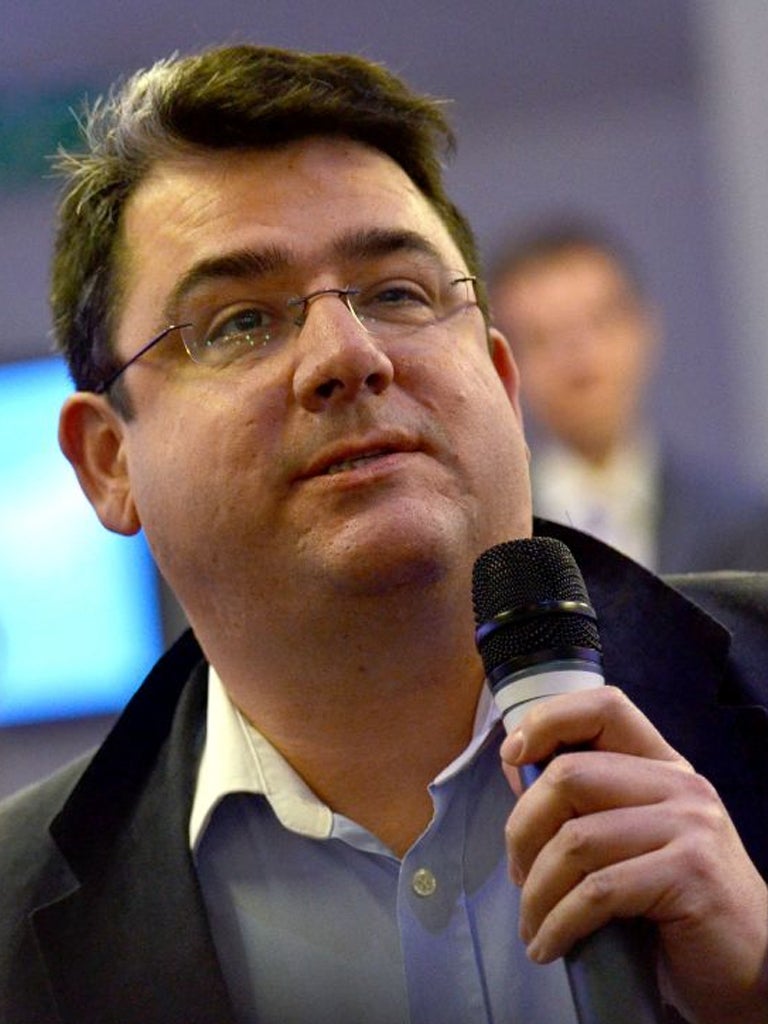
When Paul Staines – aka the notorious political blogger Guido Fawkes – made his first appearance on Newsnight a few years ago, he was determined to maintain his anonymity and asked that his face be obscured.
Jeremy Paxman asked him: "Mr Fawkes, as I suppose we must call you, why do you insist on this preposterous disguise?"
The fictional Guido might be full of fearless chutzpah, but the man who created him remains neither confident nor engaging as a public performer. So for that reason – among others – Staines had a narrow escape this week when he was expected to be hauled in front of the media ethics inquiry headed by Lord Leveson on Thursday morning and ordered to explain how he came by an early draft of Alastair Campbell's evidence, which went up on his website last weekend.
Thursday came and went. The day's hearing was cancelled because a witness was ill, and Staines's appearance was, supposedly, put off until next week. Now it is unlikely to happen at all.
Having taken a lot of evidence of journalists breaking the law to obtain information, panel members at first suspected that their computers had been hacked, causing the leak. Staines denied from the start that he had come by his information illegally, and with no evidence that he had, Leveson and his fellow panellists were in severe danger of making themselves look silly. If this had not cost Staines a lawyer's bill, the saga could be classified as a total victory for the blogger.
The week's events have reinforced Staines's reputation as the country's No 1 political blogger, a position he holds through being smart enough to see the potential of the internet early on. He launched the Guido Fawkes site seven years ago. Another quality is his formidable persistence. The web has seen hundreds of bloggers who have started out full of commitment but have given up when the feedback does not seem worth the effort. But like the Duracell battery, Staines has kept on going.
He has also avoided the pitfall that makes other blogs so tedious – having no restriction on length, bloggers write many more words than their content deserves. On the Guido Fawkes website there is always something new; it is always brief and always makes a point.
But whether reading it is a pleasure or an ordeal is altogether a matter of taste. There are a lot of angry people about who think that everyone in public life is a hypocrite and/or a crook, and want to see their failings exposed and egos punctured. It is to that audience that the Guido Fawkes blog appeals. Two academics did a study of comments on the feeds of political blogs, and noted that those who post on the Guido Fawkes blog are notably more aggressive and angrier than your average citizen. Their findings, published in the Oxford journal Parliamentary Affairs in January, noted: "Guido Fawkes had insults in 63 per cent of its posts. Some unacceptable content was removed by the moderator yet posts containing [an extremely rude phrase about Gordon Brown] were left.... This level of offensive language was extremely rare in any of the other blogs."
Guido is conventionally described as a right-wing blog, which is accurate enough in that the politics underpinning it is of the libertarian right – hostile to the euro, the unions, high taxes, high salaries in the public sector and the whole "liberal establishment". Under his own name, Staines has launched a Downing Street petition to restore the death penalty, which is not yet a quarter of the way to its target of 100,000 signatures and has been overtaken by a counter-petition to retain the ban on hanging. This is in line with Staines's earlier career, because he is a businessman and right-wing activist who has pioneered a particular kind of online journalism, not a journalist who has taken to the web.
His first very brief brush with fame was not a pleasant one. In The Guardian library there is an old, yellowing cutting alleging that the young Paul Staines, then a leading light of the Federation of Conservative Students on Humberside, had a link with the far right. Other bloggers who do not like Staines say he threatened legal action when they tried to republish this old story. That is unusual. His normal reaction to real or imagined attacks is not to make legal threats but to use his blog or Twitter for counterattack. He also has to take care not to attract the attention of libel lawyers, and has taken the precaution of basing his business in Ireland to keep out of their way.
His attitude to the law is anarchic, especially the law that prohibits drink-driving. The most recent of his four alcohol-related convictions, in April 2008, resulted in a three-year driving ban and an 18-month supervision order. Writing for the Libertarian Alliance 20 years ago, he was lyrical in praise of his friend Tony Colston-Hayter, who outwitted the police by organising illegal but highly profitable acid house parties. He also fulsomely encouraged readers to experience the "staggeringly enjoyable, mind-warping" effects of illegal drugs, and declared that some of the drug dealers he knew were "honest, peace-loving, fair-minded people who just happen to be in a business of which the majority of people are said to disapprove".
Now that he is married, and a father of two daughters, his views on illegal drugs have become more conventional, but not on other aspects of the law. Appearing in front of a parliamentary committee on the media last month, he was asked whether he would obey a privacy law, if Parliament passed one, and replied: "I don't think so."
Most of the people targeted on his website have been from the political left, the best-known example being Gordon Brown's former adviser Damian McBride, whose email about using dirty tricks against Tories fell into Staines's hands and destroyed McBride's political career. But Staines has also been merciless in pursuit of some Tories who have come into his sights, such as the MP Bill Wiggin, whose expenses claims earned him the nickname "Piggin' Wiggin" on the Guido Fawkes website, where he was routinely depicted with a pig's snout.
The big question, though, is not whether the Guido Fawkes website is fair, but whether the business model pioneered by Staines is the future of mass communication. Unlike much of the mass media, his website is not subsidised. It generates enough income through advertising to cover its relatively low costs. Staines sells stories, though he is scathing about newspapers, particularly loss-making ones – not just about the people who write for them, but the whole costly process of growing trees, cutting them down for pulp, manufacturing paper, manufacturing ink, printing and distribution. He thinks what he calls the "dead tree press" should be allowed to go out of business.
But there are many people who would feel that something has gone out of their lives without newspapers, magazines, books, bookshops and newsagents, with only the broadcast media for news and the blogosphere for comment. Yet that is the future as Paul Staines wills it. It is an odd position for a libertarian to take, given how the printed word has protected and advanced liberty across centuries, but Staines is an odd sort of libertarian.
A life in brief
Born: 11 February 1967, London.
Family: He and his wife, Orla, a solicitor, have two young daughters.
Education: Salvatorian Roman Catholic College, Harrow; Humberside College of Higher Education.
Career: Travelled the world as foreign-policy analyst in the 1980s for a right-wing pressure group before promoting raves. He moved into finance in the 1990s before declaring himself bankrupt in 2003. He started his website Order-Order the next year.
He says: "I don't just sell the products of my labour, I own the means of production. No one can fire me. And, according to what I read, I do a lot better than most journalists."
They say: "He doesn't have any political motivation, apart from thinking the political system is corrupt." Iain Dale, Tory blogger
Join our commenting forum
Join thought-provoking conversations, follow other Independent readers and see their replies
Comments