Richard Parks: Risking life and limb to hit heights for cancer charity
Ex-Wales player survives crevasses, frostbite and avalanches to complete Grand Slam of seven summits and 'three poles' in record time. He tells Matt Lloyd what he learnt along the way
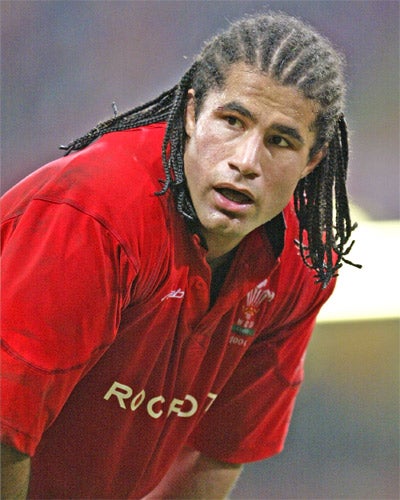
It was in rugby that Richard Parks made his name but after almost losing part of his foot to severe frostbite, surviving a brush with death in a crevasse and dodging collapsing ice shelves, avalanches and even malaria, it will be as Britain's fastest adventurer that history will now remember him.
Click HERE to view graphic (87k jpg)
On the pitch, the former Wales international was a robust and athletic loose forward unfortunate to play at the same time as Martyn Williams, otherwise more representative honours would surely have come.
However, no one can put him in the shade on the world's highest peaks and polar caps, where this remarkable record-breaker stands peerless after achieving mountaineering's "Grand Slam" in record time.
Motivated by the frustration of finishing rugby at the age of 31 due to a shoulder injury, inspired by accounts of Sir Ranulph Fiennes and driven to raise £1m for Marie Curie after witnessing several members of his family, including his father Derek, struck by cancer, the ludicrously ambitious 737 Challenge was born.
The task: to climb the highest summits on the world's seven continents as well as reaching the Earth's three poles (Everest is also handed this title), all in the space of seven months. Hence 737.
It had never been completed in the same year, let alone close to half that time.
Yet last week, Parks stood atop Russia's Mount Elbrus having completed the nine challenges, each a mammoth feat in itself, in just six months, 11 days and 7 hours. In mountaineering terms, it was akin to Roger Bannister's sub-four-minute mile. On his epic journey, Parks suffered frostbite on Everest, a collapsed ice shelf in the North Pole, a fall on Mount McKinley (Denali), avalanches on Antarctica's Mount Vinson and malaria among the team in the Indonesian jungle around the Carstensz Pyramid.
Yet he survived them all, as well as adding Mount Kilimanjaro and South America's Aconcagua to his list of conquests to write his name in the record books.
Speaking from a steakhouse in Moscow, that ironically proved the trickiest destination to find over the past seven months, it is clear the enormity of his achievements have yet to sink in. "The reality is very slowly beginning to dawn on me, but I'm incredibly proud of what we've achieved," said Parks, demonstrating a team ethic from his rugby days by insisting on using "we" and "us" despite completing each leg with a different team.
"I hadn't achieved what I wanted to in rugby so I wanted to test myself in a difficult environment and in the end I was privileged and humbled to experience highs that are hard to put into words.
"There were also some very difficult and dark times, especially at the beginning when I didn't think the Challenge was ever going to start, but most important is what we are doing for the charity. Cancer has been a big part of my life after affecting my father, uncle, auntie and grandparents so it was an easy decision to raise money for Marie Curie."
The challenge began last December when he set off for the -30C of the Antarctic. From there he faced gale-force winds on Aconcagua in Argentina before "ticking off" mountains, daunting enough on their own, as if items on a shopping list, until he faced make or break in the Himalayas.
"Not many people realise how much we were up against it at Everest. We were still in the North Pole when most other teams were beginning their climbs in March. By the time we reached base camp, we were about five weeks behind the peak season," said Parks.
"We took an aggressive approach to acclimatisation and it worked. We got up there in three weeks which is really fast, even though we spent three days in the 'Death Zone' [above 26,000ft] waiting to summit. It was all about mental strength and holding our nerve."
The Challenge teetered on the edge several times during the past seven months, but never more so following the agonising descent from Everest when Parks suffered frostbite on his foot. Every step as he kicked for a foothold was agony as the bare flesh hammered against his boot. On his return to Wales, he was warned he faced the possibility of losing his toe and even part of his foot, leaving the Challenge hanging in the balance.
Parks made a habit of putting his body on the line during his playing days at Pontypridd, Leeds, Perpignan and Newport Gwent Dragons but it soon became a reality in his charity quest.
"Those few weeks after Everest were a real low point. We had come so far that the thought of not being able to finish was agonising, but the possible consequences to my health were very real. I sought the best possible medical advice but it was still inconclusive so in the end I just went for it," he said.
It was a decision that almost brought tragic consequences. Aside from Parks' physical condition, climbing Alaska's Mount McKinley so late in the season brought extra danger as the melting ice cover exposed deep crevasses – as he discovered just hours into the climb when he plunged 20ft through a snow-covered trap door.
Fortunately he landed on his back on a ledge, relatively unscathed but again facing the mortal dangers of this extreme sport.
"I'm not exaggerating when I say I was lucky to get out of there alive. So many things could have happened, I could have fallen further, broken a bone or been hit by my sledge which was pulling me down further into the crevasse," said Parks.
"Fortunately another team following helped get me out, though we realised how bad the situation was when one of their guys fell as well.
"Lying there, I had complete faith that Matt [his climbing partner] would somehow get me out so it wasn't until afterwards that I was scared. We still had six hours of walking across the glacier, which were the longest six hours of my life. I was reliving the fall with every step, fearing what may happen."
Physically Parks is a wreck after this mountaineering odyssey. Injections in his knee and the ache from his shoulder were constant, but the crippling effects of altitude and hours of climbing saw him lose a quarter of his "fighting weight". His exertions have also taken a heavy financial and mental toll that will take even longer to recover from.
"I always knew it was going to be a big physical and mental challenge to keep performing in such extreme conditions when you're fatigued, however I wasn't prepared for how emotional it was going to be," he said.
"It was a real rollercoaster with amazing highs and lows but despite all the incredible support that really kept me going, at times it was extremely lonely. There is an amazing simplicity on the mountain but I realise that what I missed most was people. Life is better shared."
Despite his £1m target, personally his finances are in no better shape than his body having funded the challenge with his life savings, including the insurance pay-off following the shoulder injury. He also sold most of his belongings, stopping short at flogging his beloved BMW motorbike and the Wales jersey he wore against Ireland in 2003, but his house, car and pretty much everything else went on the market.
"If I couldn't put my own money where my mouth was then how could I ask sponsors or donors to invest in me in these tough economic times? I pretty much used every penny I had from my rugby career, though my rugby stuff was too precious to sell," he said.
Parks was given a hero's welcome back at the Welsh Assembly in Cardiff Bay yesterday and while the fundraising now kicks into top gear, Parks, who gave up on a dentistry degree to pursue his rugby career, faces the daunting prospect of "normal" life.
"I'm basically an unemployed 33-year-old without an income or any savings but I don't regret a second of it. I'll have to start thinking about rejoining the real world soon, though I think I'll struggle with a nine-to-five desk job.
"What is more important is the money I can raise for Marie Curie. It is an amazing charity with incredible people and I wanted to give something back to them."
Join our commenting forum
Join thought-provoking conversations, follow other Independent readers and see their replies
Comments