
For free real time breaking news alerts sent straight to your inbox sign up to our breaking news emails
Sign up to our free breaking news emails
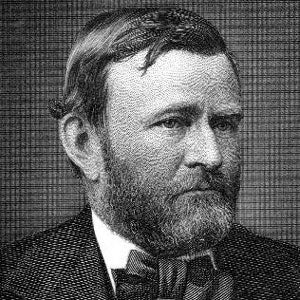
One of the greatest of all generals, Ulysses Grant was marginally less successful as a president. As a Civil War hero who had aligned himself with the Radical Republicans late in Andrew Johnson's presidency, he had obvious potential and, having reluctantly accepted the Republican nomination, he duly won. His presidency consisted largely of allowing Radical Reconstruction to run its course in the South, supporting the policy with military force as necessary. He did much to curb the power of the Ku Klux Klan (briefly suspending habeas corpus in North Carolina). He protected freedmen's civil rights, stabilised the currency, made peace with the Plains Indians and repaired relations with the UK. And he ratified (in 1870) the Fifteenth Amendment: "The right of citizens of the United States to vote shall not be denied or abridged... on account of race, colour or previous condition of servitude."
But all these successes were undermined by a series of financial scandals, in which his associates were too closely embroiled for comfort. These included the 1869 Gold Ring scandal, in which two speculators, Jay Gould and James Fisk, attempted to corner the gold market, using their (tenuous) association with Grant to strengthen their position; the 1872 Crédit Mobilier scandal, in which Grant's future Vice-President, Schuyler Colfax, was implicated in a scheme to defraud investors in the Union Pacific Railroad; an 1874 tax collection scandal that led to the resignation of Grant's Treasury Secretary, William Richardson; and the 1875 Whiskey Ring, in which at least $3m in taxes was stolen with the aid of senior government officials. Grant himself is generally thought to have been honest, but the air of corruption hindered the recovery of financial confidence in the five-year slump that followed the Financial Panic of 1873. By the end of his second term, Grant's presidency was discredited, the economy was sunk in depression, and racial extremism was on the rise again in the South.
After leaving office, Grant travelled widely; retired to Illinois; nearly secured the Republican nomination for the 1880 presidential election; and then moved to New York City, where he was enticed into becoming a partner in a financial firm, run by the swindler Ferdinand Ward. The firm went bankrupt in 1884 and Grant was left almost penniless. He also learnt that he had incurable throat cancer. Desperate to provide for his family, he hurriedly wrote his Personal Memoirs, which he completed a few days before he died. This highly regarded work was a best-seller, earning his family nearly $450,000.
In his own words
"It was my fortune, or misfortune, to be called to the office of Chief Executive without any previous political training."
"The truth is I am more of a farmer than a soldier... I never went into the army without regret and never retired without pleasure."
"The effects of the late civil strife have been to free the slave and make him a citizen. Yet he is not possessed of the civil rights that citizenship should carry with it. This is wrong, and should be corrected."
In others' words
"I have carefully searched the military records of both ancient and modern history, and have never found Grant's superior as a general."
General Robert Lee
"Various administrations have closed in gloom and weakness... but no other has closed in such paralysis and discredit as... did Grant's." Allan Nevins
Minutiae
He wore false teeth and suffered from migraines.
Grant was tone deaf and hated music.
His wife, Julia, was cross-eyed.
He liked to breakfast on cucumbers soaked in vinegar.
While President, he was once fined $20 for speeding on his pony and buggy.
When Grant was 44, his father, a wealthy tanner, decided to share out his fortune among his children. Grant refused to accept it, on the grounds that he had not helped to earn it.
Grant smoked 20 cigars a day – which probably contributed to the throat cancer that killed him. He was also a heavy drinker whose military career was dogged by accusations of drunkenness.
As a child, Grant was nicknamed "Useless" by his father, apparently because of his ineptitude at everyday tasks.
Despite an approach to war that often provoked accusations of butchery, Grant had a life-long aversion to the sight of blood.
Subscribe to Independent Premium to bookmark this article
Want to bookmark your favourite articles and stories to read or reference later? Start your Independent Premium subscription today.
Join our commenting forum
Join thought-provoking conversations, follow other Independent readers and see their replies